
Human models & functional research
Functional oncology
Combine human organoid models, functional assays and mechanism studies from target validation through candidate evaluation.
Functional oncology studies
Connect model biology with candidate response and mechanism
Current studies show glioma model identity and functional response, PDO 2.0 immune context, and antibody/nanobody spatial imaging relevant to ADC studies. Models and assays are combined around the candidate mechanism.
 View image
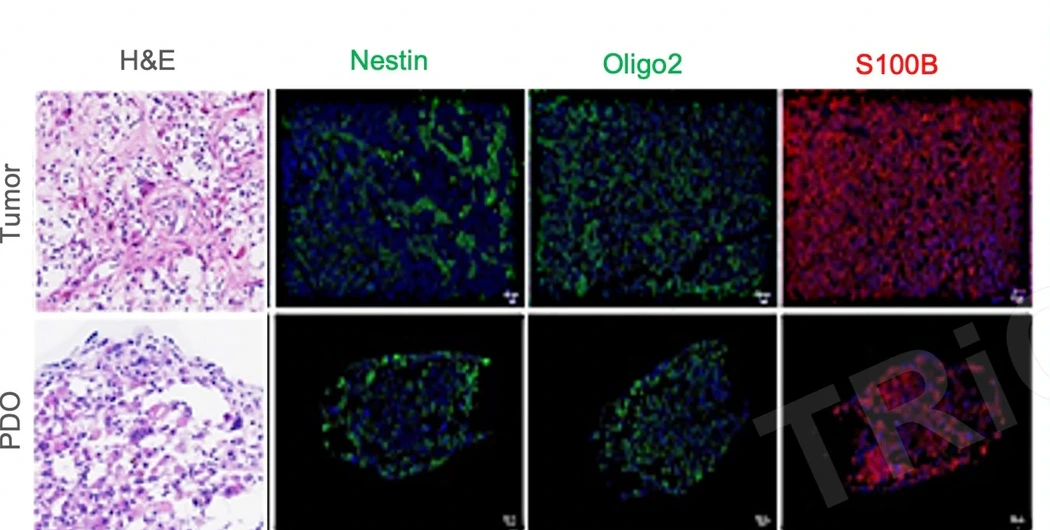
Model identity: tissue–PDO histology and lineage markers establish the glioma model context.
TRiCBIO glioma PDO 2.0 study dataView the glioma PDO 2.0 study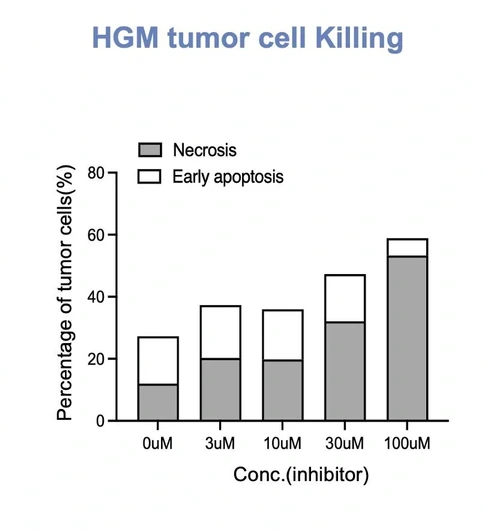 View image
Functional response: early apoptosis and necrosis across dose conditions show tumor-cell changes after candidate treatment.
TRiCBIO glioma PDO 2.0 study dataView the glioma PDO 2.0 study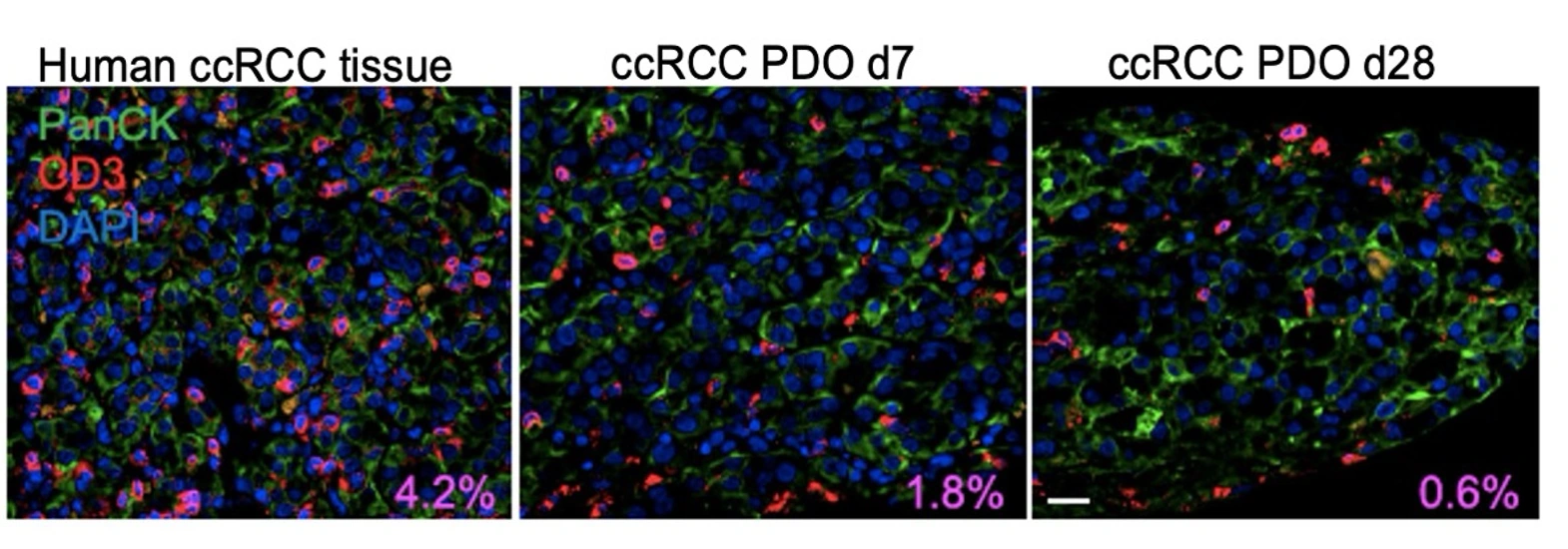 View image
Tissue and model context: PanCK, CD3 and DAPI imaging compares tumor-epithelial and CD3-positive immune-cell signals across the source tissue and PDO culture time points.
TRiCBIO ccRCC PDO 2.0 immune-context study dataView the TME study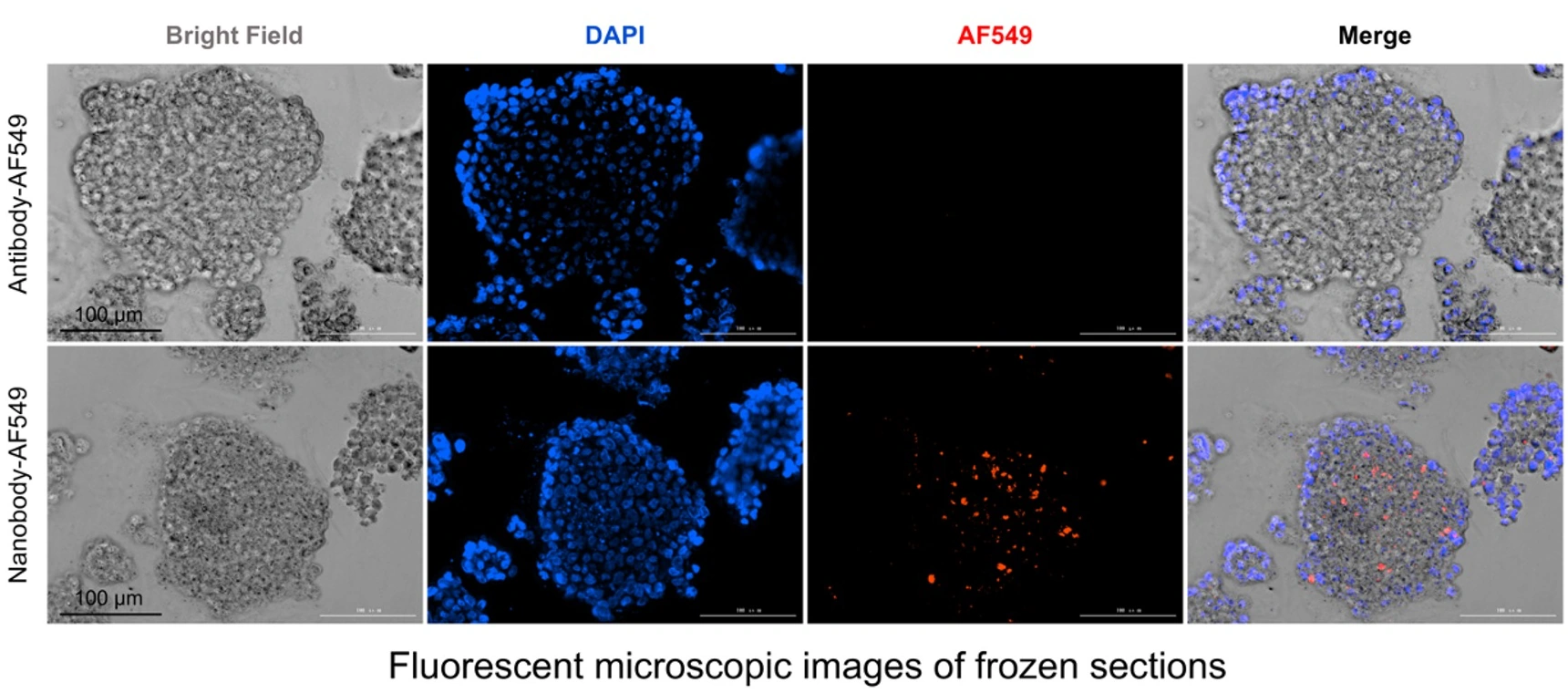 View image
Frozen-section spatial distribution: bright-field, DAPI, AF549 and merged views compare relative signal patterns for labeled antibody and nanobody in PDO frozen sections.
TRiCBIO breast cancer PDO antibody/nanobody distribution studyView antibody distribution and ADC responseStudy applications
Connect phenotype to candidate mechanism
Stage studies across models of different biological complexity
Extend in vitro findings into in vivo or multi-omics validation
Study workflow
Move from model identity to functional response
Clarify the study objective
Start with the priority—target validation, candidate comparison, mechanism or safety—then assemble the right platform capabilities.
Select human-relevant models and endpoints
Select among PDO, PDO 2.0, normal-tissue organoids and custom systems with the needed tissue, functional and molecular assays.
From functional results to next-stage studies
Use model QC and key endpoint assays to identify functional changes for further study, then extend the findings through in vivo, functional-genomics or multi-omics work.
Integrate data, analysis and interpretation
Deliver model QC, raw data, analytical methods and interpretation together so teams can compare candidates and plan follow-up studies.
Deliverables
Compare candidates and interpret mechanism with multidimensional results
- Study design and model-selection recommendation
- Model QC, raw data and multimodal readouts
- Integrated analysis, study report and recommended follow-up studies
Related models
Select the model by biological context
Organoid findings can extend into in vivo or multi-omics studies, with models, assays and deliverables aligned to the development objective.
PROJECT DISCUSSION
Build a human-relevant functional oncology study
Tell us the program stage, tumor type, candidate mechanism and what the study needs to clarify. Our scientists will connect the appropriate human model, functional assays and next-stage studies.