
Research question
Candidate, sample context and the decision your team needs to make
TRiCBIO HUMAN ORGANOID PLATFORM
TRiCBIO combines PDO 2.0 / ALI with tumor, normal-tissue and disease organoids plus multimodal assays for candidate comparison, mechanism studies and safety assessment.
PLATFORM DESIGN
Start with the question your team needs to answer, then select the sample, model, treatment conditions and readouts at the right level of complexity for candidate comparison, mechanism assessment or the next study.
Candidate, sample context and the decision your team needs to make
Match PDO, PDO 2.0, normal-tissue or disease models with the right dose, controls and co-culture conditions
Integrate tissue, immune, functional and molecular results for candidate comparison, mechanism and safety decisions
SCIENTIFIC FOUNDATION & FIELD DEVELOPMENT
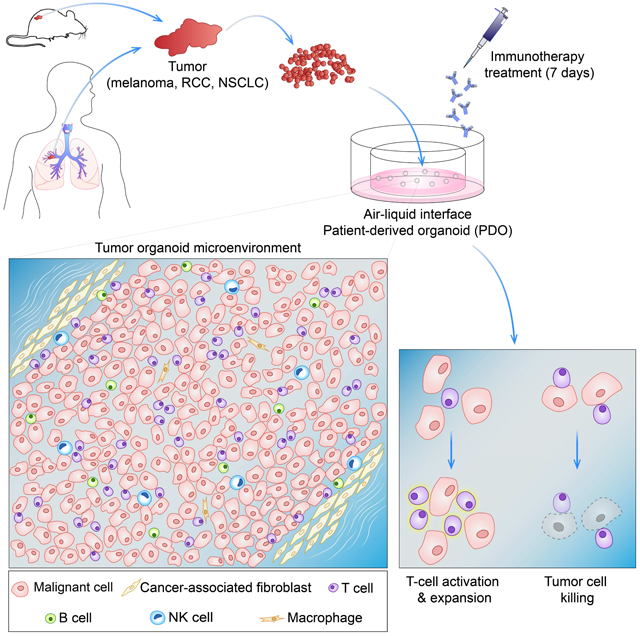
The 2018 Cell study established the ALI tumor–immune organoid foundation. Nature Reviews Cancer featured the approach as “Organoid 2.0” in 2019 and further examined its value for tumor immunity, drug development and mechanism research in a 2024 review. TRiCBIO translates this foundation into PDO 2.0 studies combining model selection, tissue imaging, flow cytometry and functional assays.
Co-first author Xingnan Li, PhD helped develop an ALI patient-derived tumor-immune organoid method for studying tumor epithelium with immune cells retained from the source sample in a three-dimensional tissue context.
Nature Reviews Cancer
DOI 10.1038/s41568-019-0108-x
Read the publisher’s article ↗WHY THIS ADVANCE MATTERS
In 2019, Nature Reviews Cancer featured the 2018 Cell ALI tumor–immune organoid study co-first-authored by Xingnan Li under the title “Organoid 2.0.” ALI brings tumor epithelium, tissue architecture and immune cells retained from the source sample into one model, extending organoid research beyond cancer cells alone to the microenvironment.
“retaining native immune cells, thereby recapitulating TME diversity”
For teams studying how a candidate affects both tumor cells and their immune environment, TRiCBIO combines PDO 2.0 with tissue imaging and immune profiling to investigate activity, cellular interactions and mechanism.
Nature Reviews Cancer
DOI 10.1038/s41568-024-00706-6
Read the publisher’s article ↗WHAT IT MEANS FOR STUDY DESIGN
The 2024 review places the Cell 2018 ALI study within the development of tumor–immune organoid technology and further defines the value of source-tissue stroma, sample-associated immune cells and the tumor T-cell repertoire for checkpoint-blockade, immunotherapy and mechanism studies.
“native embedded stromal and immune cells”For immunotherapy and combination-treatment programs, TRiCBIO pairs PDO 2.0 with immune profiling and functional assays so biopharma and research teams can examine tumor responses, immune changes and candidate mechanisms together.
STUDY EVIDENCE
PDO 2.0 immune studies, antibody distribution imaging, ADC activity and normal organoid safety data support model selection, candidate comparison and organ-risk assessment.
Swipe or use arrow keys to explore more study evidence
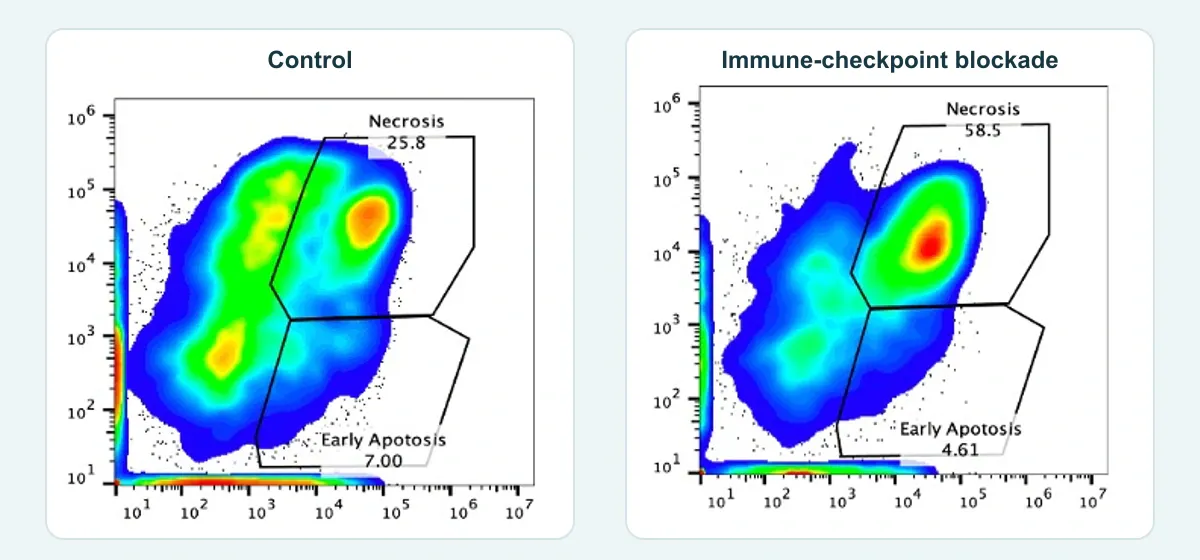
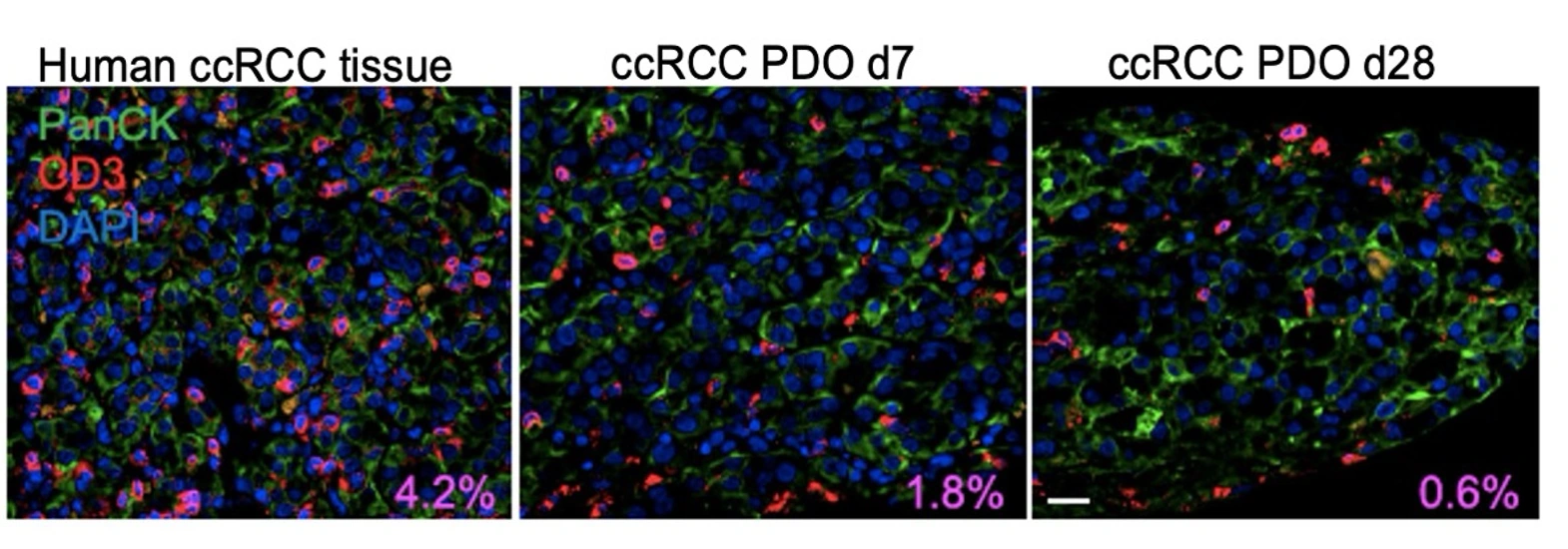
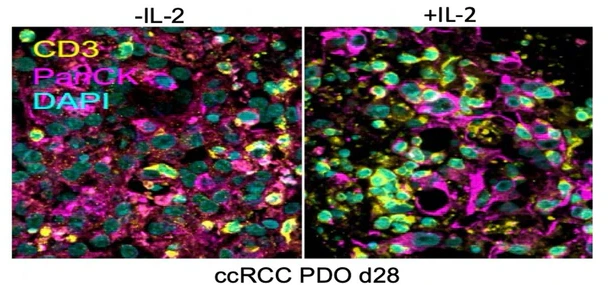
Bring tissue architecture, immune markers and functional readouts together for immunotherapies, antibodies, TCEs and other context-dependent modalities.
STUDY USESupports model selection, TME assessment and treatment-condition comparisonView study details ↗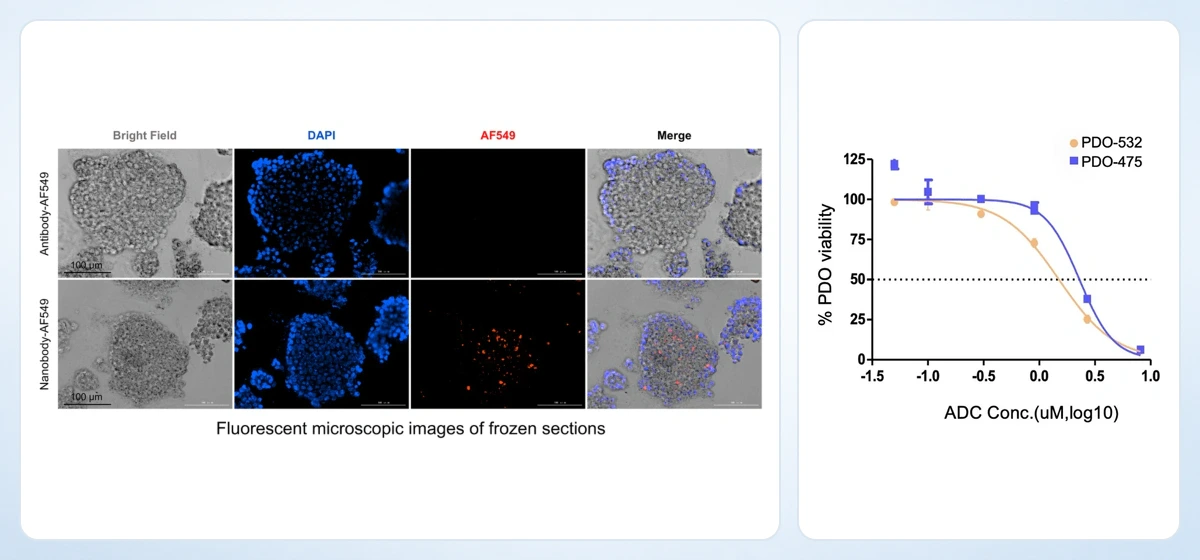
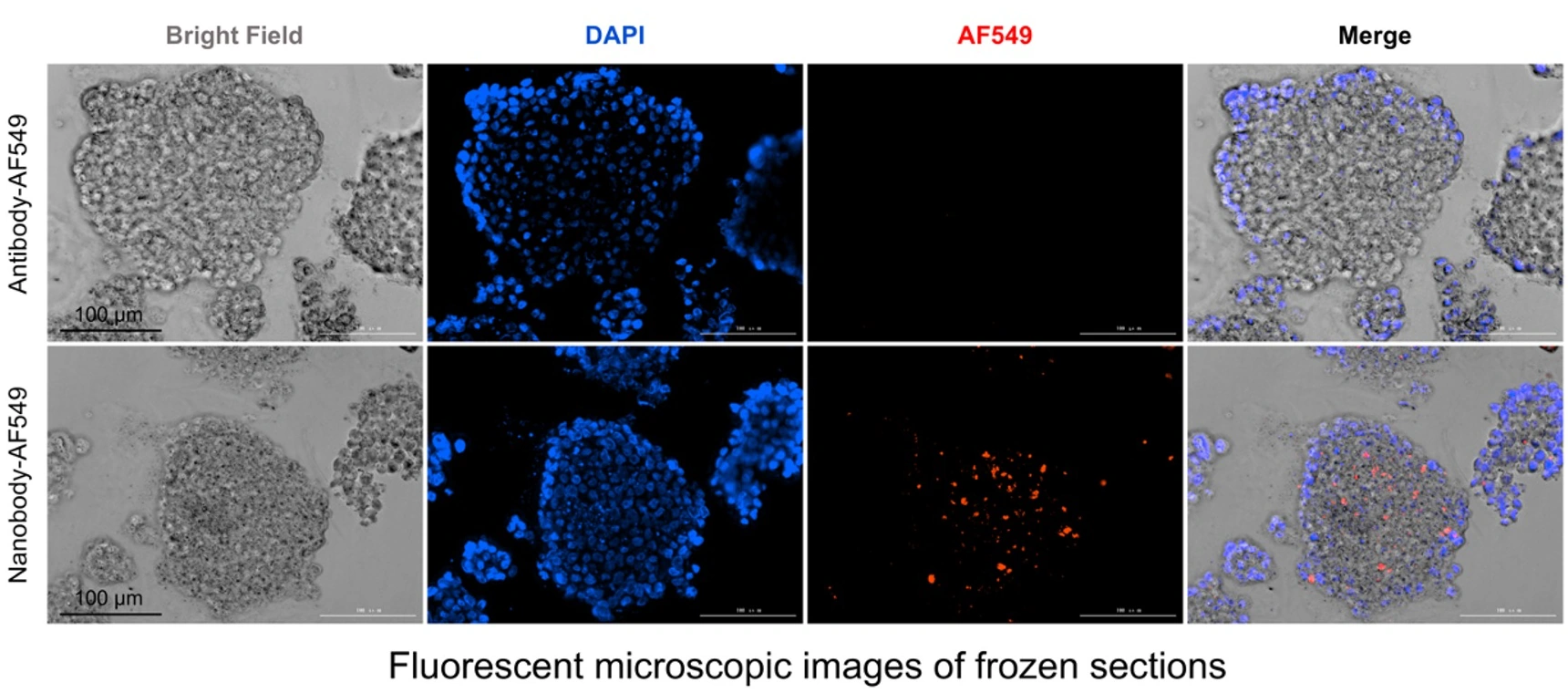
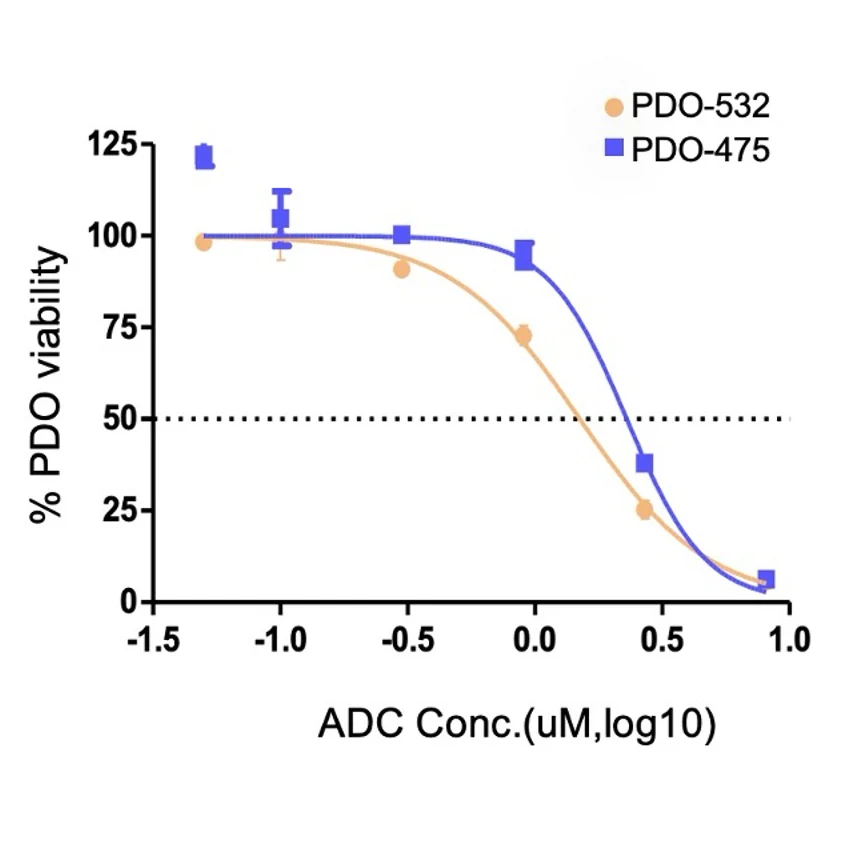
Across two breast cancer PDO studies, AF549-labeled antibody/nanobody imaging is paired with post-treatment morphology and dose-response data to inform candidate imaging and activity-study design.
STUDY USESupports candidate comparison, dose design and follow-up mechanism workView study details ↗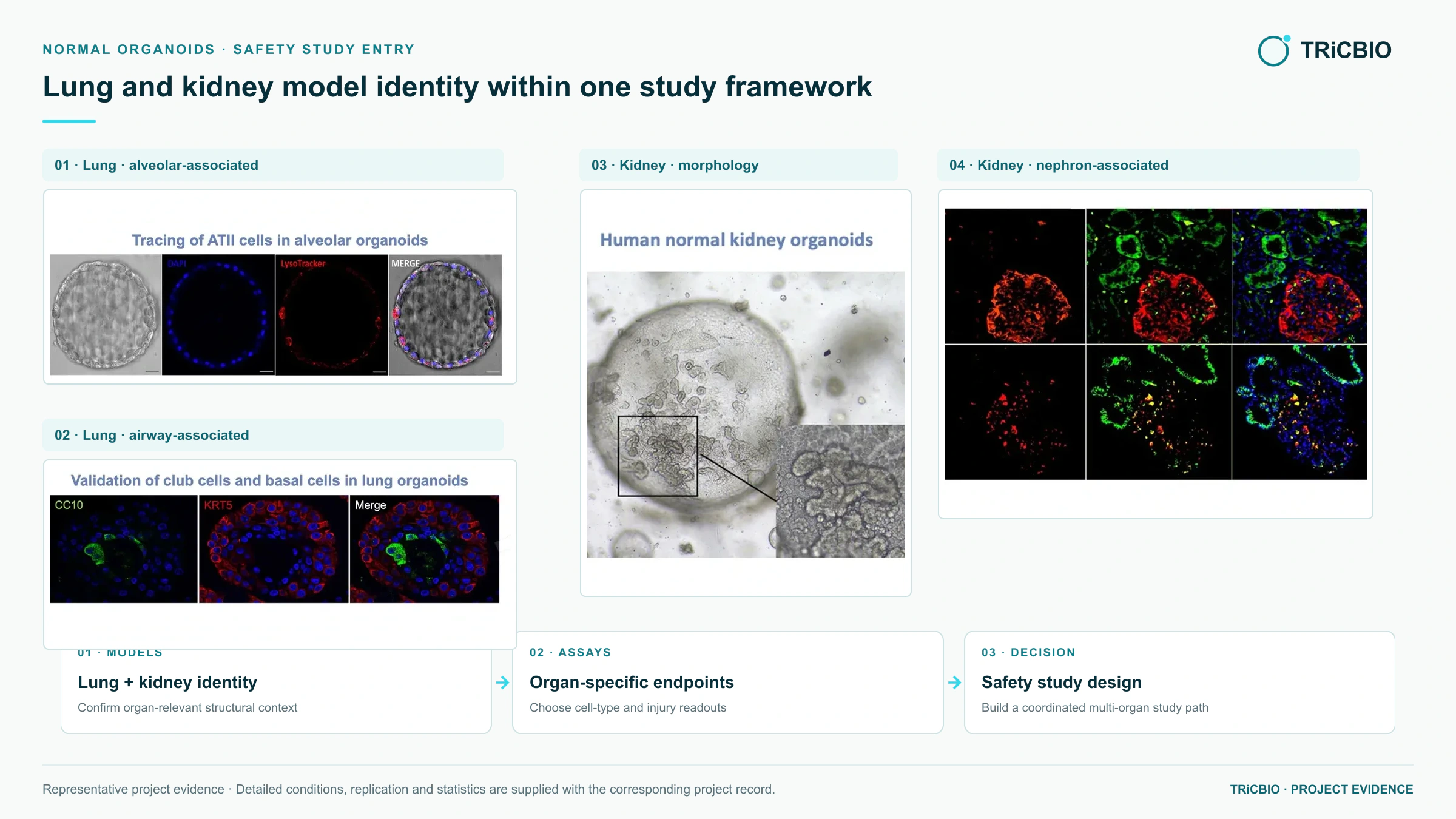
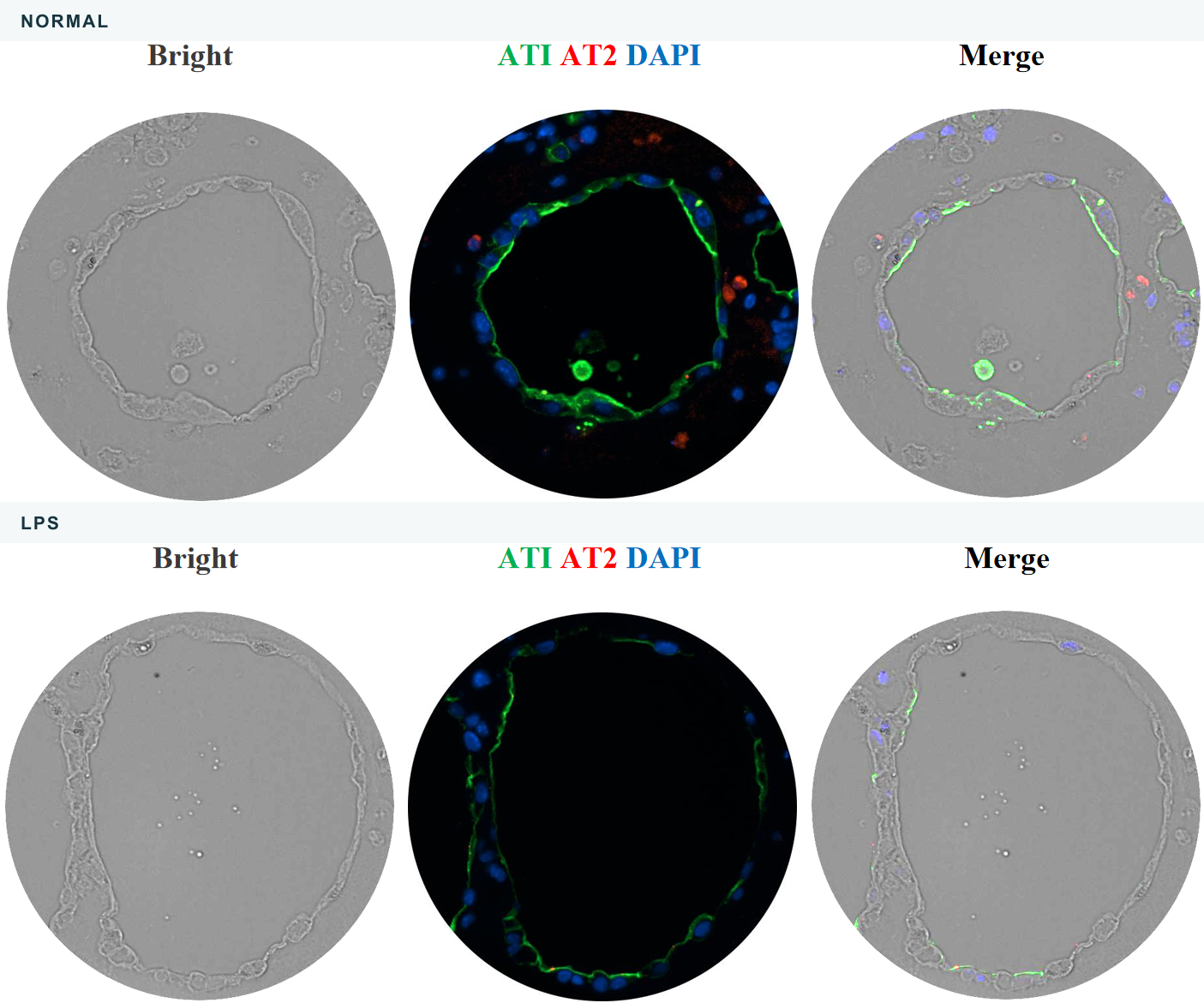
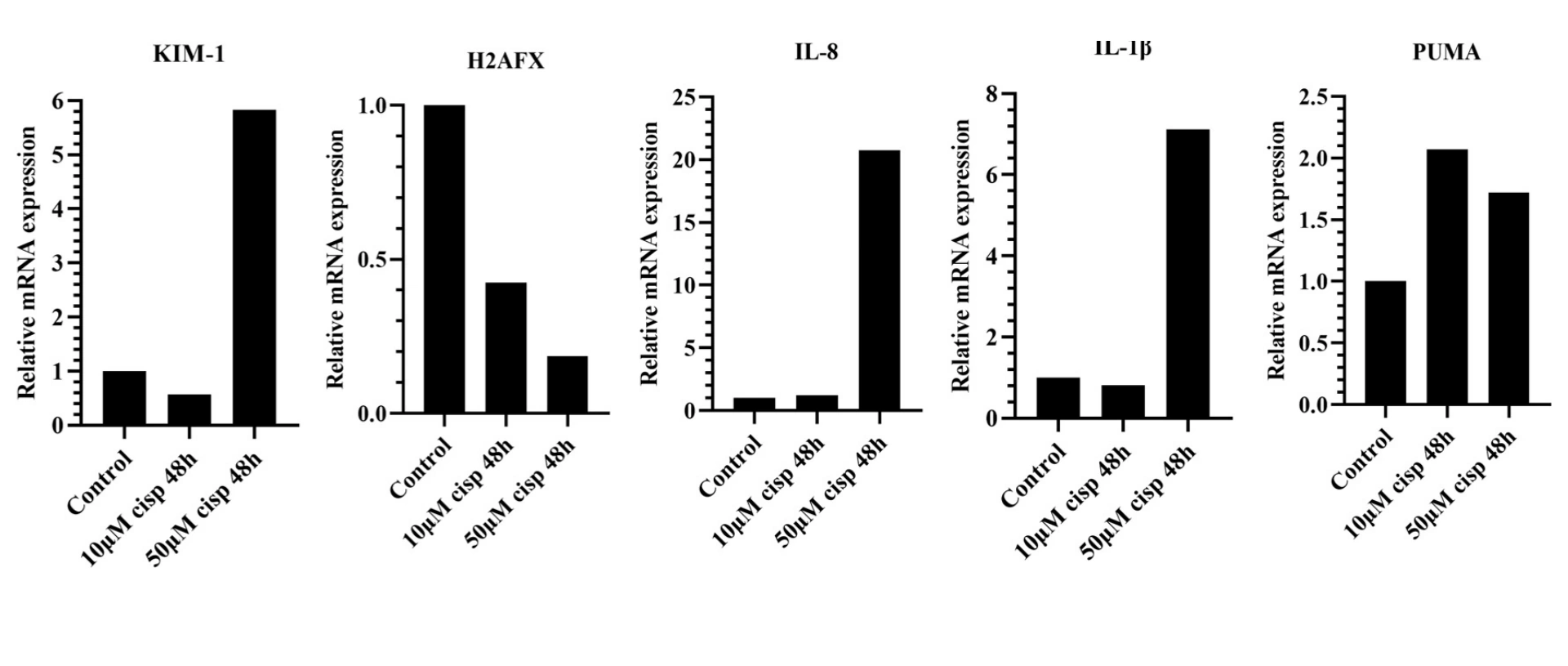
Select normal kidney, lung, liver and gastric models around program risk, using organ-specific QC and injury endpoints to build the safety study.
STUDY USESupports organ-risk assessment, exposure selection and injury-signal interpretationView study details ↗PLATFORM CAPABILITIES
Combine human models, culture systems, assays and translational extensions around the candidate mechanism and program priorities.
CAPABILITY 01
Tumor and normal-tissue organoids, PDO 2.0 and disease models.
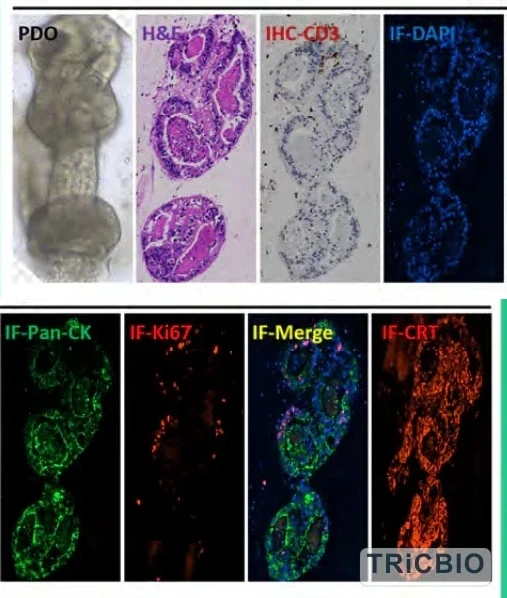
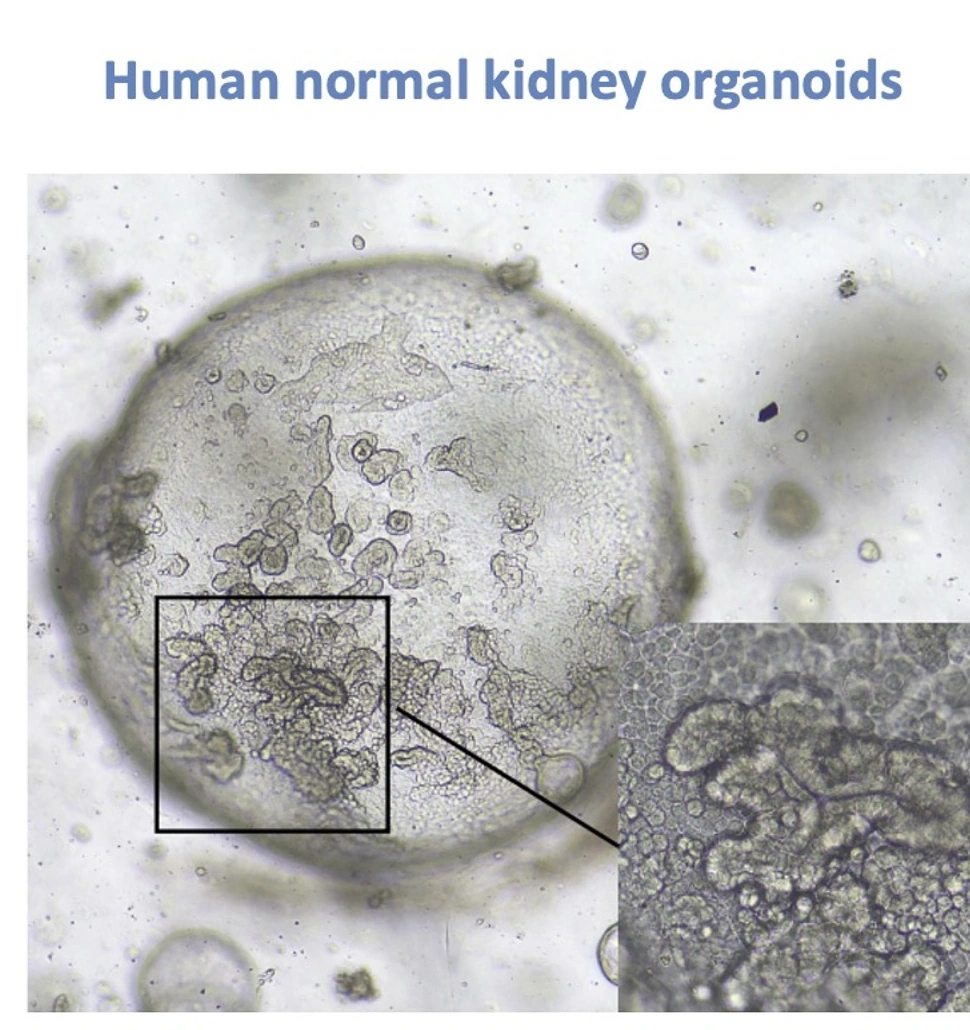
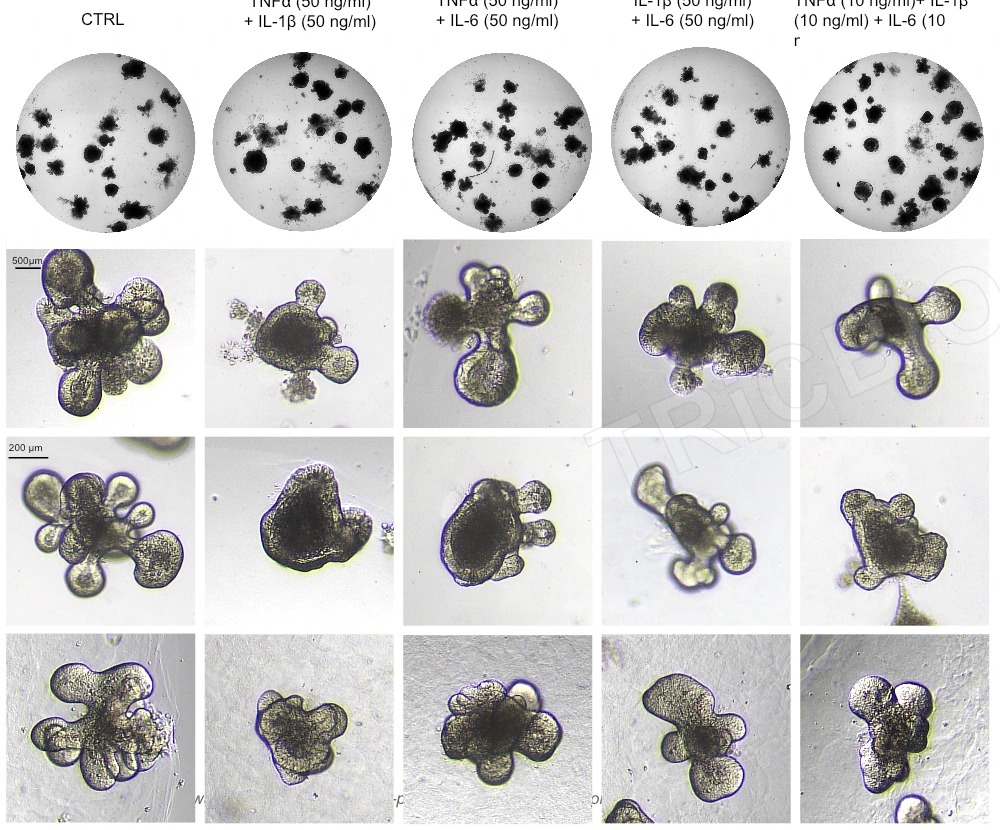
Use tumor and normal-tissue organoids plus established IBD inflammation and barrier methods for efficacy, immune and safety studies; tailor ADPKD and BBB programs to the sample, cell source and predefined endpoints.
CAPABILITY 02
ALI, screening, co-culture and study-specific systems.
Swipe to explore experimental systems · 3 capabilities
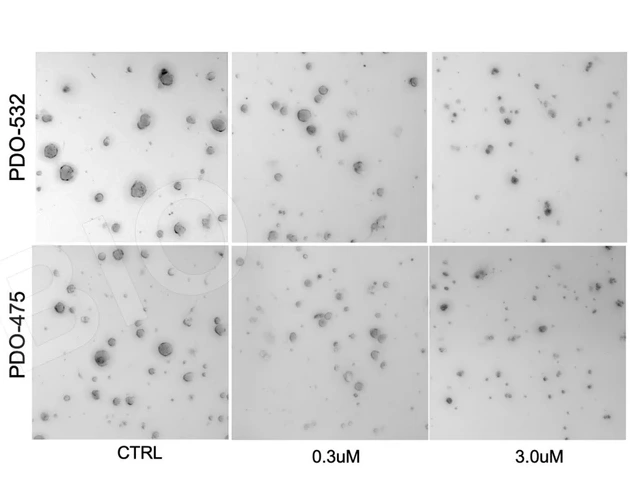 Plate-based ADC dose response | 2 breast PDO models01Screening & dose response
Plate-based dose-response studies bring model biology, dose conditions and assay endpoints into one design for candidate comparison.
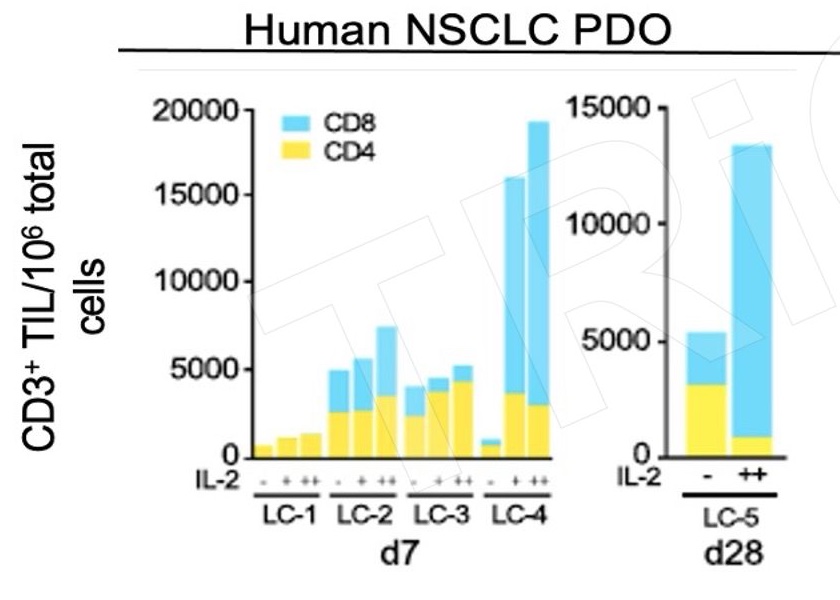 NSCLC PDO 2.0 | TIL-associated CD4/CD8 readouts02Tumor immune studies and tailored co-culture
Design co-culture and multimodal assays around tumor cells, the sample’s immune-cell context and treatment response.
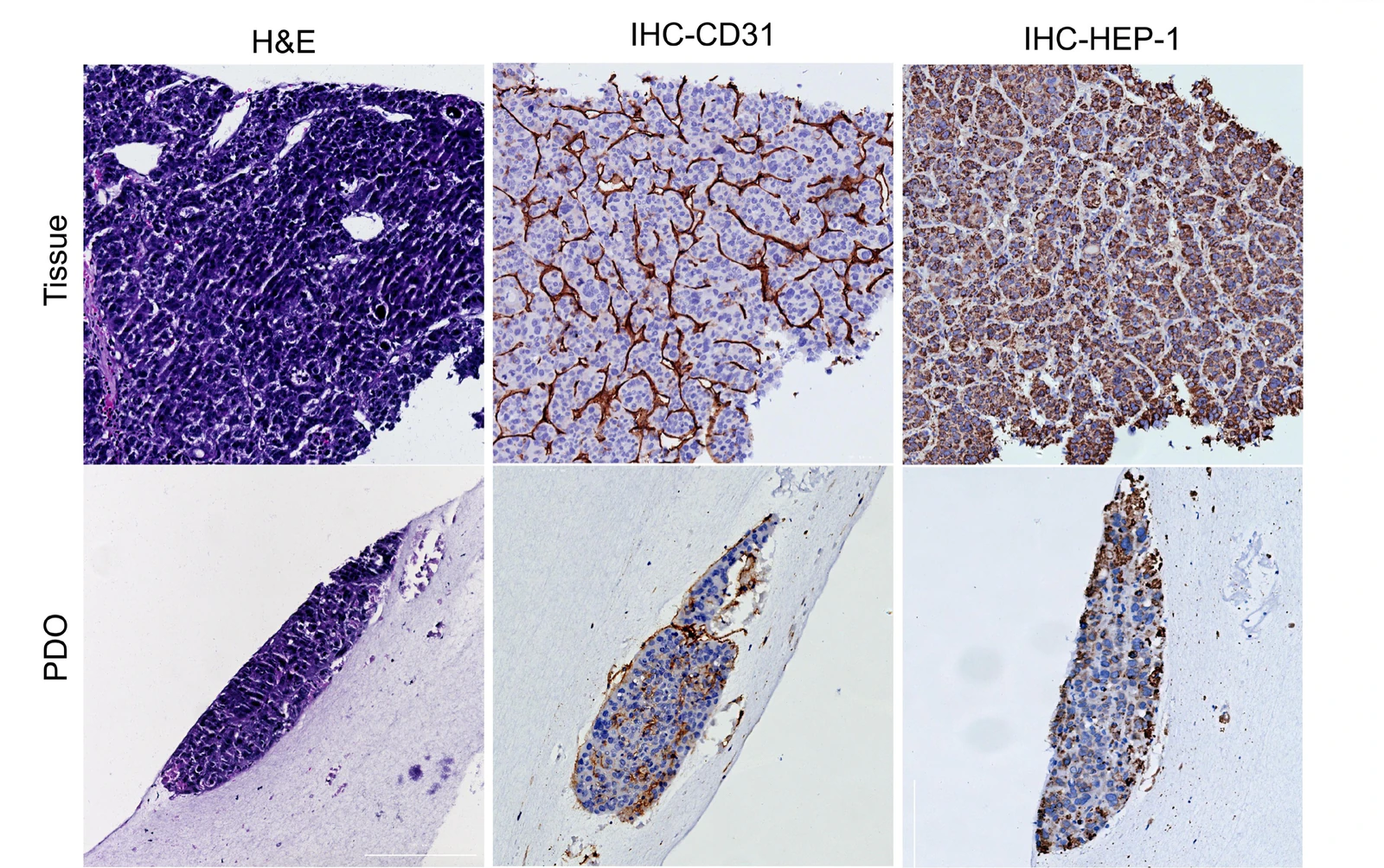 HCC tissue–PDO | H&E · CD31 · HEP-103Advanced custom co-development
Use histology, vascular markers and spatial imaging to characterize cell composition and tissue organization, then add endothelial or mural-cell co-culture and functional assays as needed.
CAPABILITY 03
Histology, imaging, flow, functional and molecular readouts.
Swipe to explore assays & analysis · 2 capabilities
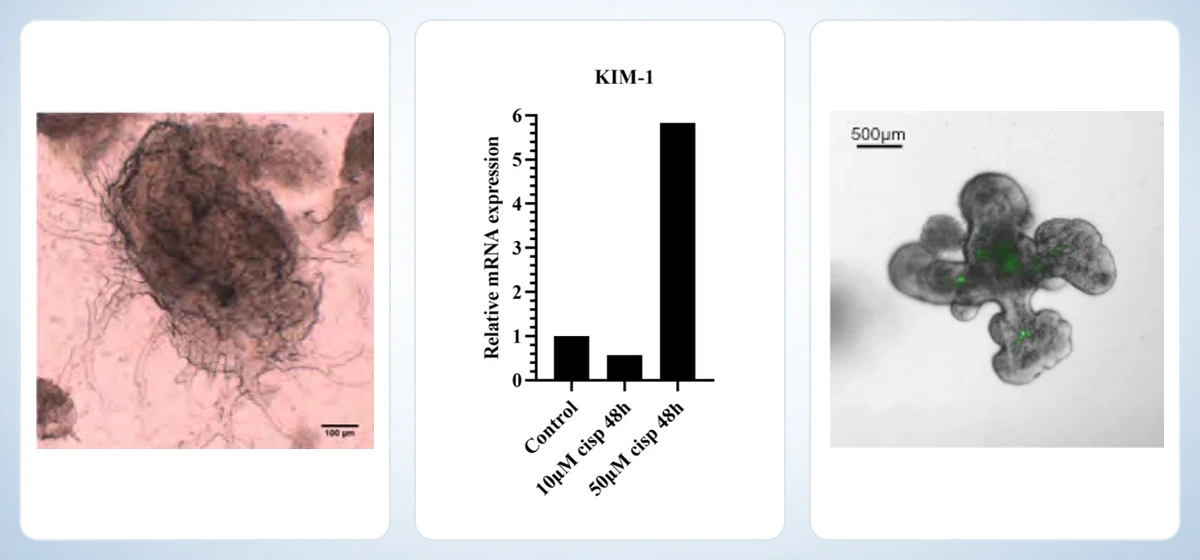 01Core platform capability
Bring model identity, batch and plate consistency, and traceable morphology, histology, molecular and functional readouts into one project-quality package.
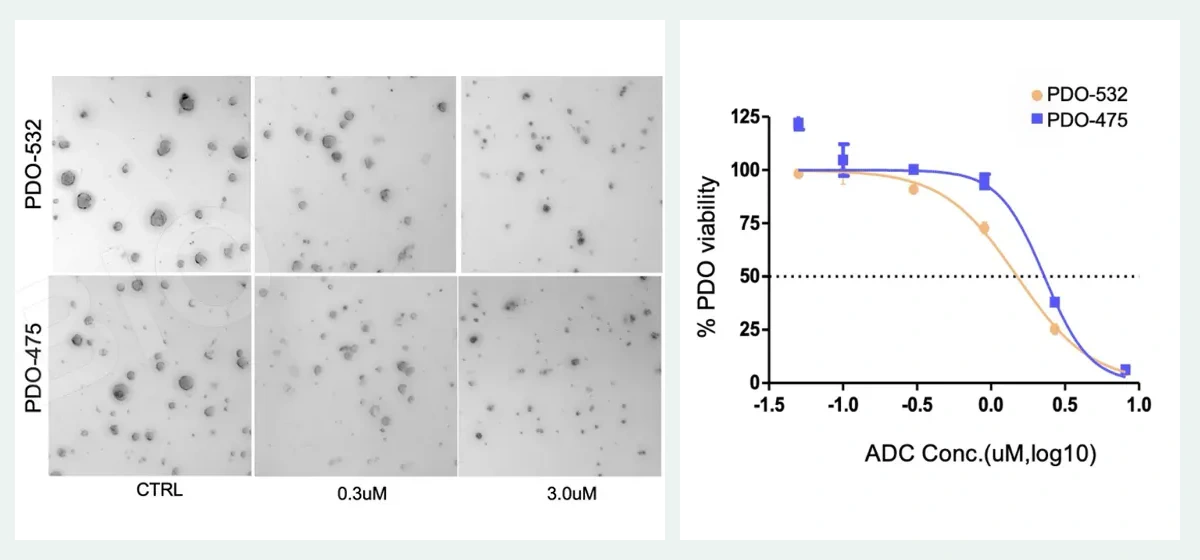 Breast cancer PDO studies | morphology + ADC dose response02Custom ADC distribution study
Compare the relative spatial distribution of candidate molecules in organoid sections alongside target expression, tissue architecture and efficacy endpoints.
CAPABILITY 04
Mechanism, genetic perturbation, PDOX and multi-omics collaboration.
Swipe to explore translational extensions · 4 capabilities
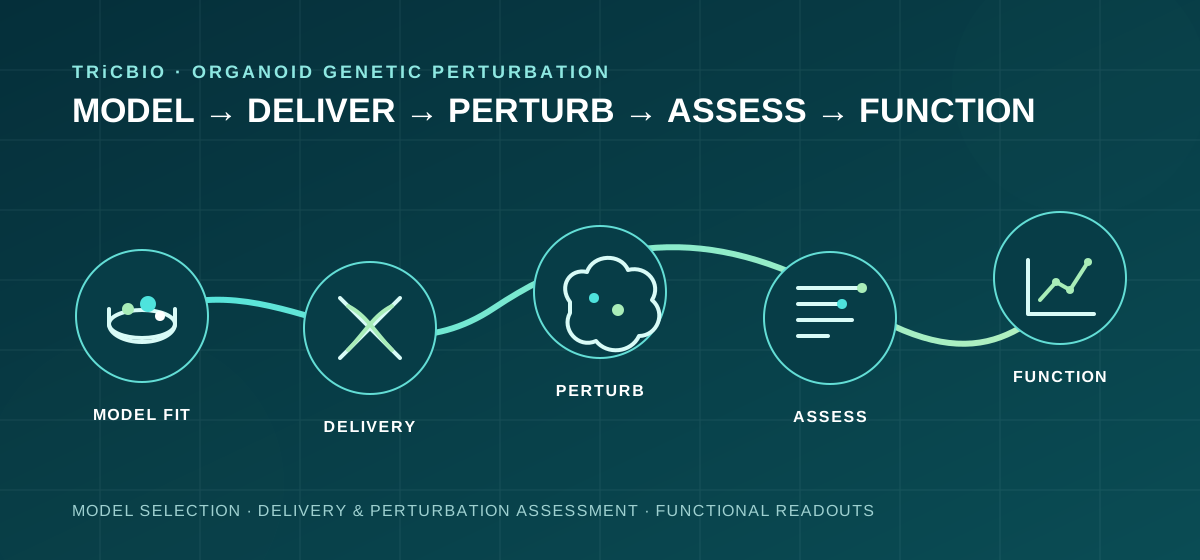 01Advanced custom functional studies
Optimize delivery, expression and editing in the target organoid, then use molecular verification and model QC to move into functional studies.
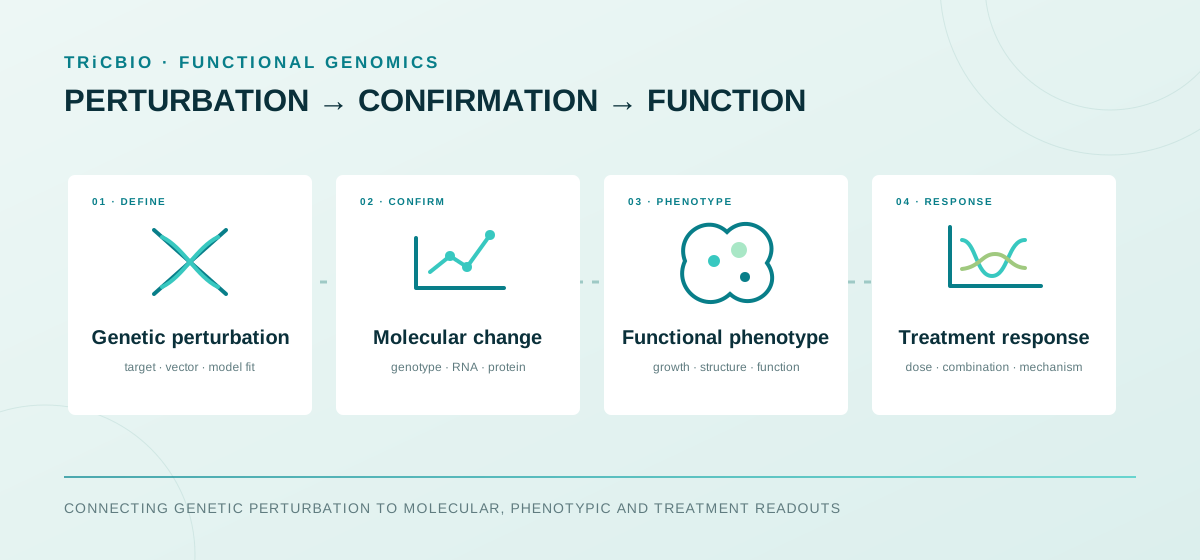 02Tailored target and mechanism studies
Start from a defined target and phenotype hypothesis, then combine genetic perturbation, pathway or omics analysis and orthogonal functional validation to interpret mechanism in a human model.
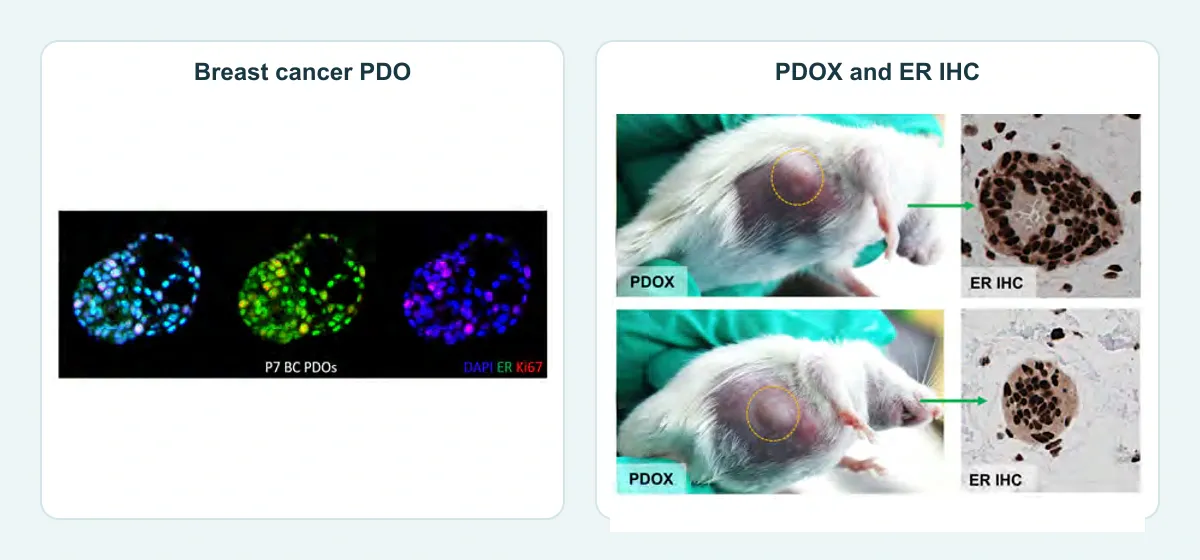 03From organoids to in vivo validation
Extend selected patient-derived organoid (PDO) findings into xenograft studies to compare tumor growth, pharmacology and mechanism-related readouts across models.
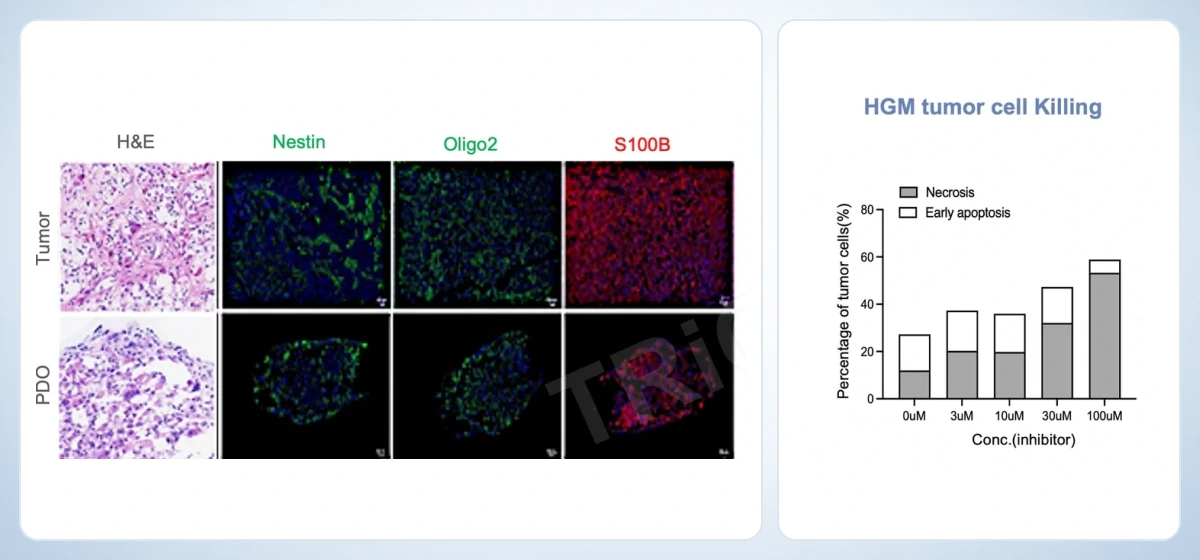 Complementary glioma studies | GBM lineage · HGM response04Human models & functional research
Interpret GBM PDO lineage profiling alongside HGM functional response to guide candidate comparison and the next model and assay choices.
EXPLORE FURTHER
Share your candidate, sample context and priority endpoints. Our scientists will recommend the right model, assay combination and follow-up plan.
TRiCBIO HUMAN ORGANOID PLATFORM
TRiCBIO combines PDO 2.0 / ALI with tumor, normal-tissue and disease organoids plus multimodal assays for candidate comparison, mechanism studies and safety assessment.
PLATFORM DESIGN
Start with the question your team needs to answer, then select the sample, model, treatment conditions and readouts at the right level of complexity for candidate comparison, mechanism assessment or the next study.
Candidate, sample context and the decision your team needs to make
Match PDO, PDO 2.0, normal-tissue or disease models with the right dose, controls and co-culture conditions
Integrate tissue, immune, functional and molecular results for candidate comparison, mechanism and safety decisions
SCIENTIFIC FOUNDATION & FIELD DEVELOPMENT
The 2018 Cell study established the ALI tumor–immune organoid foundation. Nature Reviews Cancer featured the approach as “Organoid 2.0” in 2019 and further examined its value for tumor immunity, drug development and mechanism research in a 2024 review. TRiCBIO translates this foundation into PDO 2.0 studies combining model selection, tissue imaging, flow cytometry and functional assays.
Co-first author Xingnan Li, PhD helped develop an ALI patient-derived tumor-immune organoid method for studying tumor epithelium with immune cells retained from the source sample in a three-dimensional tissue context.
Nature Reviews Cancer
DOI 10.1038/s41568-019-0108-x
Read the publisher’s article ↗WHY THIS ADVANCE MATTERS
In 2019, Nature Reviews Cancer featured the 2018 Cell ALI tumor–immune organoid study co-first-authored by Xingnan Li under the title “Organoid 2.0.” ALI brings tumor epithelium, tissue architecture and immune cells retained from the source sample into one model, extending organoid research beyond cancer cells alone to the microenvironment.
“retaining native immune cells, thereby recapitulating TME diversity”For teams studying how a candidate affects both tumor cells and their immune environment, TRiCBIO combines PDO 2.0 with tissue imaging and immune profiling to investigate activity, cellular interactions and mechanism.
Nature Reviews Cancer
DOI 10.1038/s41568-024-00706-6
Read the publisher’s article ↗WHAT IT MEANS FOR STUDY DESIGN
The 2024 review places the Cell 2018 ALI study within the development of tumor–immune organoid technology and further defines the value of source-tissue stroma, sample-associated immune cells and the tumor T-cell repertoire for checkpoint-blockade, immunotherapy and mechanism studies.
“native embedded stromal and immune cells”For immunotherapy and combination-treatment programs, TRiCBIO pairs PDO 2.0 with immune profiling and functional assays so biopharma and research teams can examine tumor responses, immune changes and candidate mechanisms together.
STUDY EVIDENCE
PDO 2.0 immune studies, antibody distribution imaging, ADC activity and normal organoid safety data support model selection, candidate comparison and organ-risk assessment.
Swipe or use arrow keys to explore more study evidence
Bring tissue architecture, immune markers and functional readouts together for immunotherapies, antibodies, TCEs and other context-dependent modalities.
STUDY USESupports model selection, TME assessment and treatment-condition comparisonView study details ↗Across two breast cancer PDO studies, AF549-labeled antibody/nanobody imaging is paired with post-treatment morphology and dose-response data to inform candidate imaging and activity-study design.
STUDY USESupports candidate comparison, dose design and follow-up mechanism workView study details ↗Select normal kidney, lung, liver and gastric models around program risk, using organ-specific QC and injury endpoints to build the safety study.
STUDY USESupports organ-risk assessment, exposure selection and injury-signal interpretationView study details ↗PLATFORM CAPABILITIES
Combine human models, culture systems, assays and translational extensions around the candidate mechanism and program priorities.
CAPABILITY 01
Tumor and normal-tissue organoids, PDO 2.0 and disease models.
Use tumor and normal-tissue organoids plus established IBD inflammation and barrier methods for efficacy, immune and safety studies; tailor ADPKD and BBB programs to the sample, cell source and predefined endpoints.
CAPABILITY 02
ALI, screening, co-culture and study-specific systems.
Swipe to explore experimental systems · 3 capabilities
Plate-based ADC dose response | 2 breast PDO models01Screening & dose responsePlate-based dose-response studies bring model biology, dose conditions and assay endpoints into one design for candidate comparison.
NSCLC PDO 2.0 | TIL-associated CD4/CD8 readouts02Tumor immune studies and tailored co-cultureDesign co-culture and multimodal assays around tumor cells, the sample’s immune-cell context and treatment response.
HCC tissue–PDO | H&E · CD31 · HEP-103Advanced custom co-developmentUse histology, vascular markers and spatial imaging to characterize cell composition and tissue organization, then add endothelial or mural-cell co-culture and functional assays as needed.
CAPABILITY 03
Histology, imaging, flow, functional and molecular readouts.
Swipe to explore assays & analysis · 2 capabilities
01Core platform capabilityBring model identity, batch and plate consistency, and traceable morphology, histology, molecular and functional readouts into one project-quality package.
Breast cancer PDO studies | morphology + ADC dose response02Custom ADC distribution studyCompare the relative spatial distribution of candidate molecules in organoid sections alongside target expression, tissue architecture and efficacy endpoints.
CAPABILITY 04
Mechanism, genetic perturbation, PDOX and multi-omics collaboration.
Swipe to explore translational extensions · 4 capabilities
01Advanced custom functional studiesOptimize delivery, expression and editing in the target organoid, then use molecular verification and model QC to move into functional studies.
02Tailored target and mechanism studiesStart from a defined target and phenotype hypothesis, then combine genetic perturbation, pathway or omics analysis and orthogonal functional validation to interpret mechanism in a human model.
03From organoids to in vivo validationExtend selected patient-derived organoid (PDO) findings into xenograft studies to compare tumor growth, pharmacology and mechanism-related readouts across models.
Complementary glioma studies | GBM lineage · HGM response04Human models & functional researchInterpret GBM PDO lineage profiling alongside HGM functional response to guide candidate comparison and the next model and assay choices.
EXPLORE FURTHER
Share your candidate, sample context and priority endpoints. Our scientists will recommend the right model, assay combination and follow-up plan.