
Candidates requiring assay development, injury-signal confirmation or mechanism work in one priority organ.
R&D service
Human organoid safety and toxicology
Focus on one priority organ with an injury assessment tailored to the model and candidate, then compare dose and exposure time and investigate the mechanism of tissue damage.
 View image
Kidney organoid safety evidence
Kidney identity, injury phenotype and molecular readouts
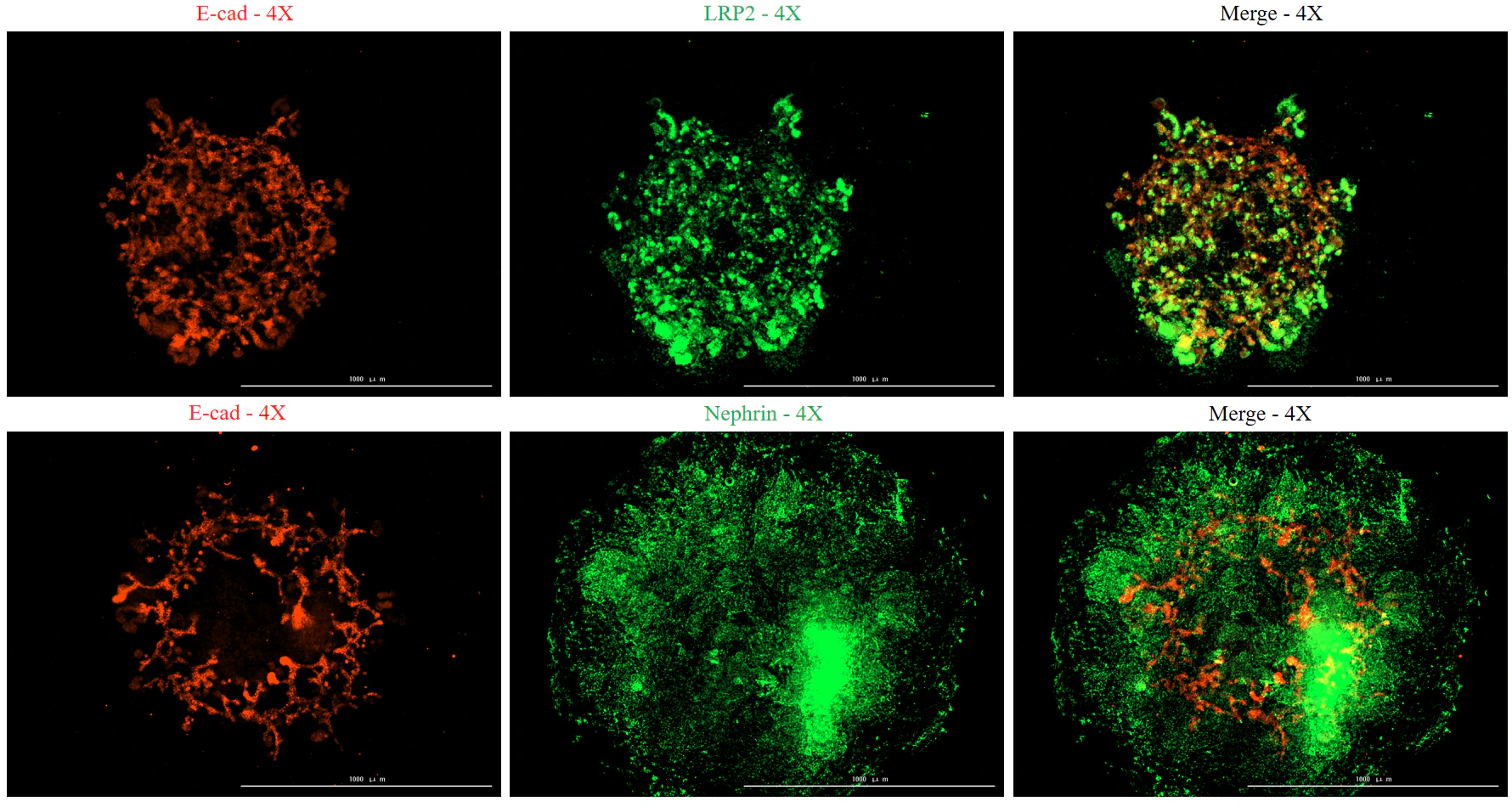
Kidney studies include identity and cisplatin molecular readouts in an H9-derived approach plus a doxorubicin acute-injury time course in human kidney organoids. Lung and other organs use organ-specific QC and endpoints selected for the project goal.
Study focus
What this study can help you decide
- 01Which injury signals emerge in the priority organ model?
- 02Which morphological, functional and molecular endpoints best characterize them?
- 03How do dose and exposure time shape injury and recovery?
STUDY APPROACH
Match the model and assays to your program
Select the normal kidney, lung or GI model, or adjacent non-tumor liver organoid, that matches the priority risk and establish organ-specific identity, batch and functional QC.
Combine viability, morphology, histology, molecular injury markers and organ-specific functional endpoints for the priority organ.
Use vehicle, organ-appropriate injury controls, batch-entry criteria and time points aligned to the exposure design.
Confirm injury signals and dose–exposure relationships in the priority organ, then define the next mechanism, recovery or in vivo study.
Study workflow
Select models and readouts around priority organ risks
We select normal-tissue models, exposure windows and complementary injury endpoints based on the candidate’s mechanism and known or anticipated organ risks.
Risk and exposure review
Review modality, target, expected exposure, known class risk and development stage.
Normal-tissue model QC
Confirm organ- and cell-type identity to establish a reliable baseline for drug-associated injury.
Dose, time and multimodal endpoints
Use dose, duration, positive and vehicle controls with morphology, viability, histology and molecular injury readouts.
Interpretation and next step
Compare in vitro injury trends and response windows, then prioritize signals for mechanistic or cross-model follow-up.
Study images and readouts
Connect model identity to organ-injury readouts
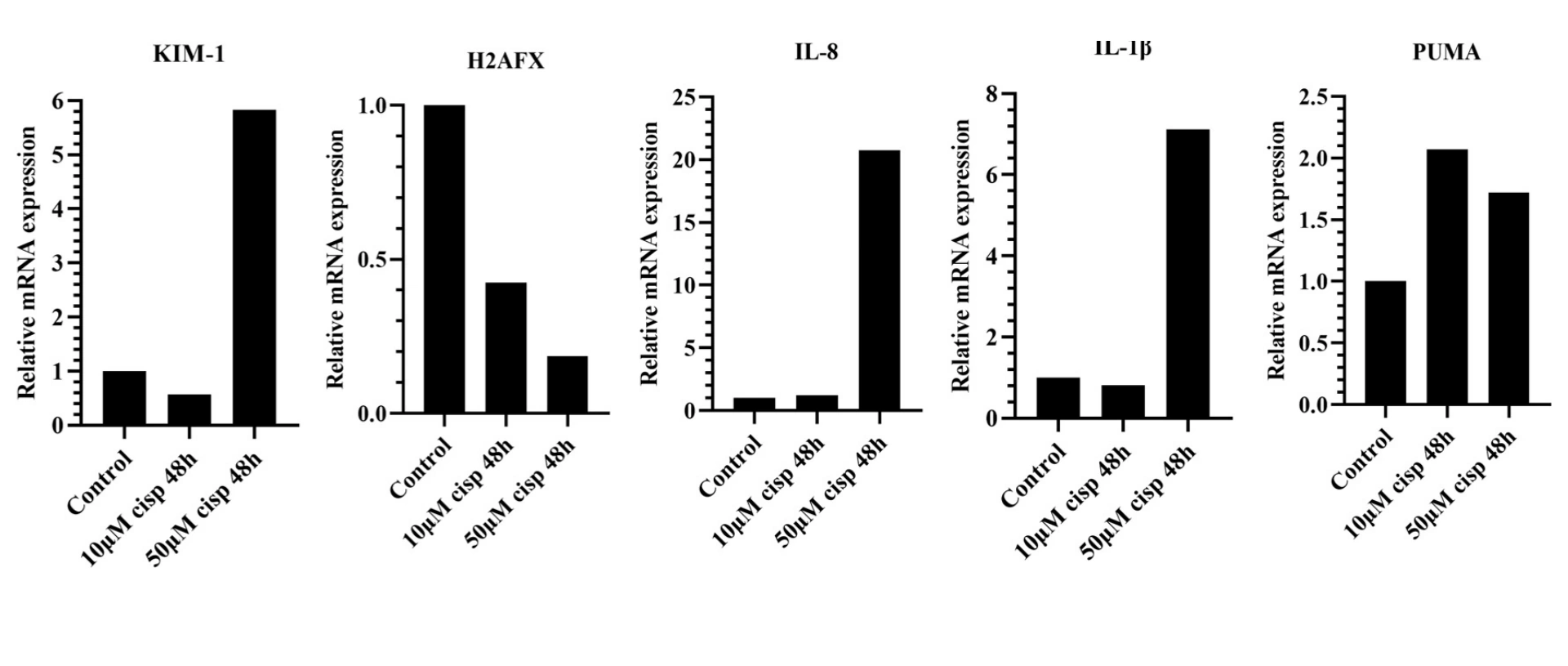
Nephron identity markers and drug-injury qPCR readouts combine structural and molecular evidence for selecting exposure conditions and follow-up injury endpoints.
 View image
H9-derived | cisplatin molecular response: RT-qPCR profiles KIM-1, H2AFX and inflammation/stress-related genes across cisplatin conditions, helping prioritize kidney-injury biomarkers and define follow-on dose, timing and confirmatory assays.
TRiCBIO H9-derived kidney organoid cisplatin studyView the kidney organoid injury study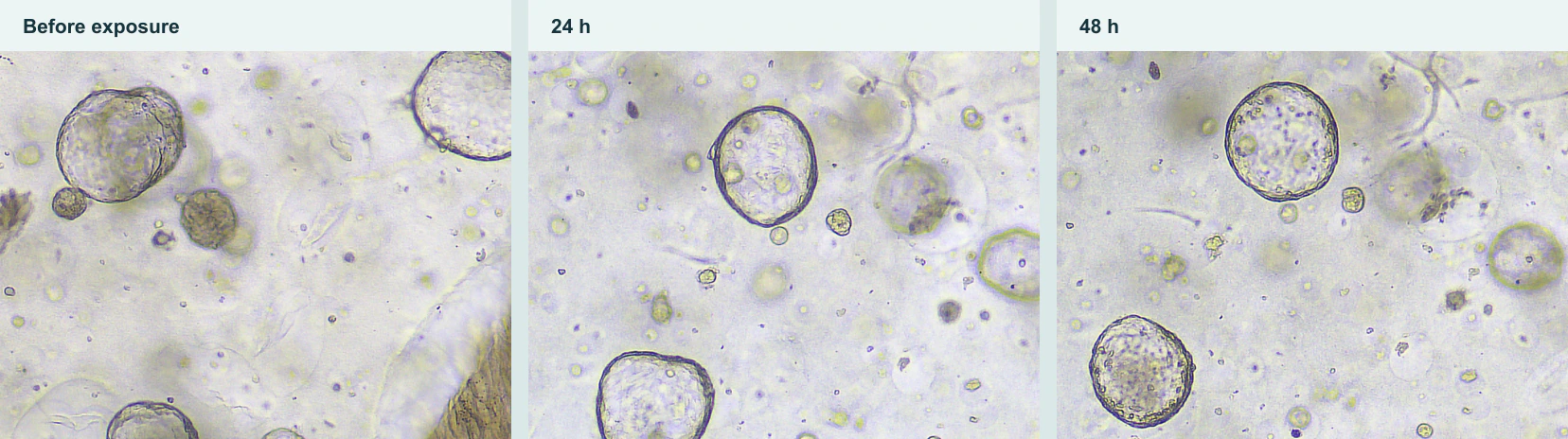 View image
Injury study | serial morphology: fields acquired before exposure and at 24 and 48 hours provide temporal context for injury observation and downstream assay timing.
Study dataExpected study outputs
What you receive
Normal-tissue model and batch QC
Model identity, baseline morphology and batch-level QC results against the criteria agreed for the study.
Exposure and injury readouts
Dose and time conditions, controls, viability, morphology and molecular injury readouts.
Safety-study report
An integrated view of risk signals, study context and recommended follow-up studies.
Relevant model systems
Recommended model systems
Select normal-tissue models, batch QC, exposure conditions and injury endpoints around the candidate and priority organ risks. Use the results to compare candidates and doses, identify early risk signals and inform subsequent GLP or regulatory toxicology studies.
PROJECT DISCUSSION
Plan a normal organoid safety study
Candidate modality, expected exposure, priority organ risks and available safety findings guide the choice of normal-tissue models, dosing and injury endpoints.