
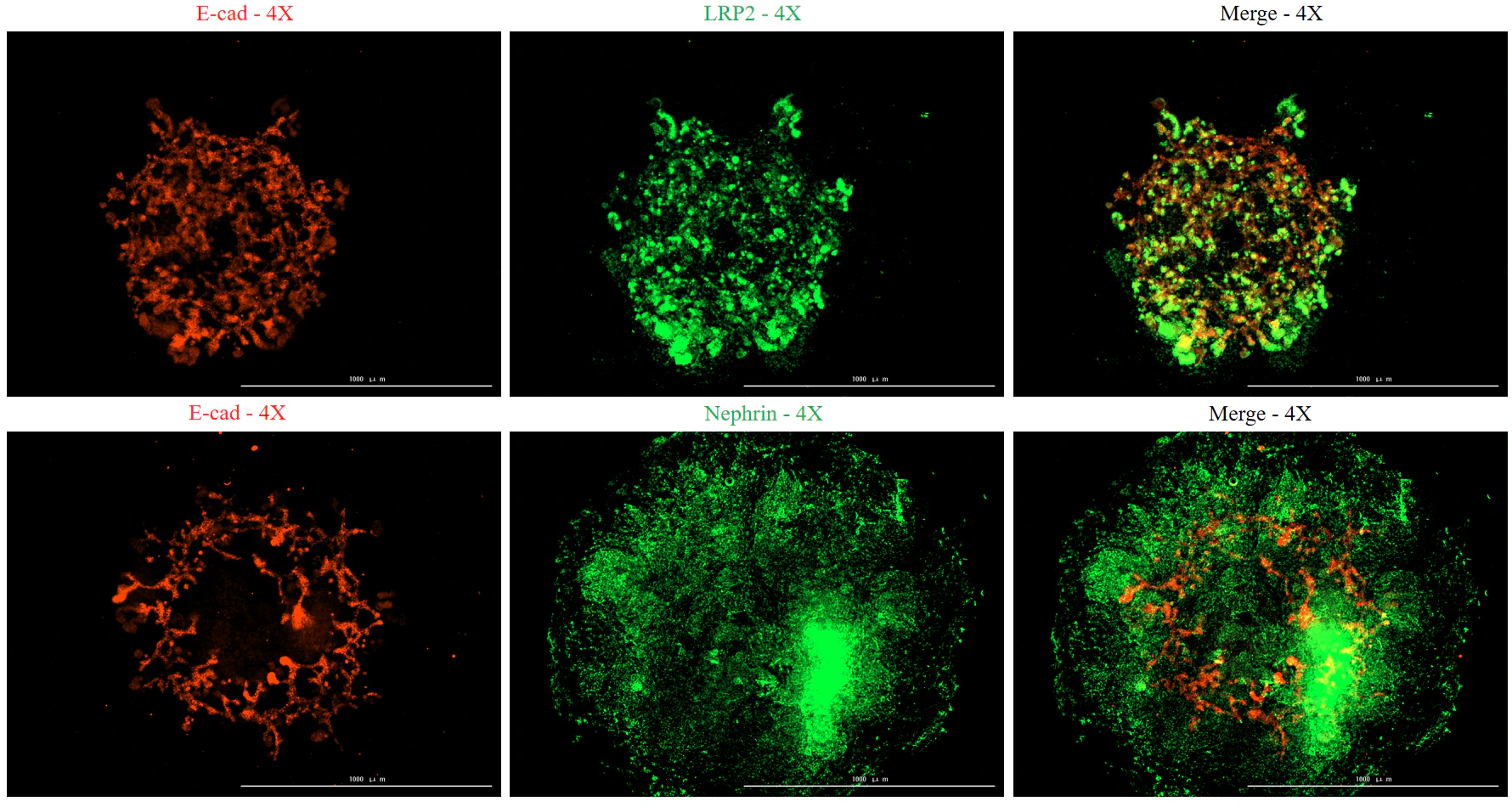
Morphology with nephron markers including LRP2, E-cadherin and Nephrin.
Human kidney organoids
Assess drug-related kidney injury using morphology, nephron markers and molecular readouts; the culture approach is selected by compound mechanism and priority endpoint.
E-cadherinLRP2NephrinLTL
Model source
Two study approaches: H9 human embryonic stem cell (hESC)-derived kidney organoids for nephron identity and cisplatin molecular readouts; a human kidney organoid drug-injury system for doxorubicin morphology time-course studies
Culture / format
24-well · 96-well adaptable
Supporting evidence
H9-derived kidney organoid identity and cisplatin molecular readouts, plus human kidney organoid doxorubicin-injury study data
IN CULTURE
Following kidney organoids through culture
These bright-field images show the culture phase of TRiCBIO’s human kidney organoid establishment and acute-injury study, following morphology and lumen- and tubule-like structures from day 2 to day 34. Together with histology and marker profiling, they help select culture stages for injury studies.
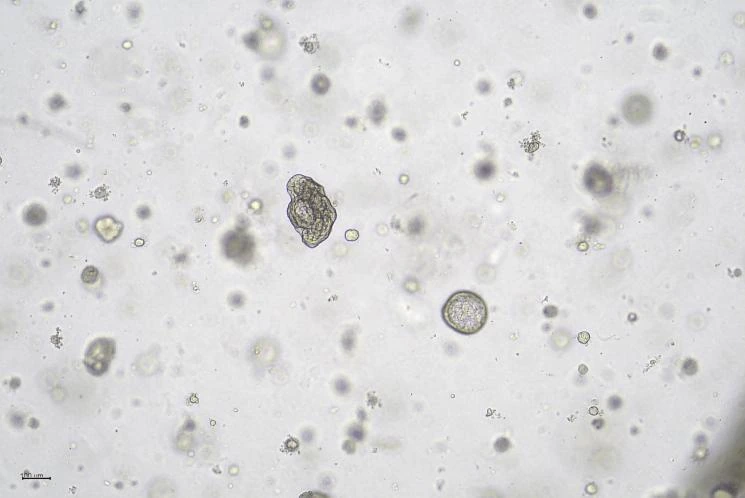 View image
Day 2 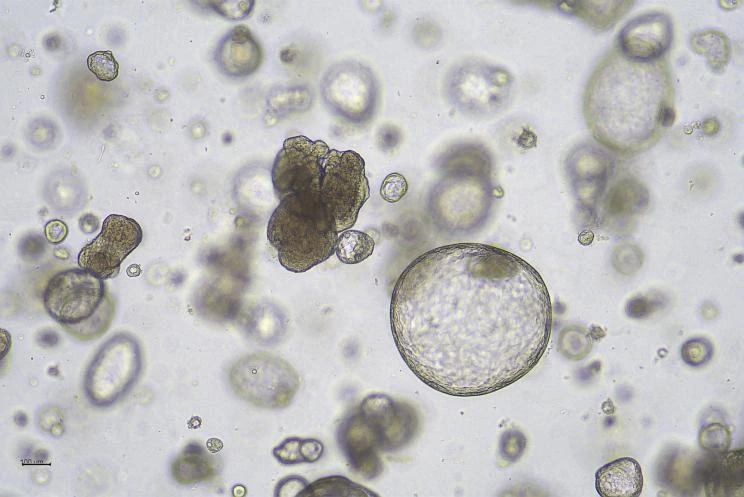 View image
Day 12 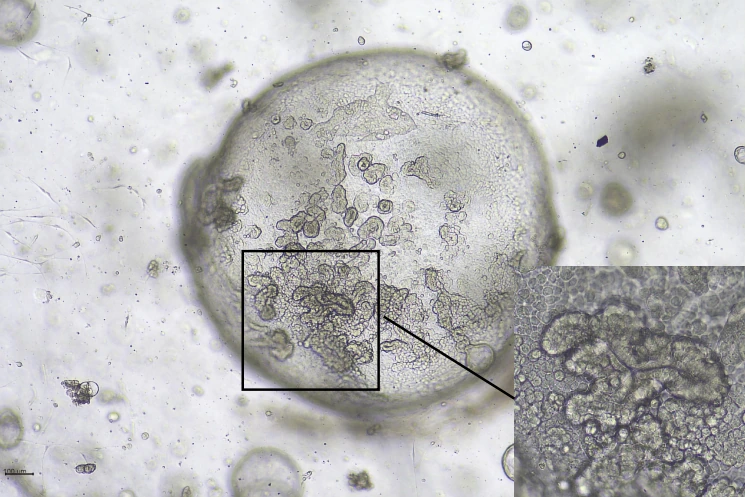 View image
Day 18 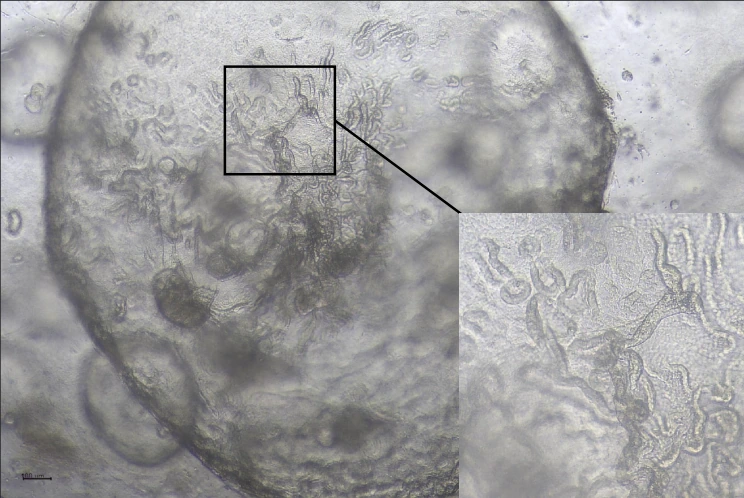 View image
Day 23 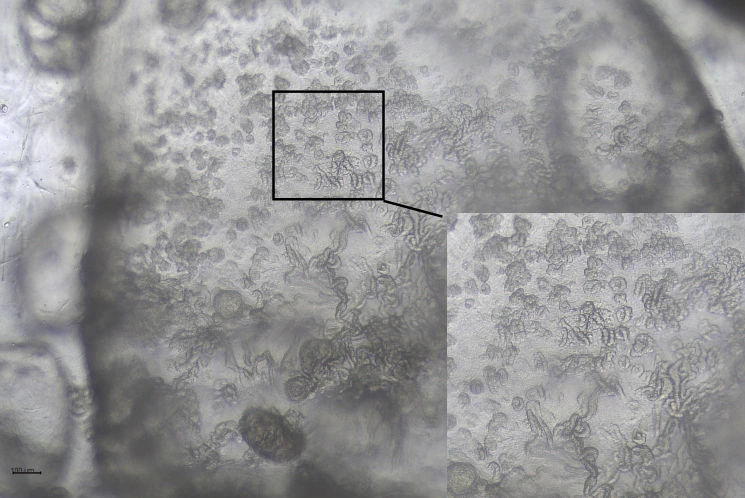 View image
Day 28 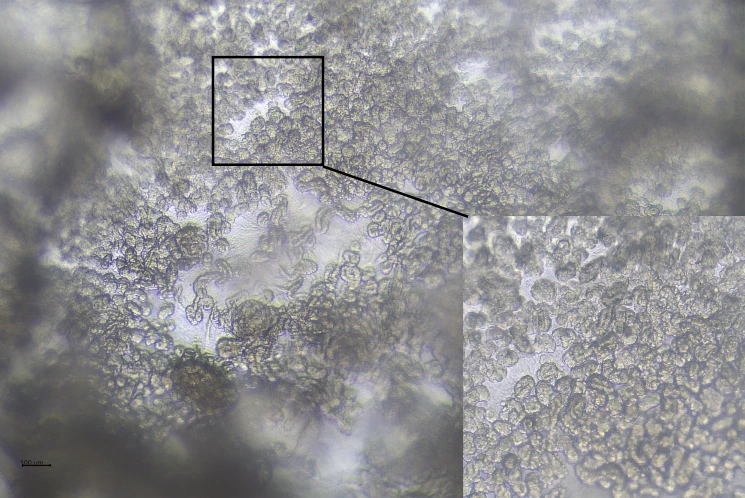 View image
Day 34
Kidney organoid culture series · Bright-field microscopy
Model characterization
Nephron profiling and injury readouts
Identity profiling and cisplatin molecular readouts from H9 human embryonic stem cell (hESC)-derived organoids complement the doxorubicin injury time course in human kidney organoids.
 View image
Model identity: E-cadherin, LRP2 and Nephrin characterize nephron-associated cells and structures.
Study data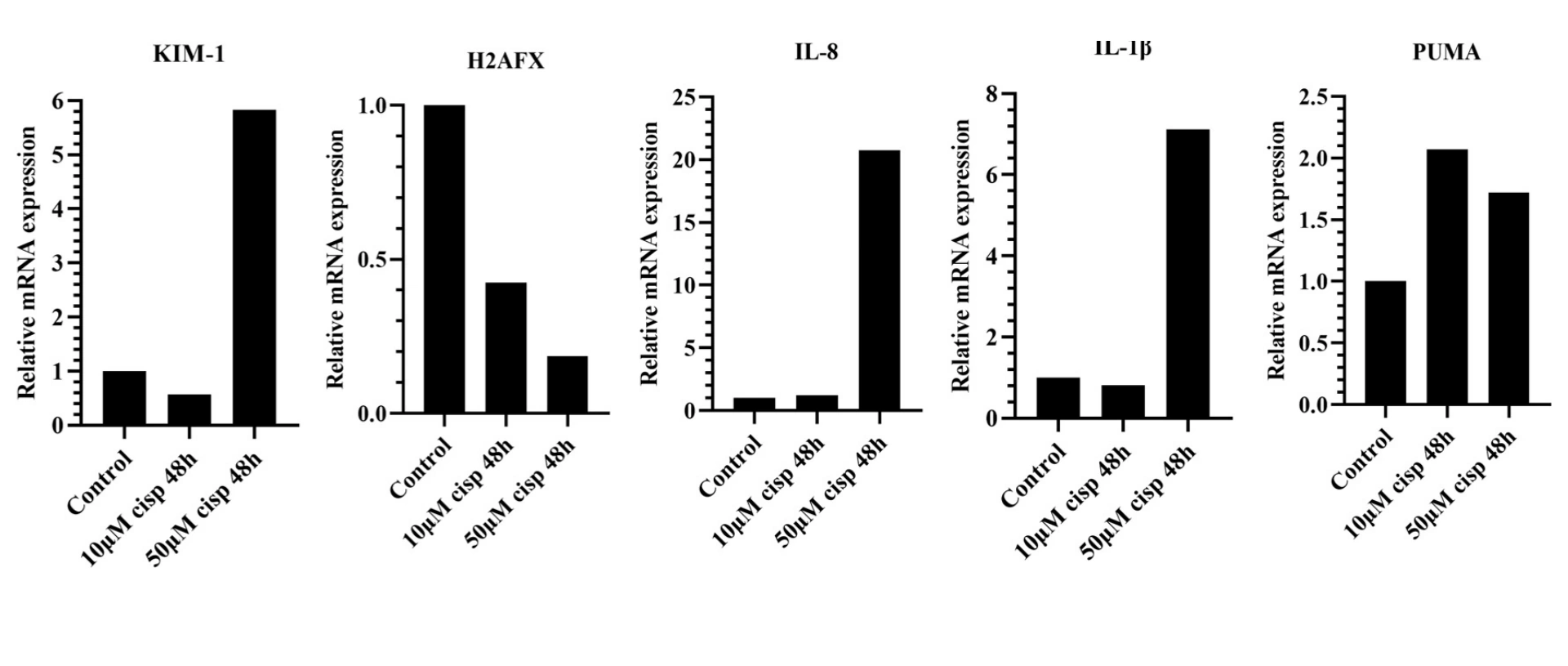 View image
H9-derived | cisplatin molecular response: RT-qPCR profiles KIM-1, H2AFX and inflammation/stress-related genes across cisplatin conditions, helping prioritize kidney-injury biomarkers and define follow-on dose, timing and confirmatory assays.
TRiCBIO H9-derived kidney organoid cisplatin study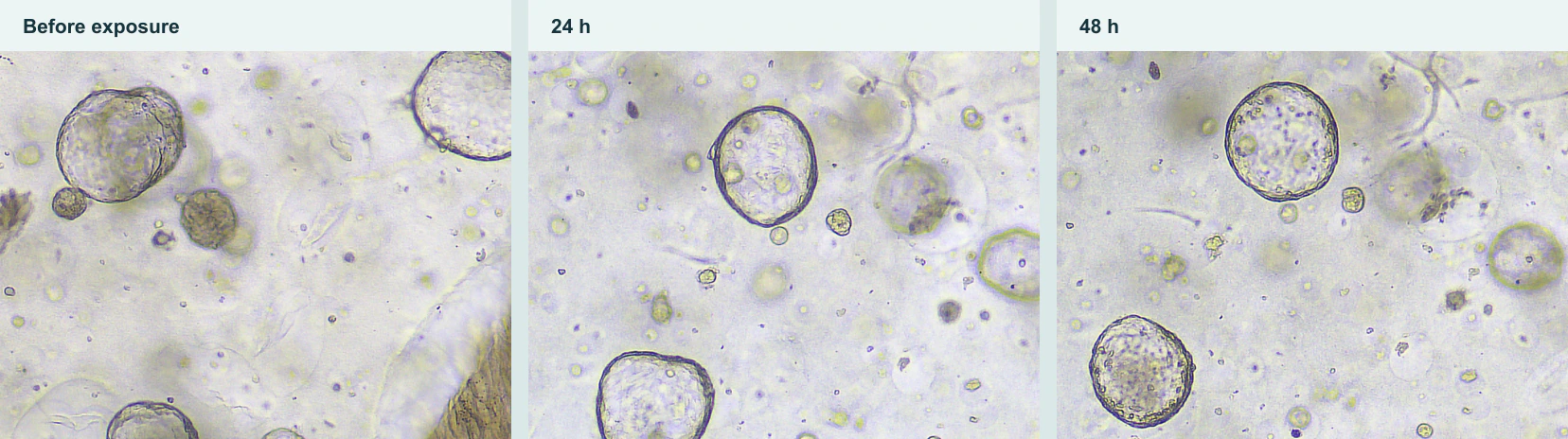 View image
Injury study | serial morphology: fields acquired before exposure and at 24 and 48 hours provide temporal context for injury observation and downstream assay timing.
Study dataModel documentation
Model profile and available documentation
Injury morphology, viability, KIM-1 and study-specific endpoints.
Nephron-identity and drug-injury data support organoid-based kidney safety studies, with morphology, identity and functional QC established for each study batch.
Differentiation/culture records, identity and injury summary, batch QC and study data.
Study planning
From study objective to model and assay plan
Candidate exposure and the priority organ-safety or functional endpoints shape the model conditions, dosing and readouts.
Candidate and exposure
Modality, concentration range, exposure time and control conditions.
Safety or functional focus
Priority organ-injury, efficacy or functional endpoints, together with the readouts needed to interpret them.
Model and deliverables
Required culture format, study batches, raw data, images and reporting needs.
Study design
Build an interpretable injury assessment from nephron identity
Kidney safety studies first establish tubular epithelial, proximal tubule and podocyte features, then compare morphology, viability and molecular injury after exposure.
Model identity and study suitability
Use E-cadherin, LRP2 and Nephrin with H&E and morphology to assess epithelial, proximal tubule and podocyte features before study entry.
Dose and exposure window
Set concentration, duration, positive and vehicle controls around candidate risk and development stage.
Look for a coherent injury signal
Compare morphology, viability, KIM-1, H2AFX and inflammation or stress readouts to build a coherent injury signal.
Interpret trends and research priorities
Describe dose- and time-associated in vitro injury trends and response windows, then prioritize signals for mechanism work.
Research applications
Recommended applications
- Nephrotoxicity and in vitro injury-response windows
- Acute kidney injury mechanisms
- Injury biomarkers
Assays & QC
Organ identity, injury and functional readouts
Key markers
E-cadherinLRP2NephrinLTL
Available assays
- IF / H&E
- RT-qPCR
- Viability
- Morphology
QC approach
The H9-derived approach uses E-cadherin, LRP2 and Nephrin to establish nephron-associated identity; the human kidney organoid drug-injury study uses Nephrin, LTL and morphology to establish its baseline.
Study & delivery
Exposure design, organ-specific endpoints and reporting
Choose a supplied model or a TRiCBIO-run dosing study. Typical deliverables include model provenance and QC records, images, molecular data and an analysis report; culture format, scale and timeline are defined in the study plan.
Related solutions
Related study options
PROJECT DISCUSSION
Discuss a human kidney organoids study
Candidate profile, expected exposure and priority organ risk determine dose conditions, controls and injury or functional endpoints for the human kidney organoids.