
Serial culture with ATII, club-cell and basal-cell profiling.
Normal lung organoid
Human lung organoids for pulmonary-injury and candidate studies, combining airway and alveolar cell profiling with changes in tissue morphology.
SCGB1A1 (CC10)KRT5LysoTracker / ATIIAT1 / AT2
Model source
Human lung tissue, with source details selected for the study objective
Culture / format
3D culture · Multiwell adaptable
Supporting evidence
TRiCBIO normal-lung serial culture, airway/alveolar-associated phenotypes and LPS injury study data
Model characterization
From model identity to an LPS injury study
ATII-associated LysoTracker signal, SCGB1A1 (CC10) and KRT5 profiling characterize alveolar- and airway-associated phenotypes; serial morphology and AT1/AT2 readouts guide observation timing and injury endpoints under LPS conditions.
MODEL IDENTITY
Alveolar- and airway-associated phenotypes
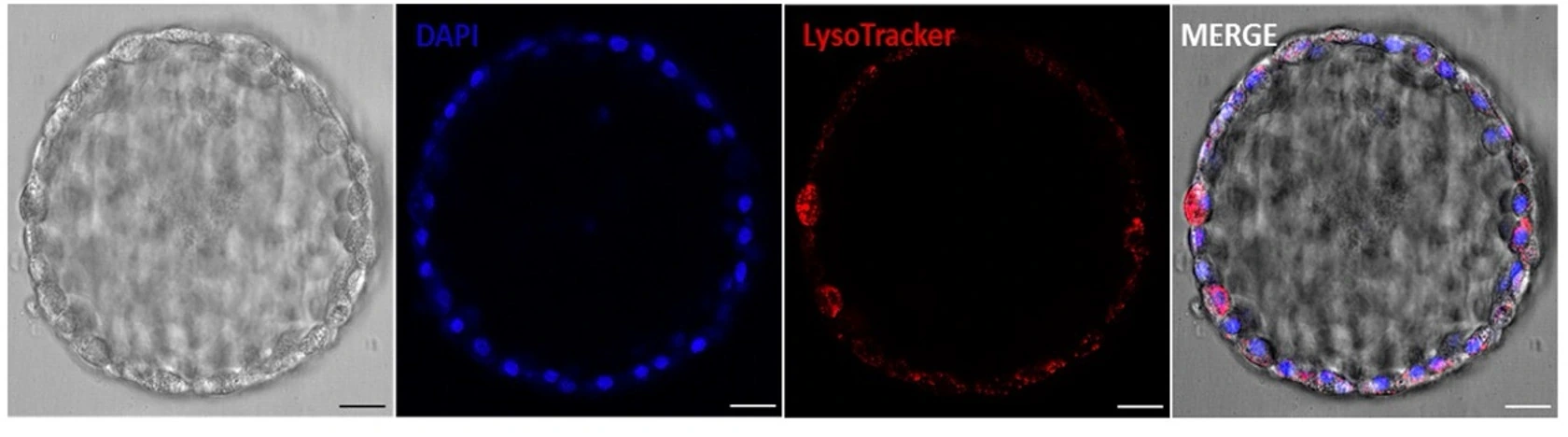
ATII-associated LysoTracker signal and SCGB1A1 (CC10)/KRT5 immunofluorescence characterize alveolar- and airway-associated phenotypes for model QC and endpoint selection.
 View image
Alveolar model profiling: bright-field, DAPI, LysoTracker and merged views show alveolar organoid morphology and ATII-associated acidic-organelle signal for model QC and endpoint selection.
Study data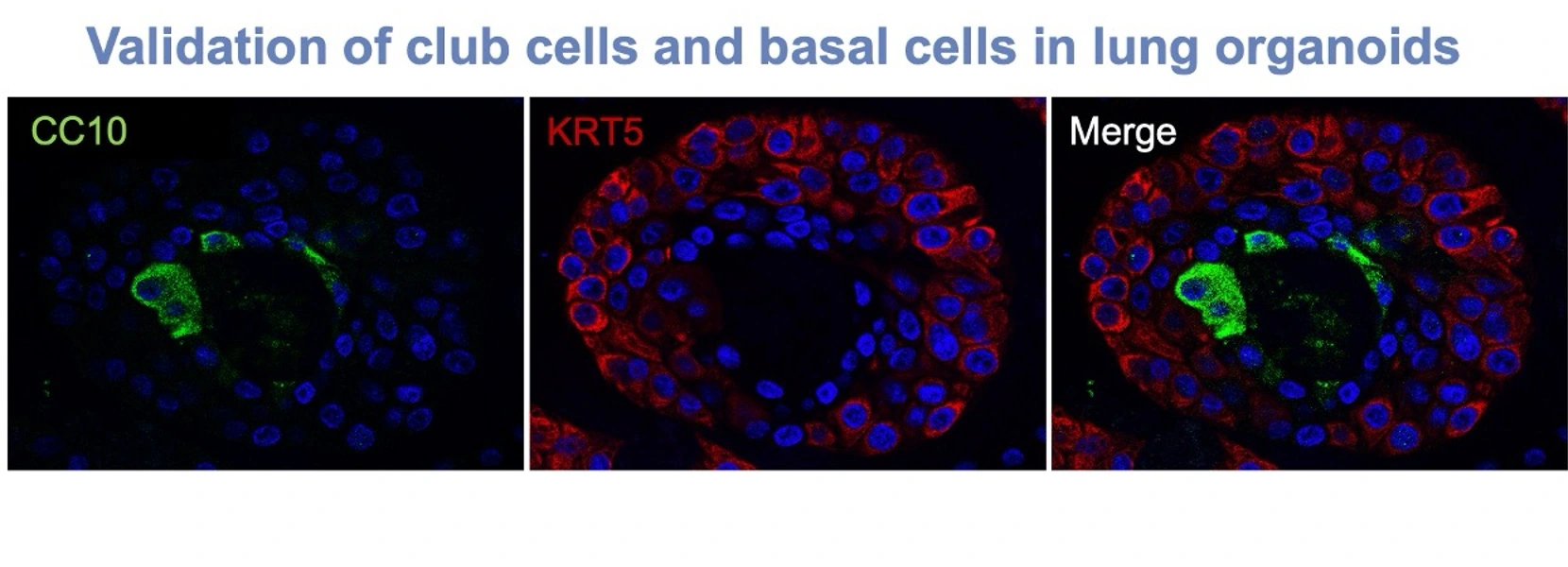 View image
Airway profiling: SCGB1A1 (CC10) and KRT5 immunofluorescence provide club-cell and basal-cell context for airway epithelial QC and study endpoints.
Study dataINJURY STUDY
Observation timing and alveolar endpoints under LPS
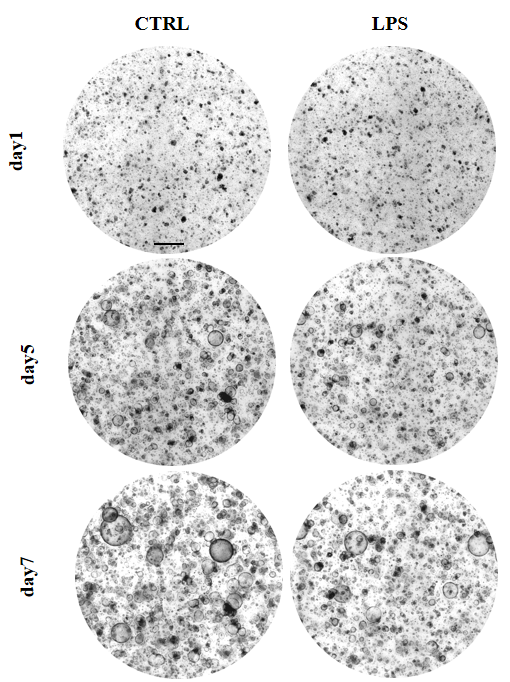
Serial morphology and AT1/AT2 profiling provide an integrated LPS-injury design for selecting observation timing, comparison conditions and quantitative follow-on endpoints.
 View image
Injury-study window: bright-field views under control and LPS conditions on days 1, 5 and 7 guide observation timing and follow-on quantitative endpoints.
TRiCBIO normal-lung organoid LPS injury study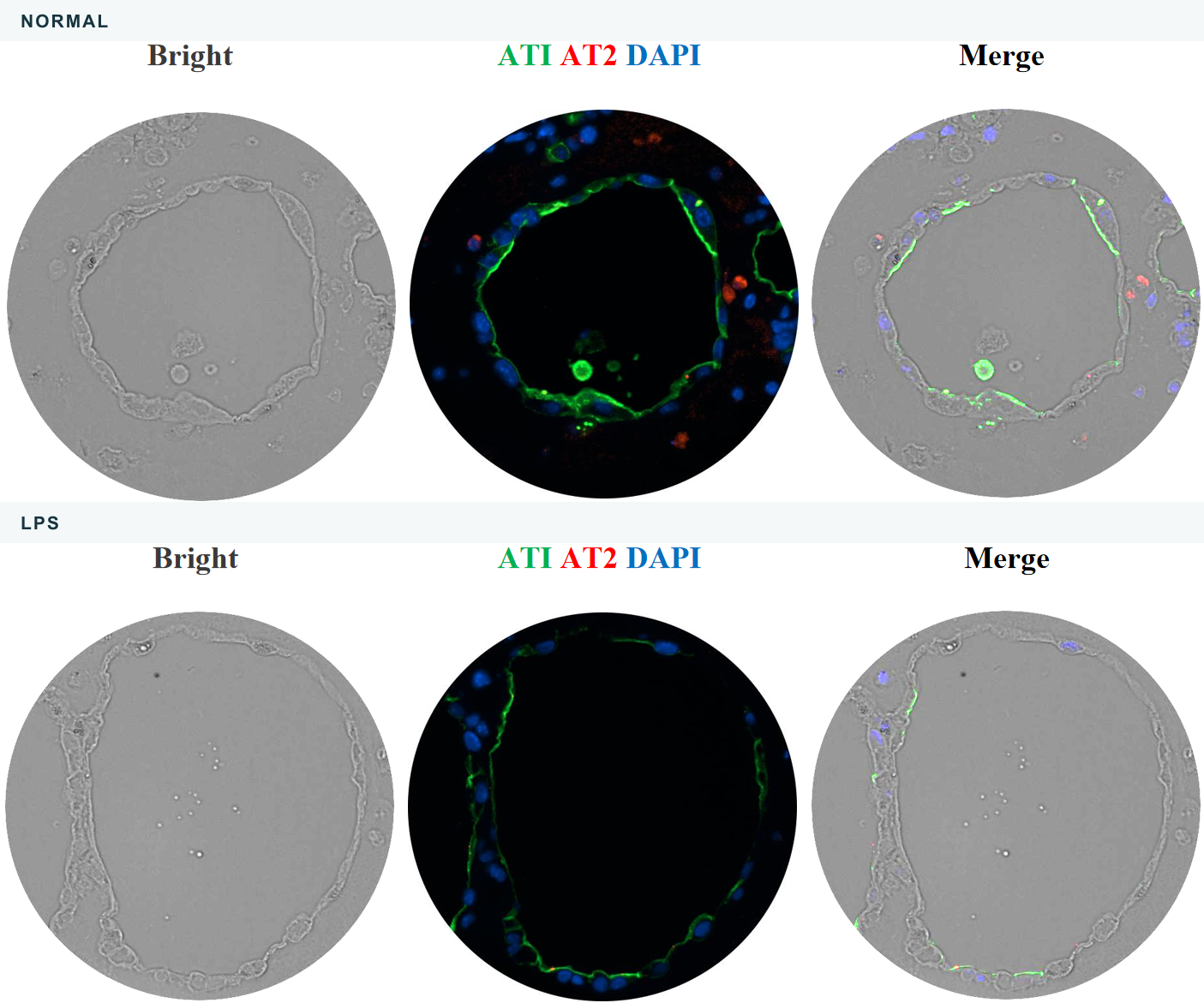 View image
Alveolar endpoints: normal and LPS conditions are compared through bright-field, AT1, AT2, DAPI and merged views, connecting the injury condition with alveolar-cell profiling.
TRiCBIO normal-lung organoid LPS injury studyModel documentation
Model profile and available documentation
Injury, repair, viability and respiratory efficacy or safety endpoints are selected for each study.
Serial culture, live-cell and marker data support functional assays or extended culture studies tailored to the objective.
Culture and identity summary, batch QC, images/data and study report.
Study planning
From study objective to model and assay plan
Candidate exposure and the priority organ-safety or functional endpoints shape the model conditions, dosing and readouts.
Candidate and exposure
Modality, concentration range, exposure time and control conditions.
Safety or functional focus
Priority organ-injury, efficacy or functional endpoints, together with the readouts needed to interpret them.
Model and deliverables
Required culture format, study batches, raw data, images and reporting needs.
Study design
Configure lung organoid studies for airway, alveolar or injury-repair questions
Normal-lung studies begin with tissue source, target cell type and candidate risk before selecting culture and readouts.
Confirm tissue source
Confirm the specific non-tumor lung-tissue source, sampling site, pathology context, sample condition and intended use for each study.
Profile relevant cell types
Assess alveolar- and airway-associated cell features and culture quality using morphology, SCGB1A1 (CC10), KRT5 and ATII-associated LysoTracker signal.
Set exposure and controls
Set dose, timing and controls around efficacy, pulmonary injury or repair.
Interpret in context
Interpret morphology, viability, cell type and program endpoints together.
Research applications
Recommended applications
- Respiratory efficacy studies
- Pulmonary toxicity and injury
- Epithelial state and repair
Assays & QC
Organ identity, injury and functional readouts
Key markers
SCGB1A1 (CC10)KRT5LysoTracker / ATIIAT1 / AT2
Available assays
- IF
- Live-cell tracking
- Viability
- Morphology
QC approach
Batch QC combines airway and alveolar markers, morphology and live-cell readouts.
Study & delivery
Exposure design, organ-specific endpoints and reporting
Choose a supplied model or a TRiCBIO-run study. Typical deliverables include imaging, endpoint results and a study report.
Related solutions
Related study options
PROJECT DISCUSSION
Discuss a normal lung organoid study
Candidate profile, expected exposure and priority organ risk determine dose conditions, controls and injury or functional endpoints for the normal lung organoid.