
Advanced custom functional studies
Genetic perturbation in organoids
Evaluate gene delivery, expression or perturbation in organoid models, then connect molecular confirmation with functional phenotypes and treatment response.
Delivery & expression
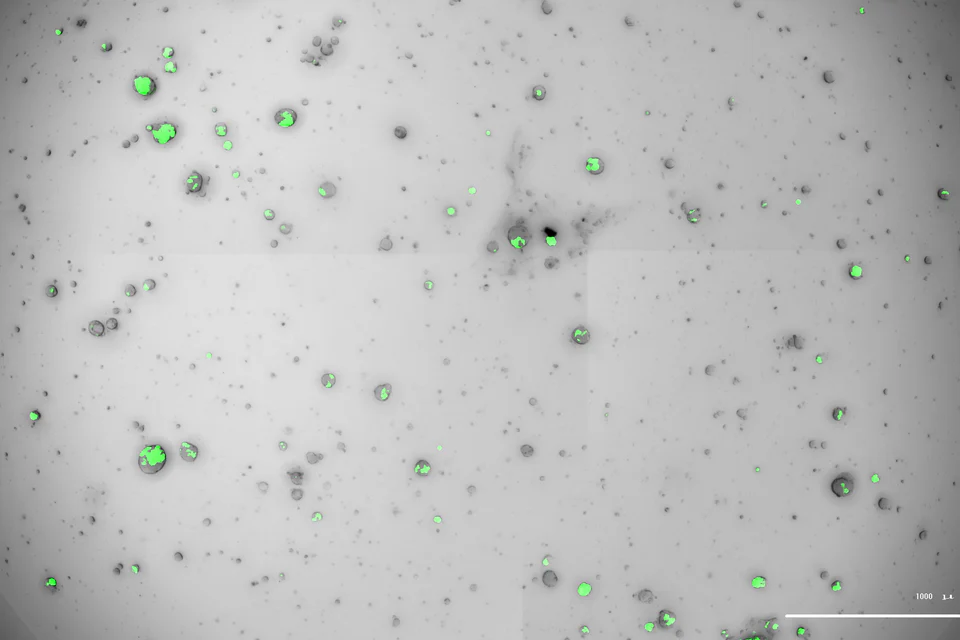
Lentiviral delivery and day-3 expression in HCC organoids
Day-3 bright-field and fluorescence images show lentiviral expression under control and lncRNA shRNA conditions, with molecular, phenotypic and treatment-response assays available for follow-on studies.
 View image
Brightfield and green-fluorescence overlay visualizes delivery and expression in organoids.
Delivery and expression results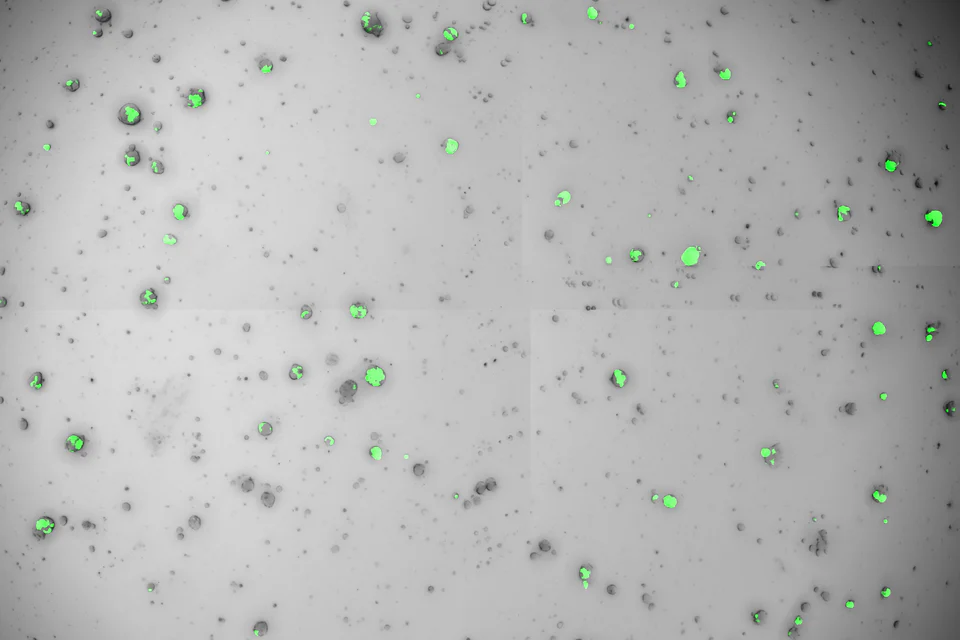 View image
Bright-field and green-fluorescence overlays show organoid morphology and expression under the lncRNA shRNA condition for direct comparison with the control.
Delivery and expression results
Function & mechanism
Connect gene modulation with function
Evaluate knockdown, overexpression, pharmacological or other perturbation strategies for the target and model. Use molecular, protein and phenotype assays to assess the perturbation and its effect on model function.
Study applications
Where genetic perturbation adds value
Evaluate expression or genetic perturbation in organoids
Connect molecular change with phenotype and treatment response
Study workflow
Confirm delivery and perturbation before interpreting phenotype
Target, vector and model assessment
Assess the target cell, vector format, selection strategy and model tolerance.
Delivery and perturbation assessment
Assess delivery feasibility, expression or perturbation, together with any changes in model morphology and function.
Molecular and phenotypic confirmation
Use molecular, protein and phenotype readouts to confirm the intended perturbation and check for nonspecific effects.
Function and treatment response
Once delivery and perturbation are established, progress into mechanism, functional phenotype and treatment-response studies.
Deliverables
Receive perturbation, phenotype and mechanism-related results
- Delivery, expression or perturbation results
- Molecular and phenotypic readouts
- Functional results, method report and recommended follow-up studies
Related models
Select the model by biological context
The study first establishes delivery efficiency, perturbation performance and culture quality, then uses those results to plan functional or mechanistic studies.
PROJECT DISCUSSION
Design an organoid genetic-perturbation study
Tell us the target gene, perturbation approach, available model and phenotype of interest. Our scientists will assess delivery, perturbation confirmation, controls and functional readouts.