
Peer-reviewed publicationStudy findings
Cell 2018: ALI tumor-immune organoids
Explore the ALI method, tumor–immune findings and key figures that underpin PDO 2.0 study design.
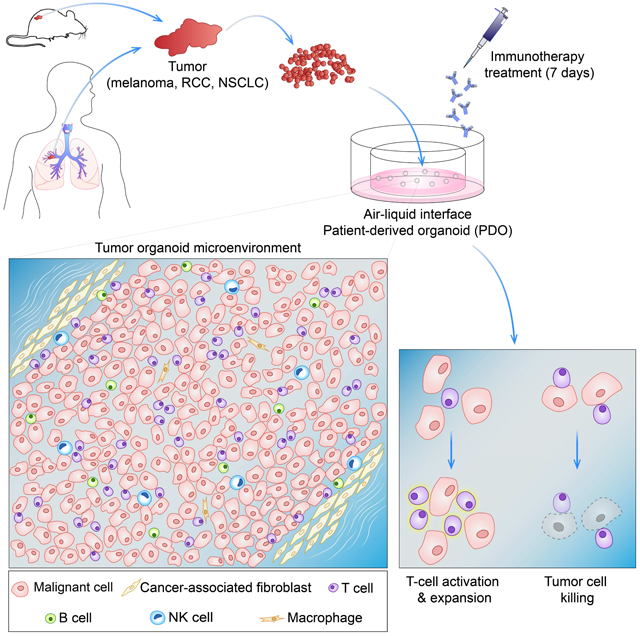 View image
Peer-reviewed research · Cell 2018
What scientific evidence did this study establish?
The study used ALI culture to maintain tumor epithelium with source-tissue architecture and immune cells retained from the source sample, then evaluated the system through histology, flow, single-cell immune repertoire profiling and functional experiments.
- Journal
- Cell · 2018
- DOI
- 10.1016/j.cell.2018.11.021
- PMID
- 30550791
- Authorship
- Xingnan Li, PhD · co-first author
Study logic
From source tissue to functional validation
The study follows source tumor tissue through ALI culture, integrated profiling and immune-function analysis, showing how model establishment supports functional research.
Original figures
Follow the core findings through the original figures
Four original figure sets trace model establishment, immune populations, TCR repertoires and checkpoint-pathway function. Select an image to read its labels and experimental details.
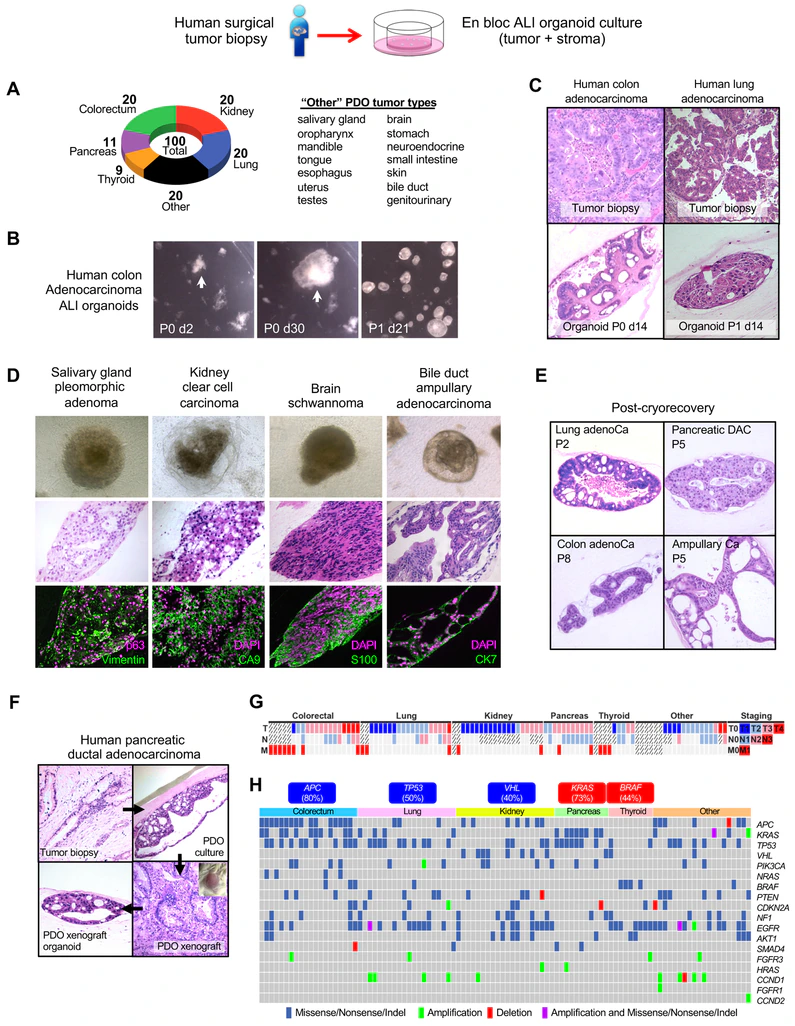 View image
FIG. 1 · ORIGINAL PAPER FIGURE
01Establish ALI PDOs across tumor histologies
The paper first shows how ALI was applied to primary and metastatic tumors, with histology, genomic features and passaging used to characterize the models.
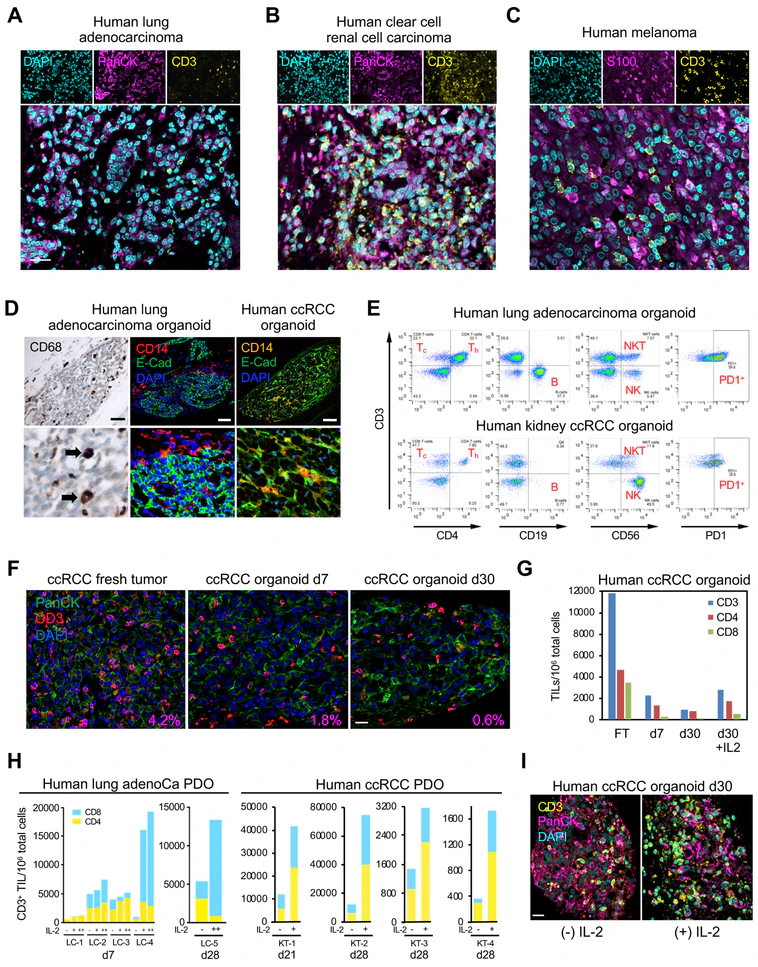 View image
FIG. 3 · ORIGINAL PAPER FIGURE
02Identify immune cells retained from the source sample
Immunofluorescence and flow detect T, B, NK and macrophage populations. Their composition and persistence vary by sample and culture condition.
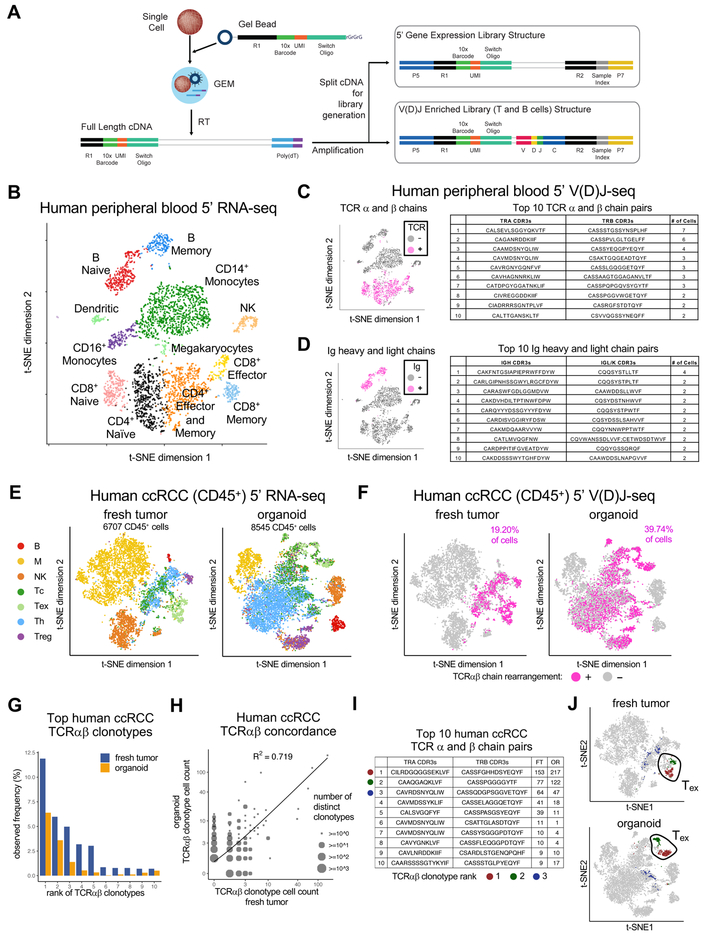 View image
FIG. 5 · ORIGINAL PAPER FIGURE
03Compare tumor and PDO TCR repertoires
Single-cell transcriptome and V(D)J profiling compare immune cells and TCR clonotypes between source tumor and matched PDO—the central evidence for sample-associated immune context.
 View image
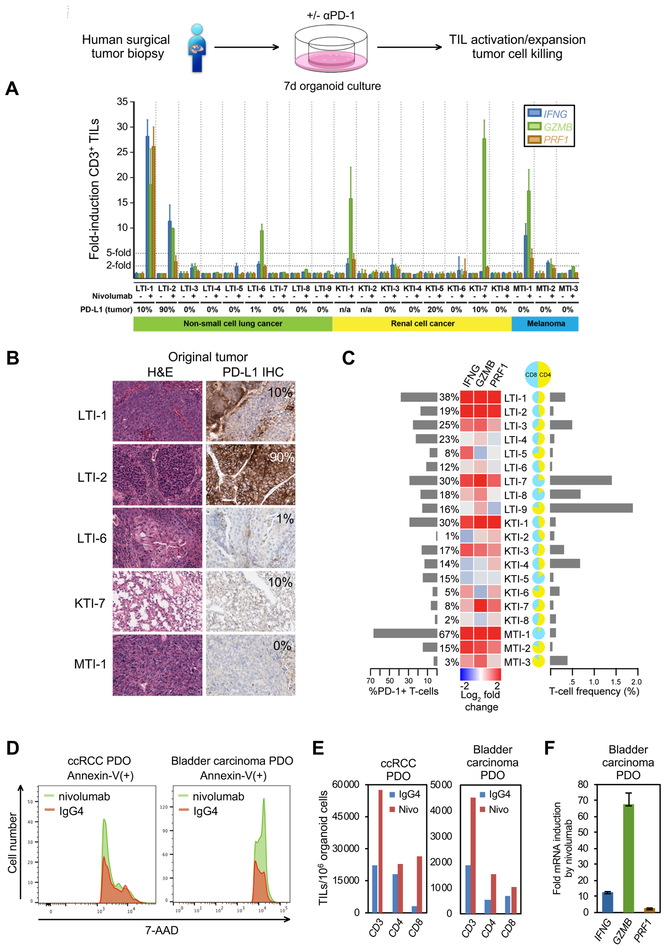
FIG. 7 · ORIGINAL PAPER FIGURE
04Examine PD-1 pathway function in human PDOs
Human PDO experiments assess checkpoint treatment alongside TIL activation, effector molecules and tumor-cell death, supporting functional immune studies.
ALI PDOs enable integrated tumor–immune research
Under defined experimental conditions and windows, the study detected sample-derived immune-cell populations, compared TCR repertoires and observed functional responses to checkpoint treatment.
Translate the published ALI method into a practical study
Begin with the sample’s measurable cellular composition and culture window, then define the candidate, controls, replication and additional samples needed to generate clear results and guide the next study step.
Apply the ALI method to models, assays and study design
Xingnan Li co-developed the method as a co-first author. TRiCBIO applies it to sample baselines, immune readouts and study windows, building each program around the R&D question.
Related models and services
Find relevant models and services
PROJECT DISCUSSION
Discuss how the ALI approach applies to your research
Share the scientific question you want to pursue. Our scientists will translate relevant ALI/PDO 2.0 methods and platform capabilities into a practical study.