
Plate-based organoid studies
Plate-based organoid studies
Design plate-based studies around model biology to compare doses, candidates or combinations with suitable controls.
Dose response & plate adaptation
Build a comparable plate-based assay with morphology and dose response
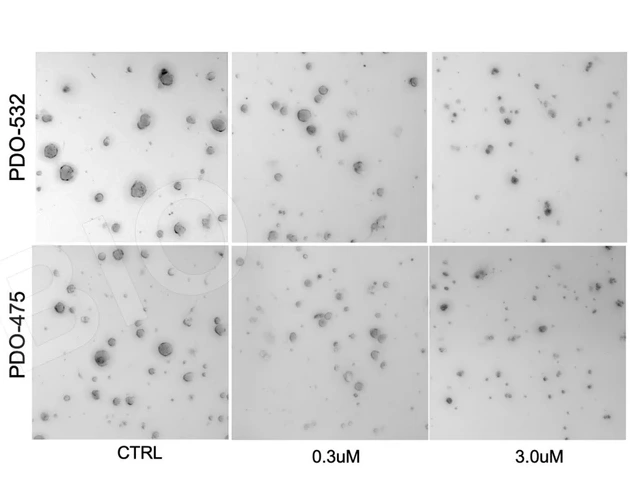
This ADC study compares concentration-related morphology and viability for one candidate across two breast cancer PDO models, showing dose-window and model-response analysis. Once the plate format, controls, concentration range and replication are established, the same design can support multi-candidate ranking and mechanism studies.
 View image
Plate-based ADC study: morphology across control and dose conditions in two breast cancer PDO models informs plate format, imaging window and quantitative endpoint selection.
TRiCBIO breast cancer PDO ADC study dataView antibody distribution and ADC response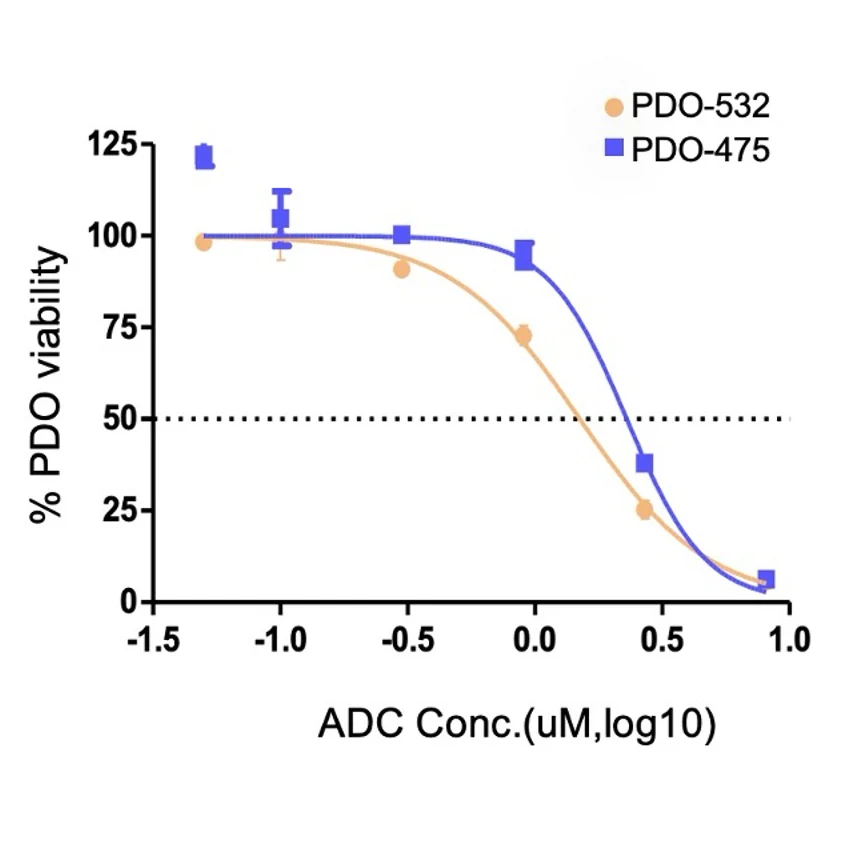 View image
ADC dose response: candidate concentration is plotted against response in two breast cancer PDO models to compare model differences, define follow-up dose ranges and plan replication.
TRiCBIO breast cancer PDO ADC study dataView antibody distribution and ADC responseStudy applications
Where plate-based studies add value
Assess combination dose matrices
Confirm screening hits in qualified organoid assays
Study workflow
Build a comparable assay before candidate studies
Plate and model adaptation
Select the plate format and study scale around model size, growth pattern, candidate set and assay endpoint.
Assay qualification and window
Confirm plating consistency, vehicle tolerance, positive control, timing and signal window.
Screen and plate QC
Monitor within- and between-plate consistency and review outliers against defined QC criteria.
Hit confirmation and ranking
Confirm hits with independent repeats or complementary endpoints before ranking.
Deliverables
Receive results designed for candidate comparison
- Plate and assay qualification report
- Dose-response or combination-matrix data
- QC, hit confirmation and candidate ranking
Related models
Select the model by biological context
Plate format and study scale are adapted to the model, with replication, assay window and candidate-selection criteria defined during assay qualification.
PROJECT DISCUSSION
Plan a plate-based candidate study
Bring the candidate set, dose or combination design, target model and primary endpoints. Our team will assess plate format, controls, replication and analysis.