
Custom ADC distribution study
Antibody distribution & ADC activity
Compare the relative spatial distribution of candidate molecules in organoid sections alongside target expression, tissue architecture and efficacy endpoints.
Antibody distribution and ADC activity
Antibody/nanobody distribution imaging and ADC activity studies
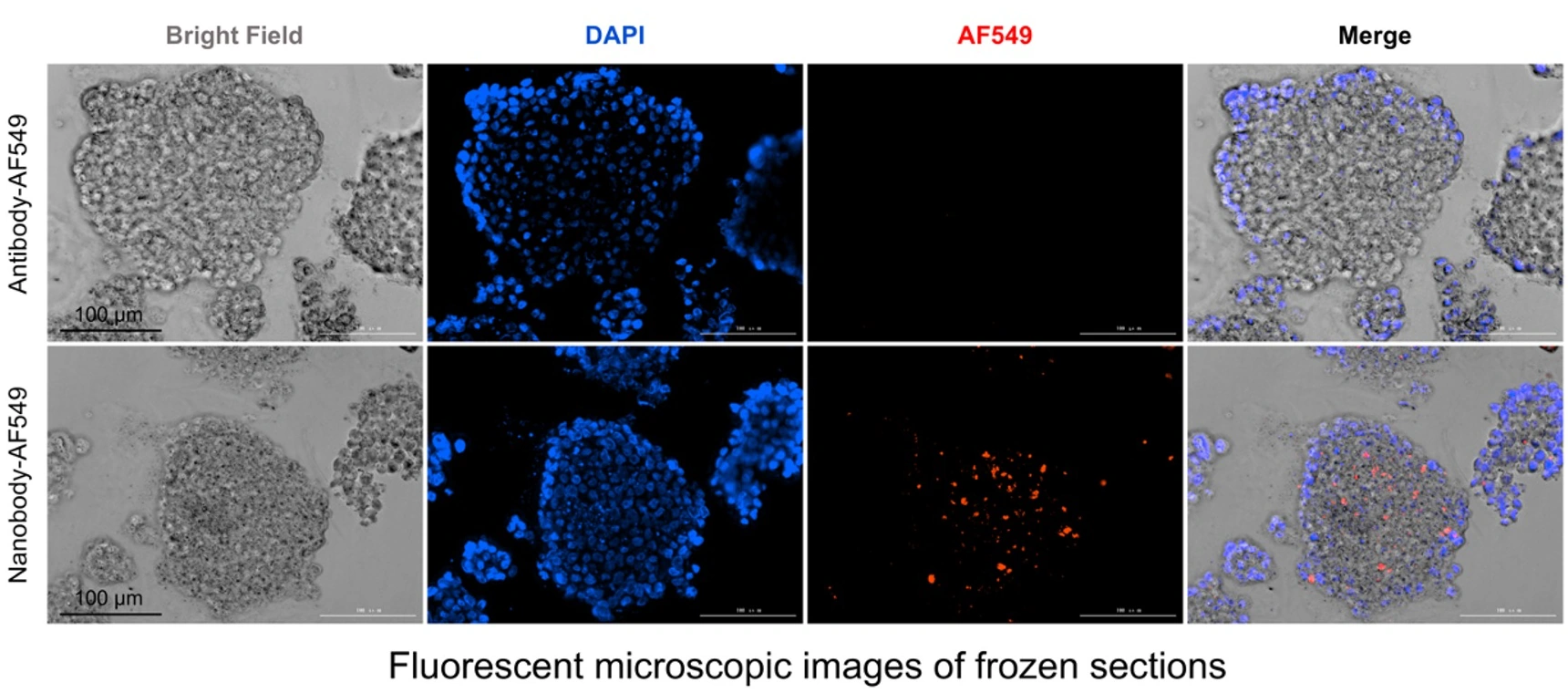
Breast cancer PDO studies combine frozen-section distribution of AF549-labeled antibody/nanobody formats with morphology and viability after ADC treatment. A candidate program can integrate target profiling, imaging controls, dedicated penetration quantification and killing endpoints.
 View image
Frozen-section spatial distribution: bright-field, DAPI, AF549 and merged views compare relative signal patterns for labeled antibody and nanobody in PDO frozen sections.
TRiCBIO breast cancer PDO antibody/nanobody distribution studyView antibody distribution and ADC response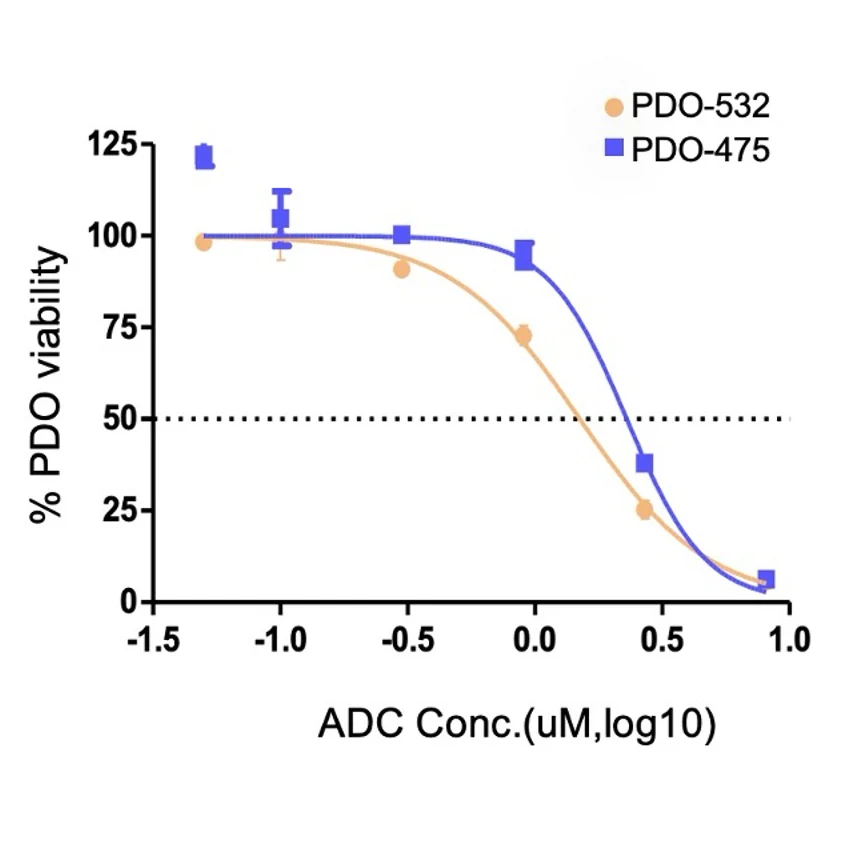 View image
ADC dose response: candidate concentration is plotted against response in two breast cancer PDO models to compare model differences, define follow-up dose ranges and plan replication.
TRiCBIO breast cancer PDO ADC study dataView antibody distribution and ADC responseStudy applications
When distribution and activity both matter
Relate target heterogeneity to ADC activity readouts
Explore penetration, bystander effects or architecture when needed
Study workflow
Connect target context, distribution and function
Target and model assessment
Confirm target expression, spatial heterogeneity, model morphology and candidate mechanism.
Labeling, incubation and controls
Select labeling, time points and isotype, competition or target-negative controls.
Spatial imaging and quantification
First compare relative spatial distribution in sections; when penetration requires quantification, add serial sections or z-stacks, distance/intensity analysis, time points and controls.
Interpret killing and mechanism together
Relate spatial signal to viability, apoptosis, histology and mechanism-relevant bystander-effect readouts.
Deliverables
Receive spatial imaging, quantitative results and activity analysis
- Target and model characterization
- Original images and spatial quantification
- ADC comparison and study report
Related models
Select the model by biological context
When penetration depth or bystander effects are included in the study plan, target, model, candidate, imaging method, controls and replication are defined before quantitative assessment.
PROJECT DISCUSSION
Study ADC spatial distribution and activity
Tell us the ADC design, target, tumor model and distribution or killing question. We’ll plan labeling, imaging, quantification and efficacy readouts.