
Tumor immune studies and tailored co-culture
Tumor immune co-culture & TME profiling
Design co-culture and multimodal assays around tumor cells, the sample’s immune-cell context and treatment response.
PDO 2.0 immune evidence
Profile tissue context, immune signals and treatment readouts
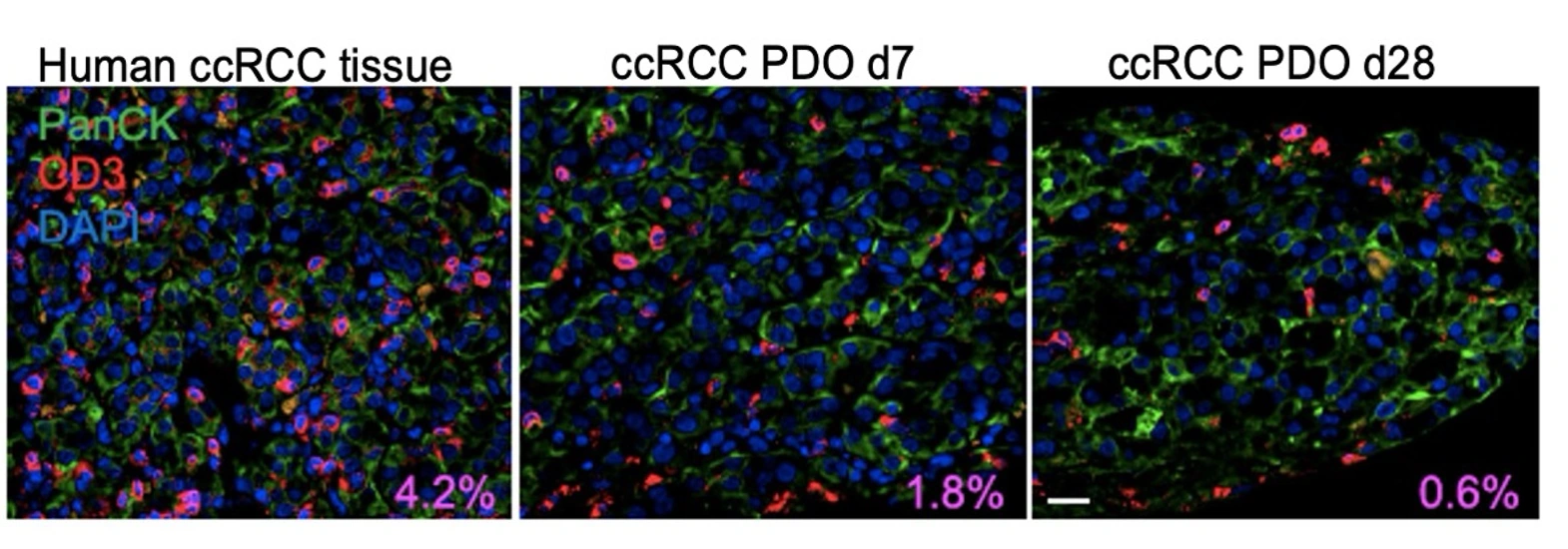
Across ccRCC and NSCLC studies, tissue imaging, PanCK/CD3/CD4/CD8 profiling and flow cytometry characterize tissue identity, immune composition and treatment response. Culture windows and endpoints are tailored to each sample baseline.
 View image
Tissue and model context: PanCK, CD3 and DAPI imaging compares tumor-epithelial and CD3-positive immune-cell signals across the source tissue and PDO culture time points.
TRiCBIO ccRCC PDO 2.0 immune-context study dataView the TME study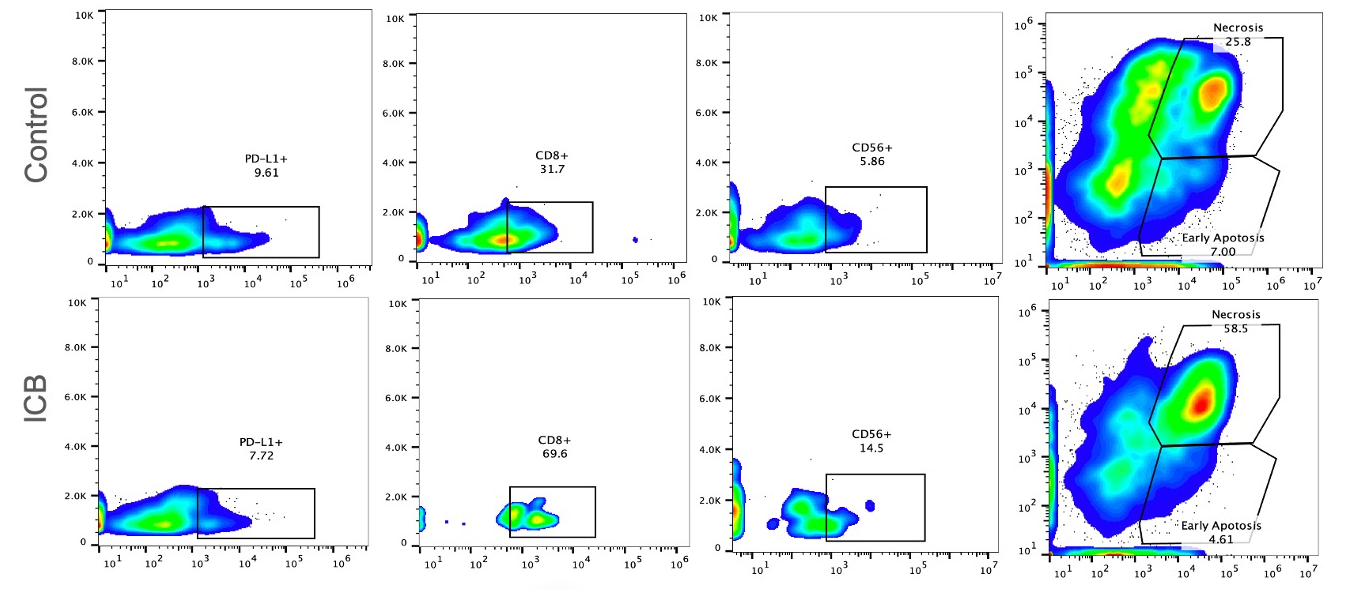 View image
Treatment-related readouts: PD-L1-, CD8- and CD56-associated flow profiles are interpreted alongside early-apoptosis and necrosis measurements to compare immune-associated and cell-death changes under immune-checkpoint blockade.
TRiCBIO ccRCC PDO 2.0 immune-context study dataView the TME study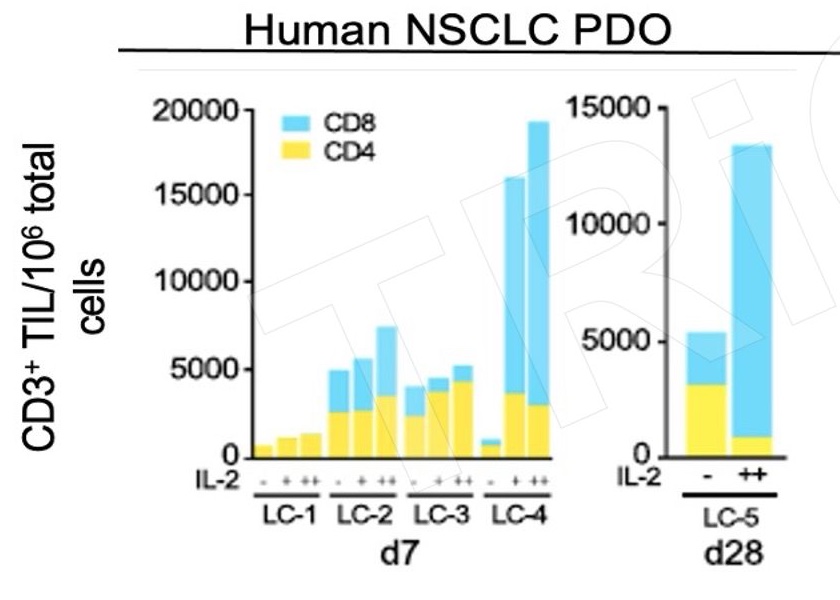 View image
NSCLC immune readouts: CD4/CD8 counts within CD3-positive TIL populations for LC-1 to LC-4 at day 7 and LC-5 at day 28 inform sample selection and IL-2 conditions.
TRiCBIO NSCLC PDO 2.0 study dataView the lung cancer PDO 2.0 studyStudy applications
When TME readouts matter
Compare immunotherapy or combination conditions
Integrate tissue, cellular and secreted readouts
Study workflow
Define immune context before treatment
Sample and immune baseline
Define tumor type, sample state, measurable immune components and the program priority.
Select PDO 2.0 or co-culture
Choose ALI, custom co-culture or a combined study design based on architecture, immune context and assay platform.
Treatment and multimodal readouts
Select histology, flow, cytokines, apoptosis or TCR profiling around the candidate mechanism.
Interpret multidimensional results
Interpret tumor-cell change, immune-population shifts and sample context together in relation to the study objective.
Deliverables
Receive integrated tissue, immune and treatment-response results
- Model and immune-baseline QC
- Tissue imaging, flow or secreted-factor data
- Analytical methods, interpretation and study scope
Related models
Select the model by biological context
At study start, we confirm the sample immune baseline, culture window and measurable endpoints, then tailor co-culture, TME assays and orthogonal validation to the study.
PROJECT DISCUSSION
Plan a tumor-immune and TME study
Describe the tumor type, sample or immune-cell context, candidate mechanism and immune changes of interest. Our scientists will configure the model, controls and multimodal assays.