
Phenotype and groups
Define the reliable functional phenotype, then group by response, model feature, dose or time.
Application
Interpret tissue-level, functional and molecular changes in the context of the model and treatment to identify reproducible, testable signals for R&D decisions.
Tissue and molecular evidence
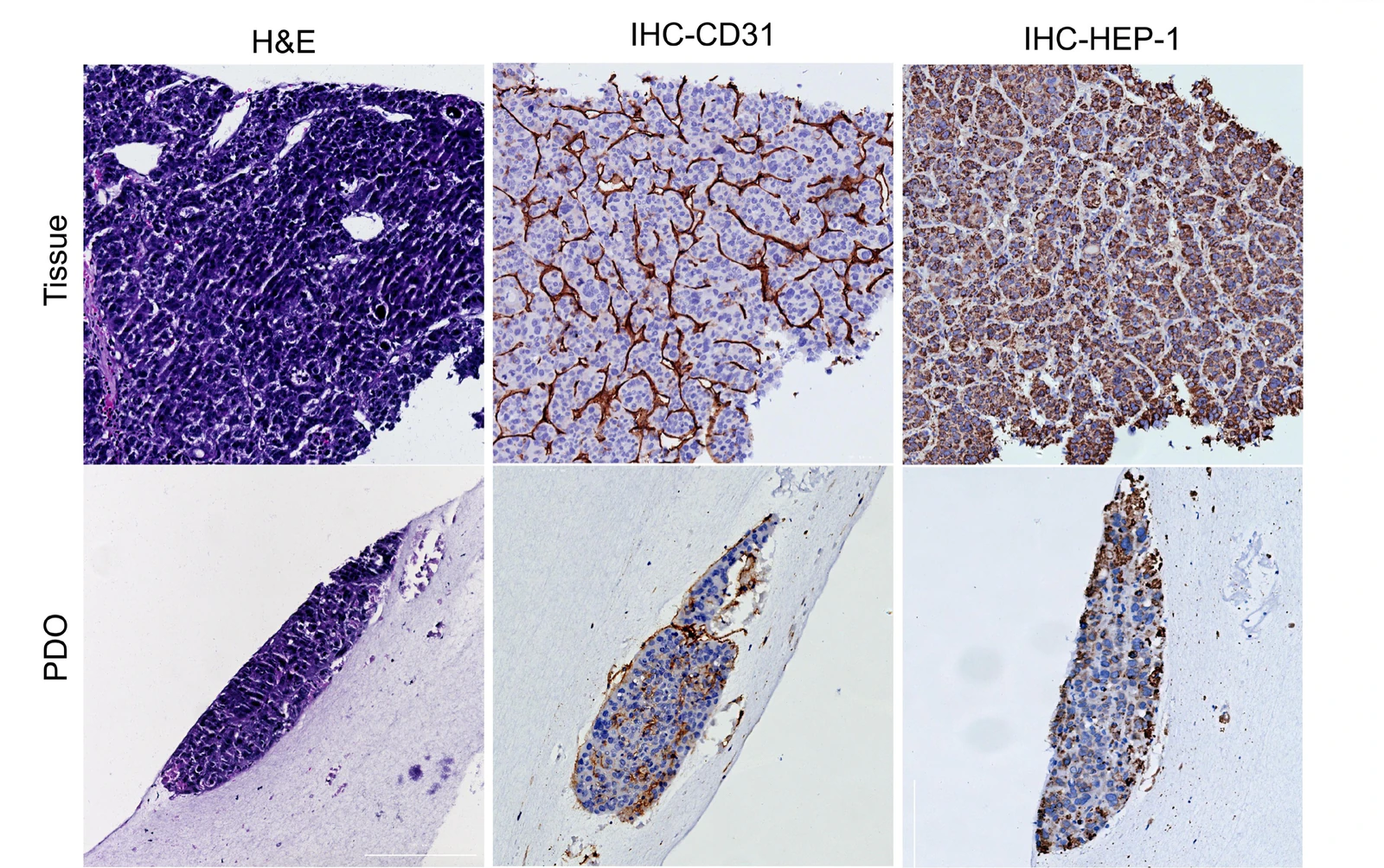
HCC source-tissue/PDO histology with CD31 and HEP-1 establishes model and target context, while kidney organoid qPCR profiles KIM-1, H2AFX and inflammation/stress-related responses after cisplatin exposure. Studies can build from these measurable phenotypes into repeatable molecular assays and follow-on validation.
 View image
Tissue and model profiling: paired H&E, CD31 and HEP-1 immunohistochemistry in source tissue and PDO shows tissue architecture, vascular features and hepatic lineage markers, supporting model identity and the selection of target and mechanism readouts.
Model & assay data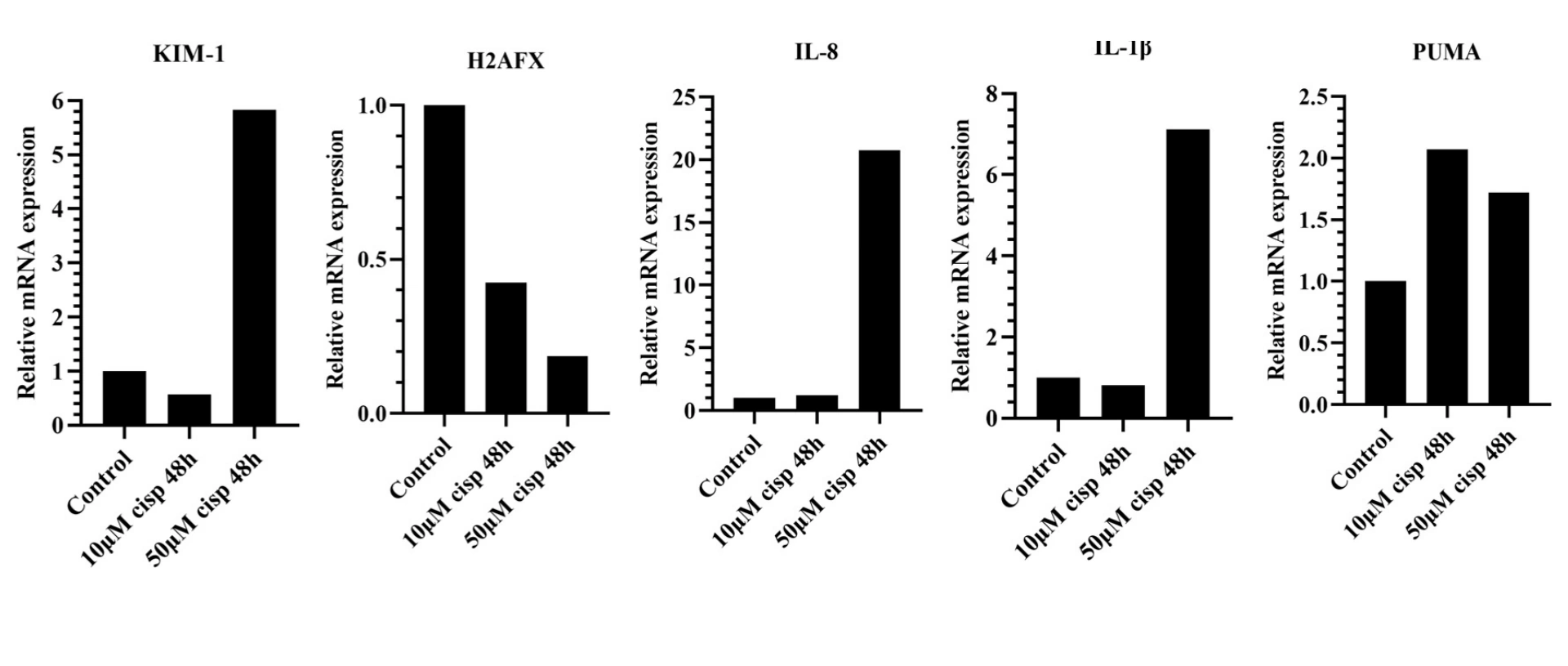 View image
H9-derived | cisplatin molecular response: RT-qPCR profiles KIM-1, H2AFX and inflammation/stress-related genes across cisplatin conditions, helping prioritize kidney-injury biomarkers and define follow-on dose, timing and confirmatory assays.
TRiCBIO H9-derived kidney organoid cisplatin studyContinue to the related case for model context, experimental setup and interpretation.
Study focus
Study workflow
Define the reliable functional phenotype, then group by response, model feature, dose or time.
Select histology, imaging, flow, qPCR, protein or secreted readouts around the hypothesis.
Compare baseline, treatment response and mechanism readouts to identify reproducible candidate markers.
Validate in additional samples or with orthogonal methods, strengthening the evidence from initial observation through independent confirmation.
Model options
Identify candidate signals associated with treatment response or mechanism, then build a validation plan using additional samples, prespecified analyses and orthogonal methods.
PROJECT DISCUSSION
Disease context, existing phenotypes and data, comparison groups and the mechanism hypothesis shape the models, assays and complementary confirmation plan.
Application
Interpret tissue-level, functional and molecular changes in the context of the model and treatment to identify reproducible, testable signals for R&D decisions.
Tissue and molecular evidence
HCC source-tissue/PDO histology with CD31 and HEP-1 establishes model and target context, while kidney organoid qPCR profiles KIM-1, H2AFX and inflammation/stress-related responses after cisplatin exposure. Studies can build from these measurable phenotypes into repeatable molecular assays and follow-on validation.
View imageTissue and model profiling: paired H&E, CD31 and HEP-1 immunohistochemistry in source tissue and PDO shows tissue architecture, vascular features and hepatic lineage markers, supporting model identity and the selection of target and mechanism readouts.
Model & assay dataView imageH9-derived | cisplatin molecular response: RT-qPCR profiles KIM-1, H2AFX and inflammation/stress-related genes across cisplatin conditions, helping prioritize kidney-injury biomarkers and define follow-on dose, timing and confirmatory assays.
TRiCBIO H9-derived kidney organoid cisplatin studyContinue to the related case for model context, experimental setup and interpretation.
Study focus
Study workflow
Define the reliable functional phenotype, then group by response, model feature, dose or time.
Select histology, imaging, flow, qPCR, protein or secreted readouts around the hypothesis.
Compare baseline, treatment response and mechanism readouts to identify reproducible candidate markers.
Validate in additional samples or with orthogonal methods, strengthening the evidence from initial observation through independent confirmation.
Model options
Identify candidate signals associated with treatment response or mechanism, then build a validation plan using additional samples, prespecified analyses and orthogonal methods.
PROJECT DISCUSSION
Disease context, existing phenotypes and data, comparison groups and the mechanism hypothesis shape the models, assays and complementary confirmation plan.