
Tumor sample context
Tumor type, collection site, sample condition, expected timing and available ethics documentation.
A renal cancer PDO system for evaluating responses to targeted and immune therapies using apoptosis and immune-cell activation readouts.
Patient renal tumor tissue
PDO · Immune co-culture study format
TRiCBIO renal cancer PDO study data
Model characterization
Source-tissue and organoid imaging plus lineage/identity markers characterize the model; functional readouts are selected for the candidate mechanism and study objective.
 View image
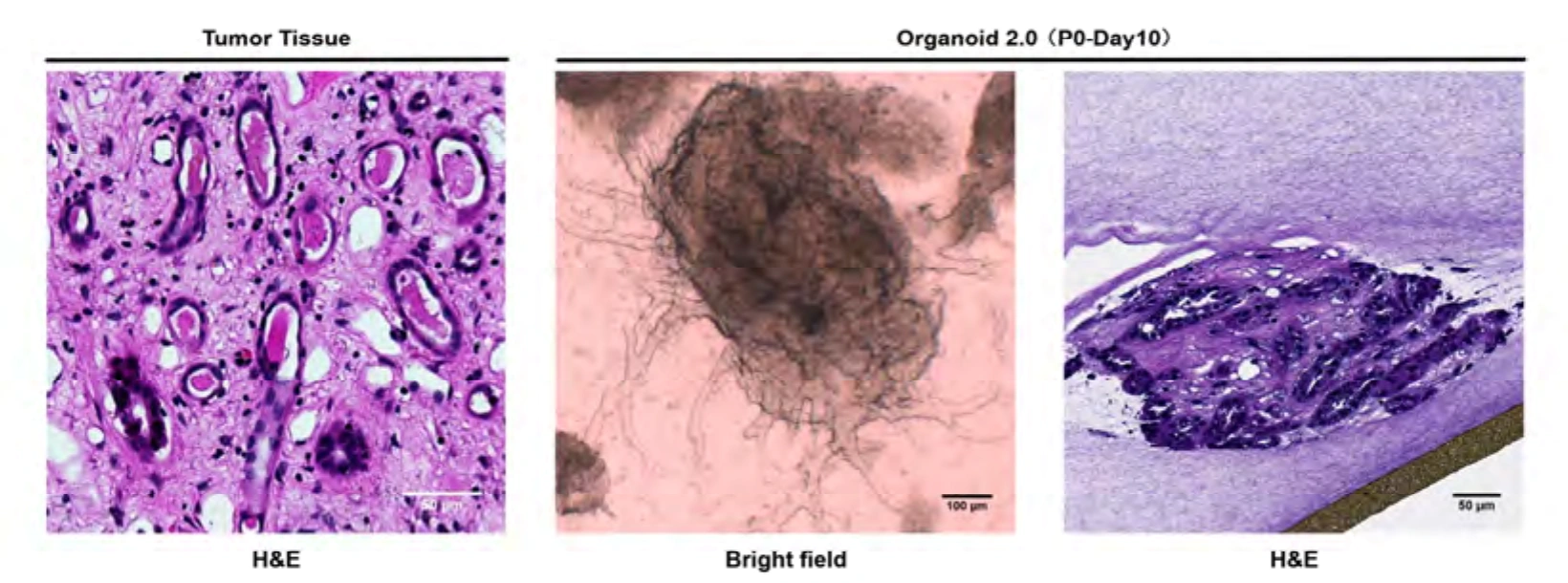
Model confirmation: source tissue, PDO histology and bright-field views establish the model context before treatment studies.
TRiCBIO RCC PDO 2.0 study data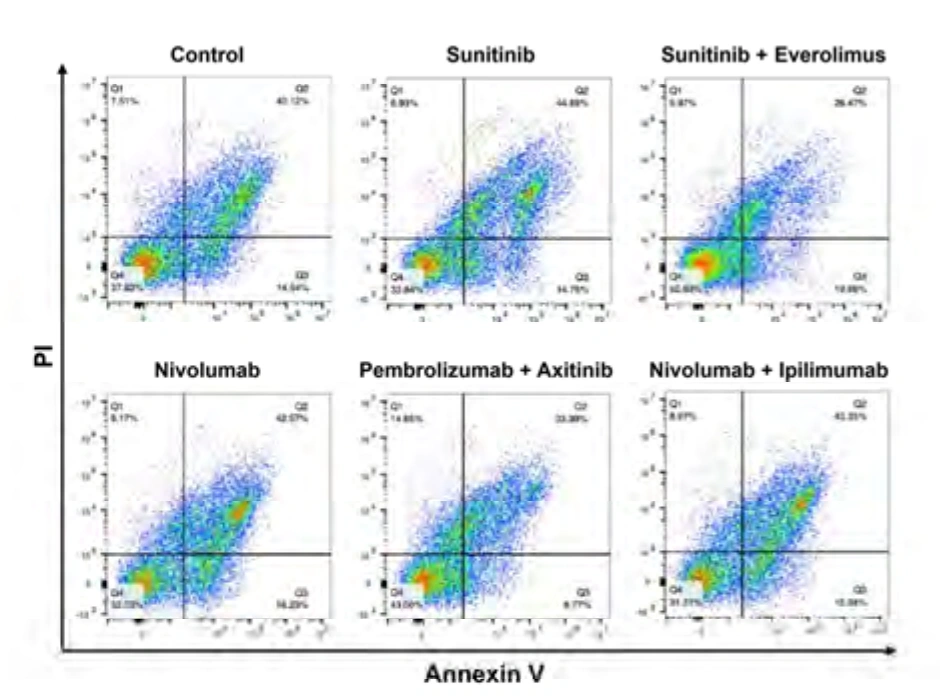 View image
Apoptosis readouts: flow plots compare Annexin V/PI distributions across control, targeted, immune and combination conditions to guide cell-death endpoints and replication.
TRiCBIO RCC PDO 2.0 study data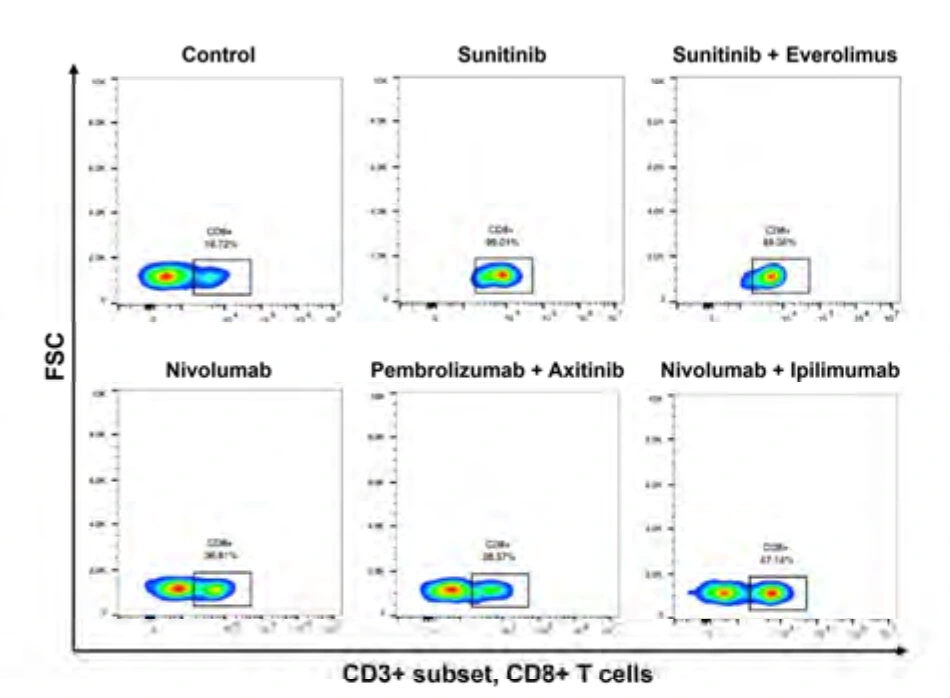
Immune readouts: CD3/CD8 flow cytometry is interpreted with apoptosis measurements to compare cell-death and immune changes across the same treatment conditions.
TRiCBIO RCC PDO 2.0 study data View image
Study planning
Tumor type, sample condition, candidate and intended comparison guide the culture format, controls and assays.
Tumor type, collection site, sample condition, expected timing and available ethics documentation.
Modality, dosing plan, controls and the response or comparison the study should address.
Planned histology, flow, molecular or functional assays, together with preferred data and report formats.
Study design
Renal cancer programs may span targeted agents, mTOR-associated regimens and immunotherapy. Establish source-tissue and PDO identity before comparing treatment conditions with consistent controls, apoptosis and immune readouts.
Confirm renal cancer pathology, sampling site, prior treatment, sample state and available source-tissue records.
Compare source-tissue H&E, PDO bright-field and PDO H&E, adding study-relevant markers such as PAX8 and CD10 before treatment studies.
Set dose, timing, single-agent groups and controls around targeted, mTOR-associated, ICB or combination mechanisms, then compare results using consistent analysis criteria.
Integrate Annexin V/PI, CD3/CD8/CD107a flow, histology and viability to distinguish tumor-cell death, immune-population shifts and sample variation.
Research applications
Assays & QC
QC combines tissue identity, morphology, apoptosis and immune functional readouts.
Study & delivery
Choose a supplied model or a TRiCBIO-run intervention study. Typical deliverables include functional data and a project report.
Related solutions
PROJECT DISCUSSION
Tumor type, sample status, candidate profile and comparison endpoints determine the culture format, controls, assay panel and deliverables for the renal cancer PDO.
A renal cancer PDO system for evaluating responses to targeted and immune therapies using apoptosis and immune-cell activation readouts.
Patient renal tumor tissue
PDO · Immune co-culture study format
TRiCBIO renal cancer PDO study data
Model characterization
Source-tissue and organoid imaging plus lineage/identity markers characterize the model; functional readouts are selected for the candidate mechanism and study objective.
View imageModel confirmation: source tissue, PDO histology and bright-field views establish the model context before treatment studies.
TRiCBIO RCC PDO 2.0 study dataView imageApoptosis readouts: flow plots compare Annexin V/PI distributions across control, targeted, immune and combination conditions to guide cell-death endpoints and replication.
TRiCBIO RCC PDO 2.0 study dataImmune readouts: CD3/CD8 flow cytometry is interpreted with apoptosis measurements to compare cell-death and immune changes across the same treatment conditions.
TRiCBIO RCC PDO 2.0 study dataView imageStudy planning
Tumor type, sample condition, candidate and intended comparison guide the culture format, controls and assays.
Tumor type, collection site, sample condition, expected timing and available ethics documentation.
Modality, dosing plan, controls and the response or comparison the study should address.
Planned histology, flow, molecular or functional assays, together with preferred data and report formats.
Study design
Renal cancer programs may span targeted agents, mTOR-associated regimens and immunotherapy. Establish source-tissue and PDO identity before comparing treatment conditions with consistent controls, apoptosis and immune readouts.
Confirm renal cancer pathology, sampling site, prior treatment, sample state and available source-tissue records.
Compare source-tissue H&E, PDO bright-field and PDO H&E, adding study-relevant markers such as PAX8 and CD10 before treatment studies.
Set dose, timing, single-agent groups and controls around targeted, mTOR-associated, ICB or combination mechanisms, then compare results using consistent analysis criteria.
Integrate Annexin V/PI, CD3/CD8/CD107a flow, histology and viability to distinguish tumor-cell death, immune-population shifts and sample variation.
Research applications
Assays & QC
QC combines tissue identity, morphology, apoptosis and immune functional readouts.
Study & delivery
Choose a supplied model or a TRiCBIO-run intervention study. Typical deliverables include functional data and a project report.
Related solutions
PROJECT DISCUSSION
Tumor type, sample status, candidate profile and comparison endpoints determine the culture format, controls, assay panel and deliverables for the renal cancer PDO.