TRiCBIO
EvidenceNavigation menu
R&D ServicesModels & ProductsApplicationsTechnologyEvidence & ResourcesHow We WorkAbout TRiCBIOProject inquiry中文
Study resultsSafety case study

Kidney organoids for safety and injury research

Explore kidney identity, molecular injury markers and morphology over time through cisplatin and doxorubicin studies.

01Study objective02Model & design03Assays & findings04Decision & next step
Model & sampleH9-derived kidney organoids and human kidney organoid injury studies
ObjectiveConnect model identity and exposure conditions with drug-associated kidney injury readouts
Study conditionsCisplatin molecular readouts in H9-derived kidney organoids and doxorubicin acute-injury observations in human kidney organoids
AssaysE-cadherin, LRP2, Nephrin, RT-qPCR, serial morphology and study-specific injury endpoints
Study evidenceIdentity and cisplatin molecular readouts in H9-derived organoids, with doxorubicin injury over time in human kidney organoids
DeliverablesReceive images, assay results and an analysis summary; the report documents the study design, sample size and statistical methods

STUDY EVIDENCE

Kidney organoid approaches for identity and injury studies

Kidney organoid studies cover nephron identity and cisplatin molecular readouts in H9 hESC-derived organoids, together with morphology over time during doxorubicin exposure in a human kidney organoid system. We select the culture approach, dose, timing and injury endpoints for each candidate.

01Model identityEstablish nephron-associated identity
02Exposure designDefine dose, timing and controls
03Multimodal assaysConnect morphology, IF and molecular endpoints
04Follow-on workSelect mechanism and recovery studies
H9-derived approach: identity and cisplatin molecular readouts2 study figures
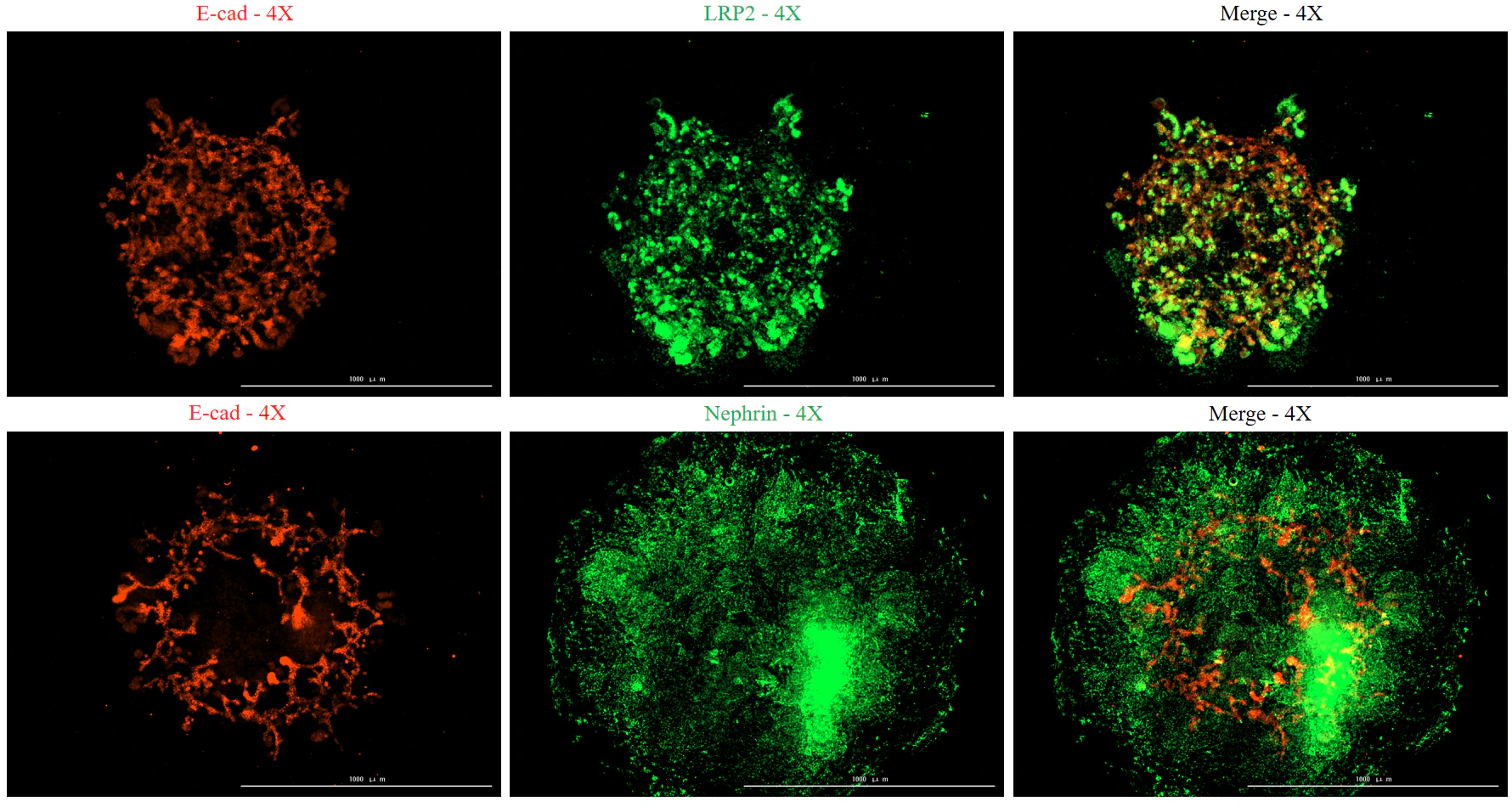
01H9-derived | model identity
Nephron-associated cells and structures

Nephron-associated cells and structures

E-cadherin, LRP2 and Nephrin combine with morphology and histology to confirm nephron-associated identity before injury studies.

Confirms model suitability and cell-type-relevant endpoints
02H9-derived | cisplatin molecular readouts
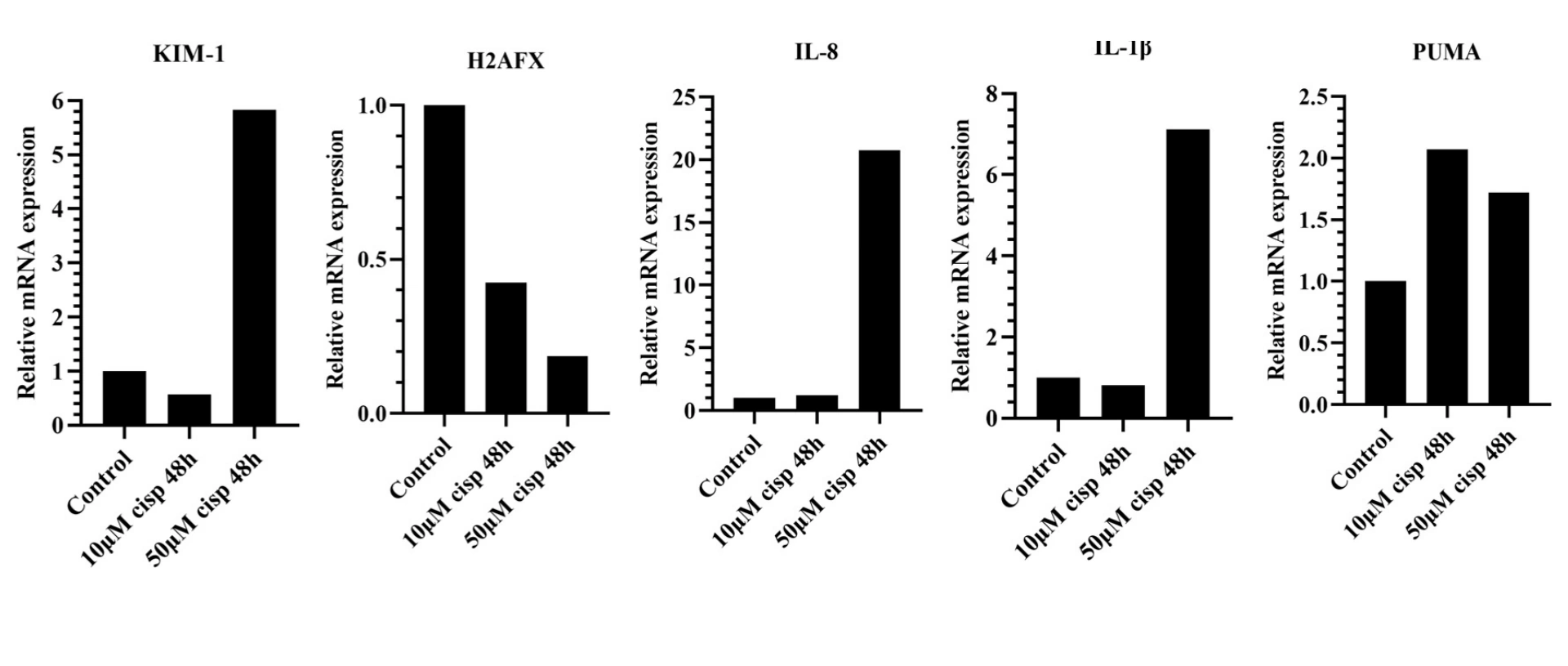
KIM-1, H2AFX, inflammation and stress readouts

KIM-1, H2AFX, inflammation and stress readouts

RT-qPCR after cisplatin exposure profiles expression responses in KIM-1, H2AFX, IL-8, IL-1β and PUMA, supporting selection of kidney-injury, inflammatory and stress-related endpoints for follow-on confirmation.

Guides molecular-injury endpoints and follow-up priorities
Human kidney study: doxorubicin acute-injury observation1 study figure
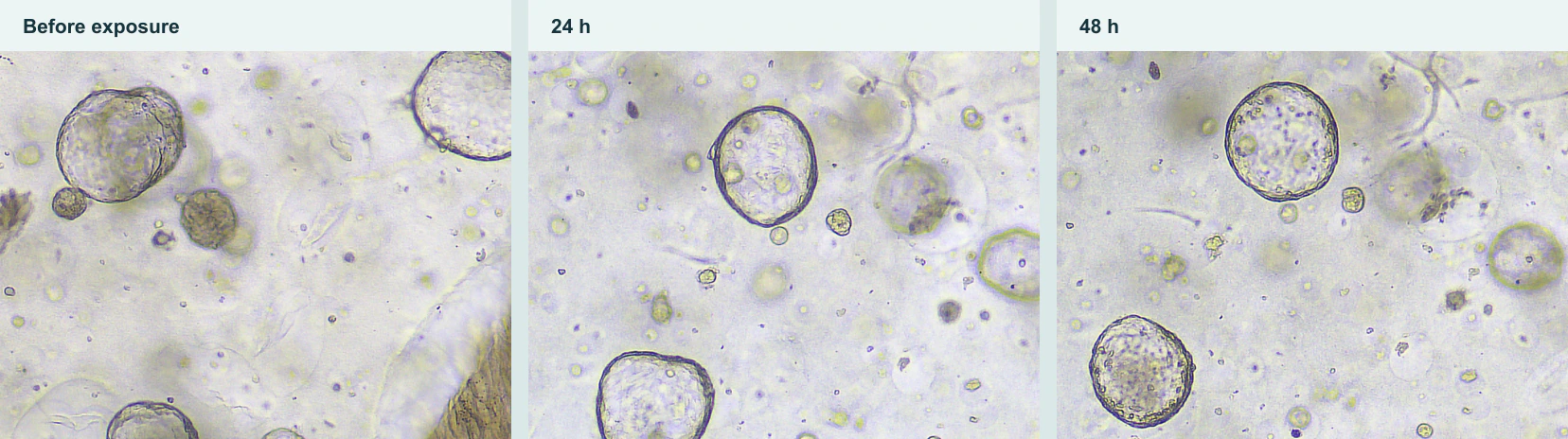
03Injury study | serial morphology
Fields before and 24/48 hours after exposure

Fields before and 24/48 hours after exposure

Bright-field views before exposure and at 24 and 48 hours provide morphological context for injury timing and downstream assays.

Guides observation windows and sampling time points

INTERPRETATION

Shape safety studies with identity and injury readouts

How the results are used

Confirms model identity, compares the timing and molecular dimensions of injury, and selects follow-on endpoints for dose, mechanism and recovery studies.

Study application

Kidney safety studies can draw on H9-derived cisplatin readouts or human kidney organoid doxorubicin evidence, then align dose, timing and mechanism endpoints within the selected culture approach.

Follow-on study

Compare dose and exposure duration, add mechanism and recovery endpoints, and confirm findings across independent batches.

Related models and services

Choose the right models and services for the next study

Study planning

Build your study from this evidence

Best suited for

Early safety screening or kidney-injury mechanism work

What to share

Candidate, exposure design, known risk and endpoints to compare

How TRiCBIO runs the study

Model identity checks, compound exposure, morphology and injury assays

What you receive

Model QC, dose conditions, images, assay data and study report

How it informs the study

Identify kidney injury signals and define recommended follow-up studies

Key study variables

Candidate properties, exposure range, batch consistency and translational-study planning

PROJECT DISCUSSION

Discuss a study built around your program

Tell us which model, assay or finding you want to extend. Our scientists will adapt the approach to your candidate, samples and decision point.