
Antibody, multispecific or TCE candidates requiring target-dependent killing and immune-activation assessment.
R&D service
Antibody, multispecific & TCE studies
Evaluate antibody, multispecific and T-cell engager (TCE) candidates using target profiling, defined effector-to-target ratios, live-cell or endpoint cytotoxicity and cytokine readouts.
STUDY DESIGN MAP
Match the model and assays to the candidate mechanism
Configure the study around target status, tumor model, effector-cell source and E:T ratio, then compare candidates through complementary killing, activation and cytokine readouts.
 View image
Foundation for antibody and TCE studies
Design antibody and TCE studies around tumor identity and immune context
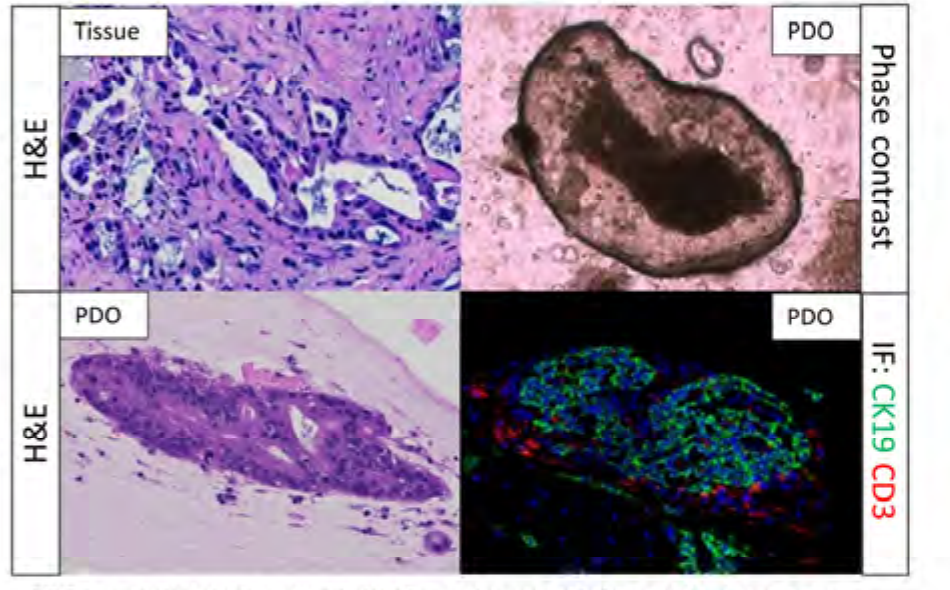
PDAC PDO 2.0 evidence shows tumor-epithelial and sample-associated T-cell context, while renal PDO 2.0 evidence adds PanCK/CD3 signals across source tissue and culture time. New studies match target, effector cells and dose with mechanism-relevant cytotoxicity, activation and cytokine readouts.
Study focus
What this study can help you decide
- 01What cytotoxic effect does the candidate produce in 3D tissue?
- 02How can immune-cell activation and its relationship to tumor-cell killing be quantified?
- 03How are dose, target expression and response related?
STUDY APPROACH
Match the model and assays to your program
Choose conventional PDO, PDO 2.0 or an exogenous immune co-culture based on tissue architecture, the immune biology of interest and the sample baseline.
Target state, E:T ratio, live-cell or endpoint cytotoxicity, CD3/CD8/CD107a flow readouts and relevant cytokines.
Effector-free control, target-negative/low models, isotype/non-binding controls and an appropriate activation control.
Compare candidates, optimize effector conditions and prioritize the next mechanism studies.
Study workflow
Design antibody and TCE studies around the mechanism
To compare antibody, multispecific and TCE candidates, we assess target expression, dose, effector-cell conditions and immune activation alongside tumor-cell viability.
Target and model assessment
Review target location and intensity, tumor model, modality and candidate set, then define model-selection criteria.
Effector and control design
Select sample-derived immune cells or external effectors according to mechanism, with a defined E:T ratio, preconditioning, positive/negative and target-relevant controls.
Dynamic killing and immune activation
Combine live or endpoint imaging, viability/apoptosis, activation markers such as CD107a and cytokines to compare responses across dose, target and effector conditions.
Candidate comparison
Compare potency, response window and immune-activation profiles using consistent experimental and analytical criteria, helping teams rank candidates and prioritize next-stage studies.
Study images and readouts
Tumor-epithelial identity and sample-associated T-cell context
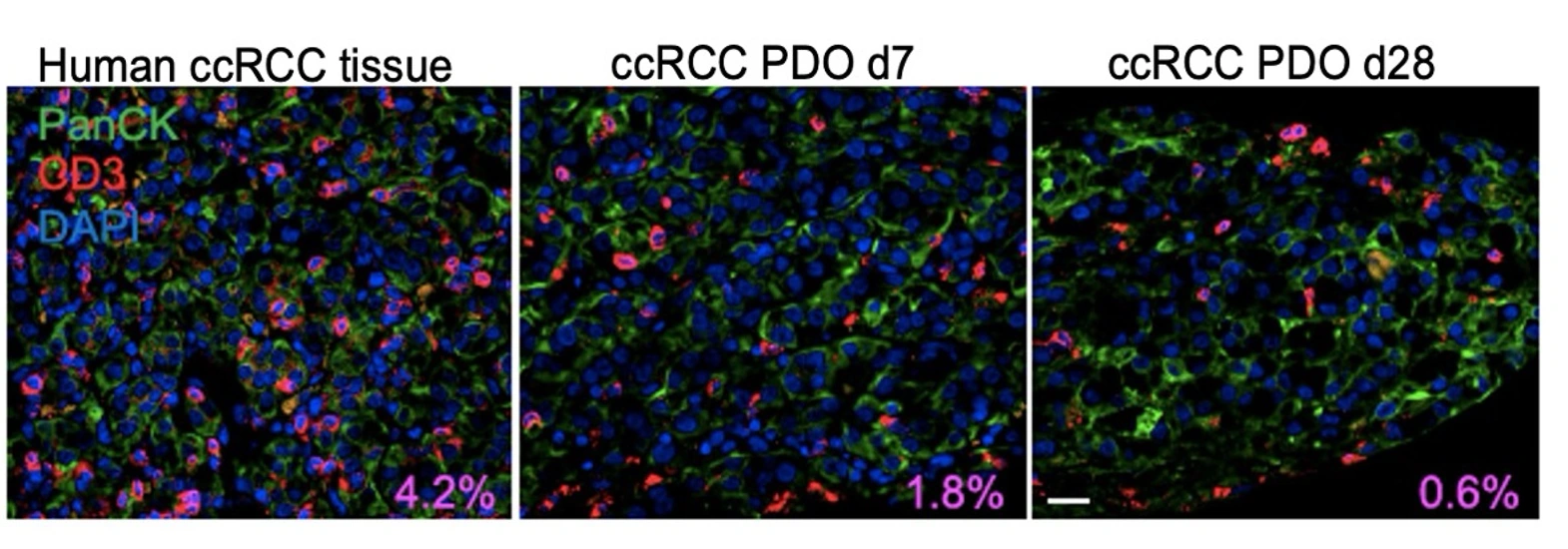
PanCK/CD3 signals across renal source tissue and PDO 2.0 culture time add tissue, epithelial and T-cell context. Combined with PDAC model evidence, they support model, effector-cell and cytotoxicity assay selection for antibody and TCE studies.
 View image
Tissue and model context: PanCK, CD3 and DAPI imaging compares tumor-epithelial and CD3-positive immune-cell signals across the source tissue and PDO culture time points.
TRiCBIO ccRCC PDO 2.0 immune-context study dataView the TME studyExpected study outputs
What you receive
Target and effector conditions
A record of model selection, target expression, effector-cell source, E:T ratio and key controls.
Killing and activation readouts
Live or endpoint killing data, activation-marker results and cytokine analyses specified in the study plan.
Candidate comparison summary
A side-by-side analysis of potency and response profiles under matched conditions, with recommendations for follow-up.
Relevant model systems
Recommended model systems
TRiCBIO combines 3D tumor models with immune assays for TCE evaluation, with study designs tailored to the target, molecular format, effector source, E:T ratio and cytokine readouts relevant to safety assessment.
PROJECT DISCUSSION
Plan a mechanism-focused 3D study
With the target, molecular format, effector-cell conditions and response of interest defined, we can set the E:T ratio, controls, and killing and activation readouts.