
Programs studying immune composition, activation, cytotoxicity and treatment response in tissue context.
R&D service
PDO 2.0 for immuno-oncology
Evaluate immune activation and tumor-cell killing in PDO 2.0 / ALI models or immune co-cultures, with tissue imaging and functional assays tailored to your candidate.
 View image
Tissue, immune and treatment readouts
Connect tissue and immune baseline with treatment-related functional response
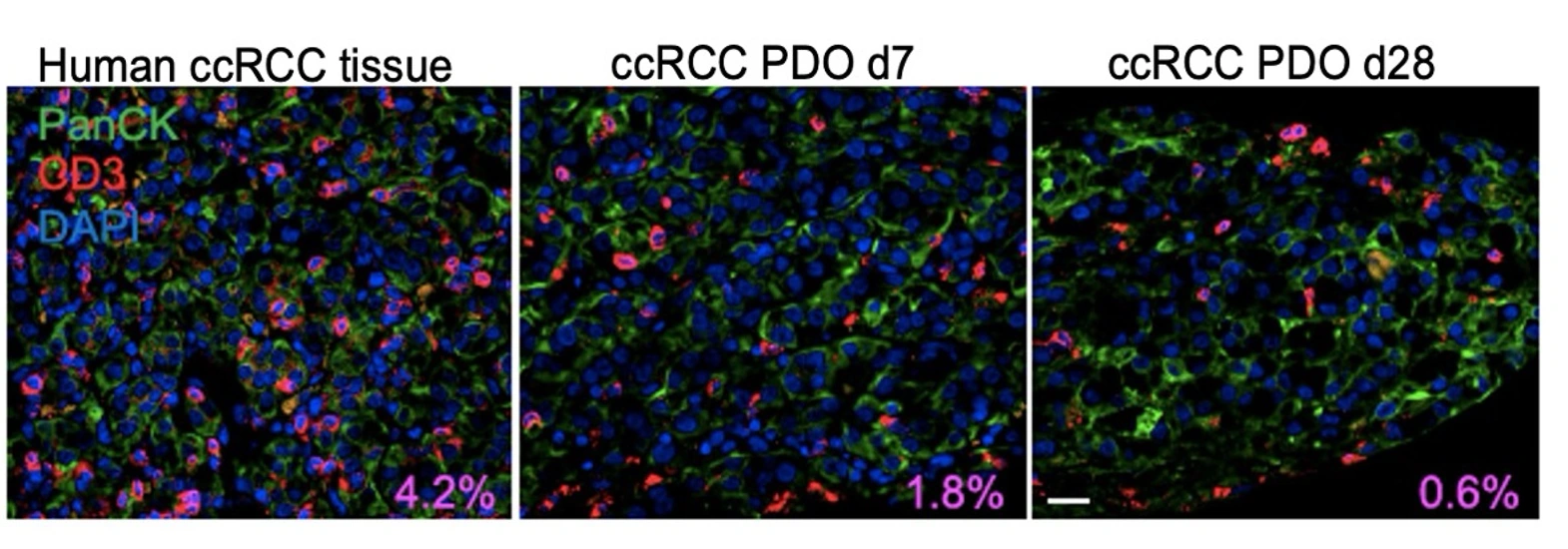
Within the same ccRCC PDO 2.0 study, PanCK/CD3 signals, IL-2 stimulation and ICB-related flow readouts characterize the sample baseline, compare treatment conditions and guide immune-functional endpoints.
Study focus
What this study can help you decide
- 01What immune-cell populations are present in the tumor sample?
- 02How does treatment affect immune activation and cytotoxicity?
- 03How does tissue context shape response?
STUDY APPROACH
Match the model and assays to your program
Use conventional PDO for tumor-cell-focused efficacy and add PDO 2.0 when immune and tissue context are central to the study.
Histology, immunofluorescence, flow, tumor viability/apoptosis and cytokines selected from the sample baseline.
Baseline and vehicle, mechanism-relevant positive controls, monotherapy and combination arms with gating and analysis records.
Integrate tumor response, immune activation and secreted signals to compare treatment conditions and prioritize the strongest mechanism and follow-up studies.
Study workflow
From sample profiling to immunotherapy response
We tailor the model and assay plan to the candidate's mechanism and the sample's tissue and immune profiles. Options include PDO 2.0 / ALI, immune co-culture and combined study designs.
Candidate and sample profile
We review the modality, mechanism, tumor type, sample condition and prior therapy to select the immune questions and assays best suited to the study.
Model selection and immune baseline
Select PDO 1.0, PDO 2.0 / ALI or a project-specific co-culture, then establish a pretreatment baseline using histology, epithelial identity and markers such as CD3 and CD8.
Treatment and multimodal readouts
Set dose, time and appropriate controls, then combine viability, apoptosis, flow, histology, immunofluorescence, cytokine or TCR readouts around the mechanism.
Compare responses and plan next studies
Integrate tumor response, immune-cell changes, secreted signals and model QC to compare candidates and prioritize mechanism or confirmatory studies.
Study images and readouts
Tissue identity, immune context and function
Use tissue images, functional readouts and molecular assays to understand model identity, treatment response and differences across candidate strategies.
 View image
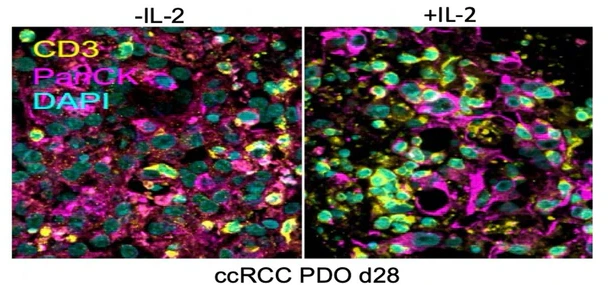
Immune-stimulation context: CD3, PanCK and DAPI imaging with and without IL-2 shows immune and tumor-epithelial signals within the same PDO study.
TRiCBIO ccRCC PDO 2.0 immune-context study data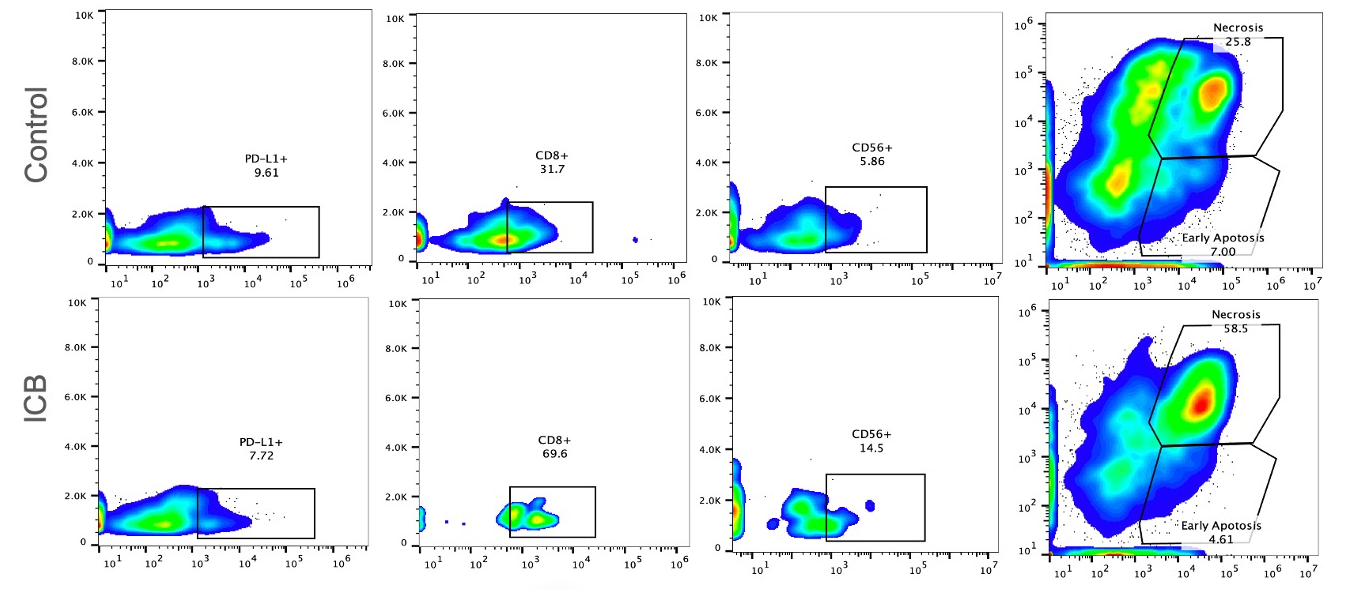 View image
Treatment-related readouts: PD-L1-, CD8- and CD56-associated flow profiles are interpreted alongside early-apoptosis and necrosis measurements to compare immune-associated and cell-death changes under immune-checkpoint blockade.
TRiCBIO ccRCC PDO 2.0 immune-context study dataExpected study outputs
What you receive
Model and immune baseline
Pretreatment QC covers model identity, tissue state and immune components selected for the study.
Tumor and immune response data
Results from the agreed assays, such as tumor viability, apoptosis, immune-cell profiling, histology or cytokine analysis.
Traceable data package & interpretation
Receive raw data, experimental conditions, analysis methods and a study report, with interpretation of how the findings support candidate comparison and next-step decisions.
Relevant model systems
Recommended model systems
The 2018 Cell study established the ALI tumor–immune organoid method. TRiCBIO applies it to tissue and immune profiling in colorectal, pancreatic, liver and renal cancer programs, defining the sample baseline, measurable endpoints, culture window and deliverables before treatment begins.
PROJECT DISCUSSION
Plan an immuno-oncology study
Describe the tumor type, sample context, candidate mechanism and immune change of interest. Our scientists can recommend PDO 2.0 / ALI or a co-culture design with the corresponding assays.