
Tumor sample context
Tumor type, collection site, sample condition, expected timing and available ethics documentation.
Use conventional PDOs for HCC efficacy studies. Immunotherapy or anti-angiogenic programs can add PDO 2.0, vascular-marker profiling or a purpose-built co-culture.
Patient HCC tissue
PDO · ALI · Immune co-culture study format
TRiCBIO HCC PDO study data
Model characterization
Source-tissue and organoid imaging plus lineage/identity markers characterize the model; functional readouts are selected for the candidate mechanism and study objective.
 View image
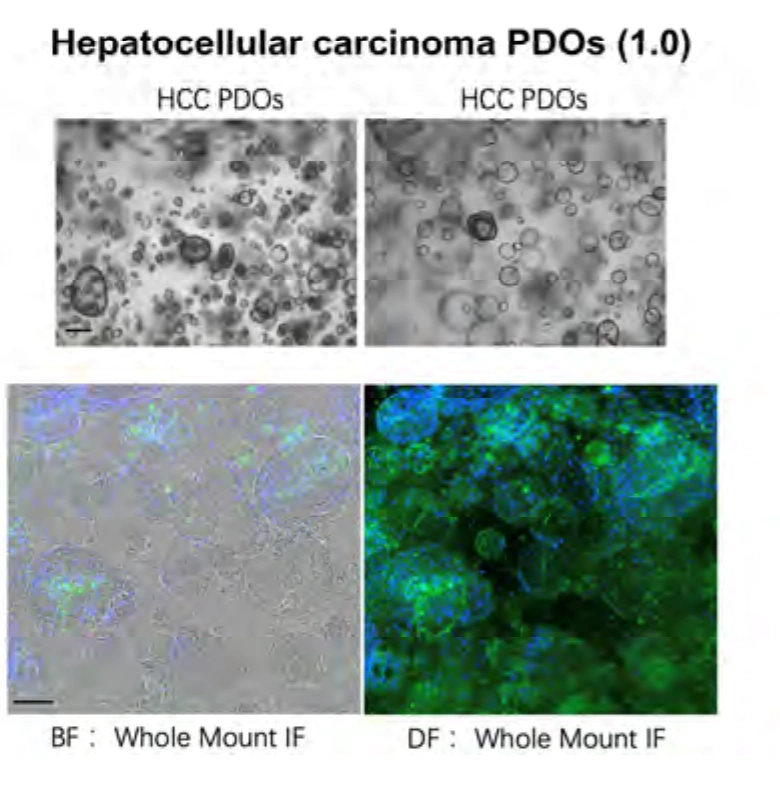
Conventional PDO culture: bright-field and whole-mount immunofluorescence show model morphology and cell state, supporting characterization and downstream endpoint design.
Study data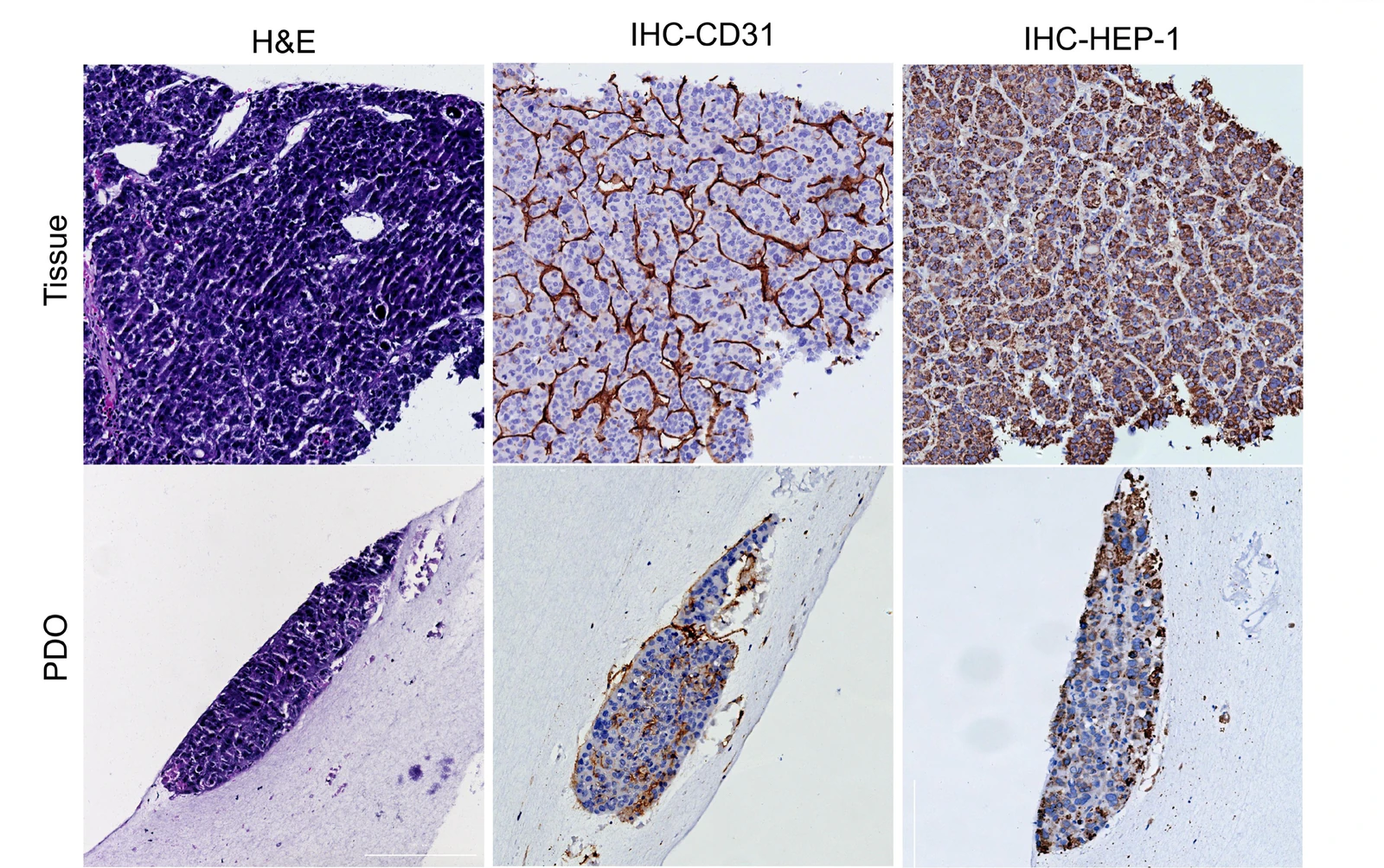 View image
Tissue and model profiling: paired H&E, CD31 and HEP-1 immunohistochemistry in source tissue and PDO shows tissue architecture, vascular features and hepatic lineage markers, supporting model identity and the selection of target and mechanism readouts.
Model & assay dataStudy planning
Tumor type, sample condition, candidate and intended comparison guide the culture format, controls and assays.
Tumor type, collection site, sample condition, expected timing and available ethics documentation.
Modality, dosing plan, controls and the response or comparison the study should address.
Planned histology, flow, molecular or functional assays, together with preferred data and report formats.
Study design
HCC PDO studies combine source tissue, model identity, immune or vascular context and treatment response, connecting activity readouts with tissue biology to explain differences among candidates.
Review the documented liver-tumor pathology, sampling site, prior treatment and available pathology.
Use H&E and hepatic, epithelial or endothelial markers to confirm that the model is ready for efficacy work.
Set doses, time points and controls around small-molecule, ICB, anti-angiogenic or combination mechanisms.
Compare candidates using viability, histology, immune composition, cytokine or flow results in context.
Research applications
Assays & QC
Hepatic identity and tissue architecture establish the model baseline, followed by immune, vascular-marker and functional readouts matched to the selected system.
Study & delivery
Choose a supplied model or a TRiCBIO-run efficacy and mechanism study. Typical deliverables include imaging, assay data, analysis and a study report.
Related solutions
PROJECT DISCUSSION
Tumor type, sample status, candidate profile and comparison endpoints determine the culture format, controls, assay panel and deliverables for the HCC PDO / PDO 2.0.
Use conventional PDOs for HCC efficacy studies. Immunotherapy or anti-angiogenic programs can add PDO 2.0, vascular-marker profiling or a purpose-built co-culture.
Patient HCC tissue
PDO · ALI · Immune co-culture study format
TRiCBIO HCC PDO study data
Model characterization
Source-tissue and organoid imaging plus lineage/identity markers characterize the model; functional readouts are selected for the candidate mechanism and study objective.
View imageConventional PDO culture: bright-field and whole-mount immunofluorescence show model morphology and cell state, supporting characterization and downstream endpoint design.
Study dataView imageTissue and model profiling: paired H&E, CD31 and HEP-1 immunohistochemistry in source tissue and PDO shows tissue architecture, vascular features and hepatic lineage markers, supporting model identity and the selection of target and mechanism readouts.
Model & assay dataStudy planning
Tumor type, sample condition, candidate and intended comparison guide the culture format, controls and assays.
Tumor type, collection site, sample condition, expected timing and available ethics documentation.
Modality, dosing plan, controls and the response or comparison the study should address.
Planned histology, flow, molecular or functional assays, together with preferred data and report formats.
Study design
HCC PDO studies combine source tissue, model identity, immune or vascular context and treatment response, connecting activity readouts with tissue biology to explain differences among candidates.
Review the documented liver-tumor pathology, sampling site, prior treatment and available pathology.
Use H&E and hepatic, epithelial or endothelial markers to confirm that the model is ready for efficacy work.
Set doses, time points and controls around small-molecule, ICB, anti-angiogenic or combination mechanisms.
Compare candidates using viability, histology, immune composition, cytokine or flow results in context.
Research applications
Assays & QC
Hepatic identity and tissue architecture establish the model baseline, followed by immune, vascular-marker and functional readouts matched to the selected system.
Study & delivery
Choose a supplied model or a TRiCBIO-run efficacy and mechanism study. Typical deliverables include imaging, assay data, analysis and a study report.
Related solutions
PROJECT DISCUSSION
Tumor type, sample status, candidate profile and comparison endpoints determine the culture format, controls, assay panel and deliverables for the HCC PDO / PDO 2.0.