
Risk and exposure
Review modality, target, expected exposure and known class risk.
Application
Use human organ models to compare dose- and exposure-related injury with organ-specific morphological, functional and molecular readouts.
Human organ safety studies
Match lung, kidney, gastric and adjacent non-tumor liver models to the candidate’s expected exposure and organ risks, with tailored QC, dosing conditions and injury endpoints for each tissue.
 View image
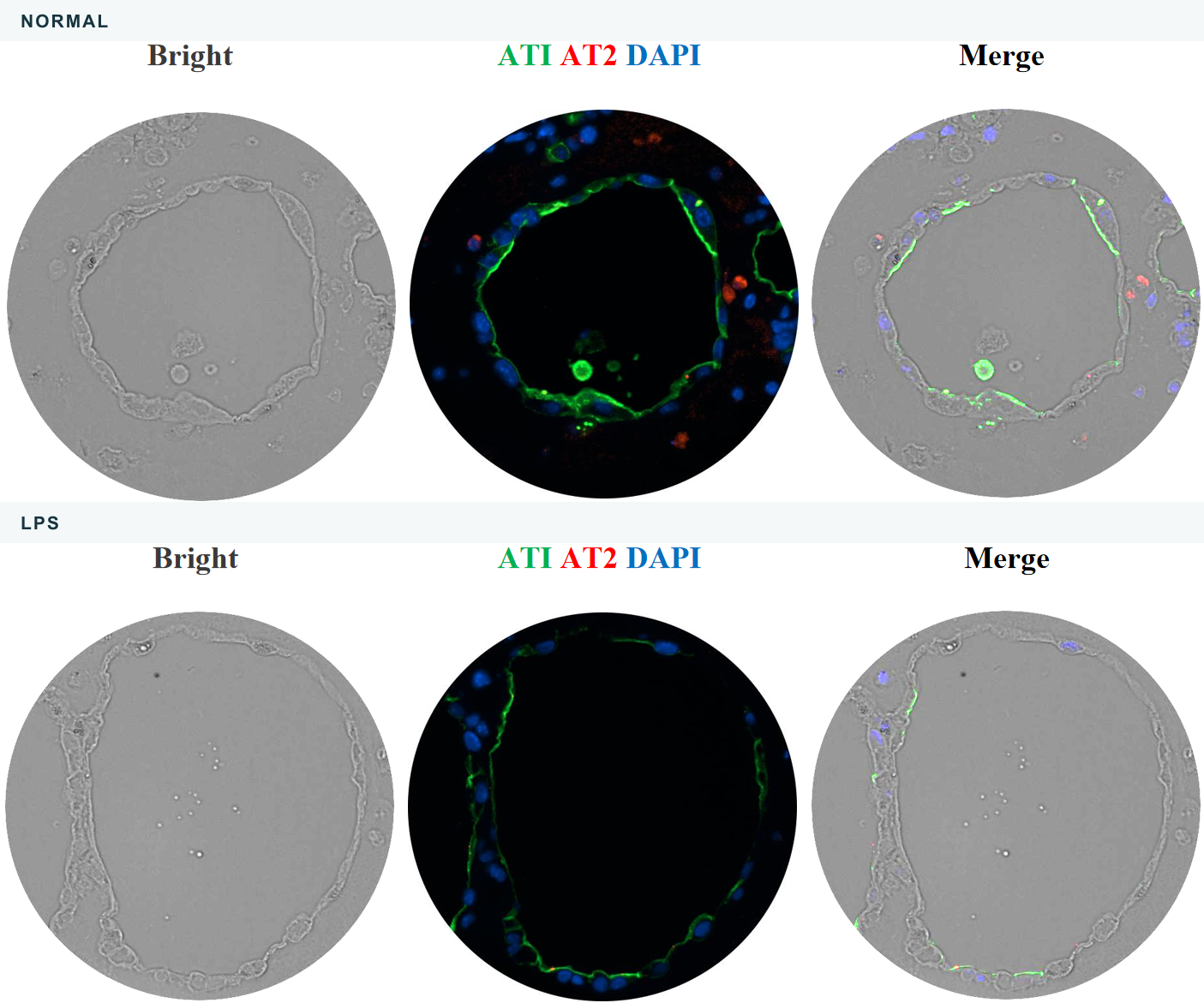
Alveolar endpoints: normal and LPS conditions are compared through bright-field, AT1, AT2, DAPI and merged views, connecting the injury condition with alveolar-cell profiling.
TRiCBIO normal-lung organoid LPS injury study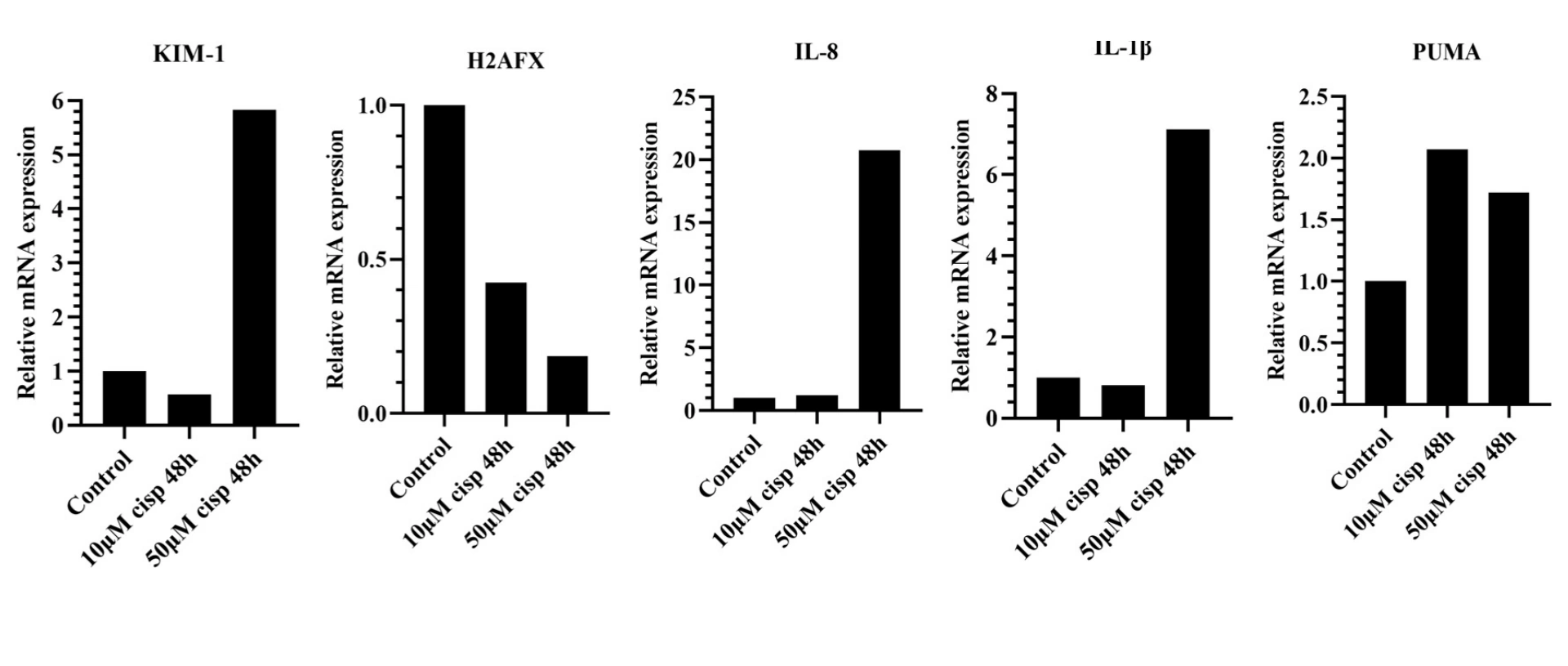 View image
H9-derived | cisplatin molecular response: RT-qPCR profiles KIM-1, H2AFX and inflammation/stress-related genes across cisplatin conditions, helping prioritize kidney-injury biomarkers and define follow-on dose, timing and confirmatory assays.
TRiCBIO H9-derived kidney organoid cisplatin studyContinue to the related case for model context, experimental setup and interpretation.
Study focus
Study workflow
Review modality, target, expected exposure and known class risk.
Confirm organ and cell identity to establish a reliable baseline for interpreting candidate-related injury.
Combine morphology, viability, histology and molecular injury readouts.
Compare in vitro injury trends and prioritize signals for mechanism work or confirmation in another model.
Model options
Start with kidney molecular-injury and normal-lung LPS-injury evidence, then extend to gastric and adjacent non-tumor liver organoids according to candidate risk, with organ-specific QC, exposure conditions and injury endpoints planned together.
PROJECT DISCUSSION
Candidate exposure, priority organ risks and available safety findings guide human organ-model selection, dose design and organ-specific injury endpoints.
Application
Use human organ models to compare dose- and exposure-related injury with organ-specific morphological, functional and molecular readouts.
Human organ safety studies
Match lung, kidney, gastric and adjacent non-tumor liver models to the candidate’s expected exposure and organ risks, with tailored QC, dosing conditions and injury endpoints for each tissue.
View imageAlveolar endpoints: normal and LPS conditions are compared through bright-field, AT1, AT2, DAPI and merged views, connecting the injury condition with alveolar-cell profiling.
TRiCBIO normal-lung organoid LPS injury studyView imageH9-derived | cisplatin molecular response: RT-qPCR profiles KIM-1, H2AFX and inflammation/stress-related genes across cisplatin conditions, helping prioritize kidney-injury biomarkers and define follow-on dose, timing and confirmatory assays.
TRiCBIO H9-derived kidney organoid cisplatin studyContinue to the related case for model context, experimental setup and interpretation.
Study focus
Study workflow
Review modality, target, expected exposure and known class risk.
Confirm organ and cell identity to establish a reliable baseline for interpreting candidate-related injury.
Combine morphology, viability, histology and molecular injury readouts.
Compare in vitro injury trends and prioritize signals for mechanism work or confirmation in another model.
Model options
Start with kidney molecular-injury and normal-lung LPS-injury evidence, then extend to gastric and adjacent non-tumor liver organoids according to candidate risk, with organ-specific QC, exposure conditions and injury endpoints planned together.
PROJECT DISCUSSION
Candidate exposure, priority organ risks and available safety findings guide human organ-model selection, dose design and organ-specific injury endpoints.