
Candidate and exposure
Modality, concentration range, exposure time and control conditions.
Organoids from adjacent non-tumor liver tissue for epithelial-biology, drug-exposure and tumor-versus-adjacent-tissue studies.
Adjacent non-tumor liver tissue from surgical specimens
3D culture · Organoid 1.0 / 2.0 comparison
TRiCBIO adjacent non-tumor liver organoid culture and characterization
Model characterization
Culture morphology, histology and tissue-lineage markers establish the model profile and guide selection of subsequent efficacy, safety or functional endpoints.
 View image
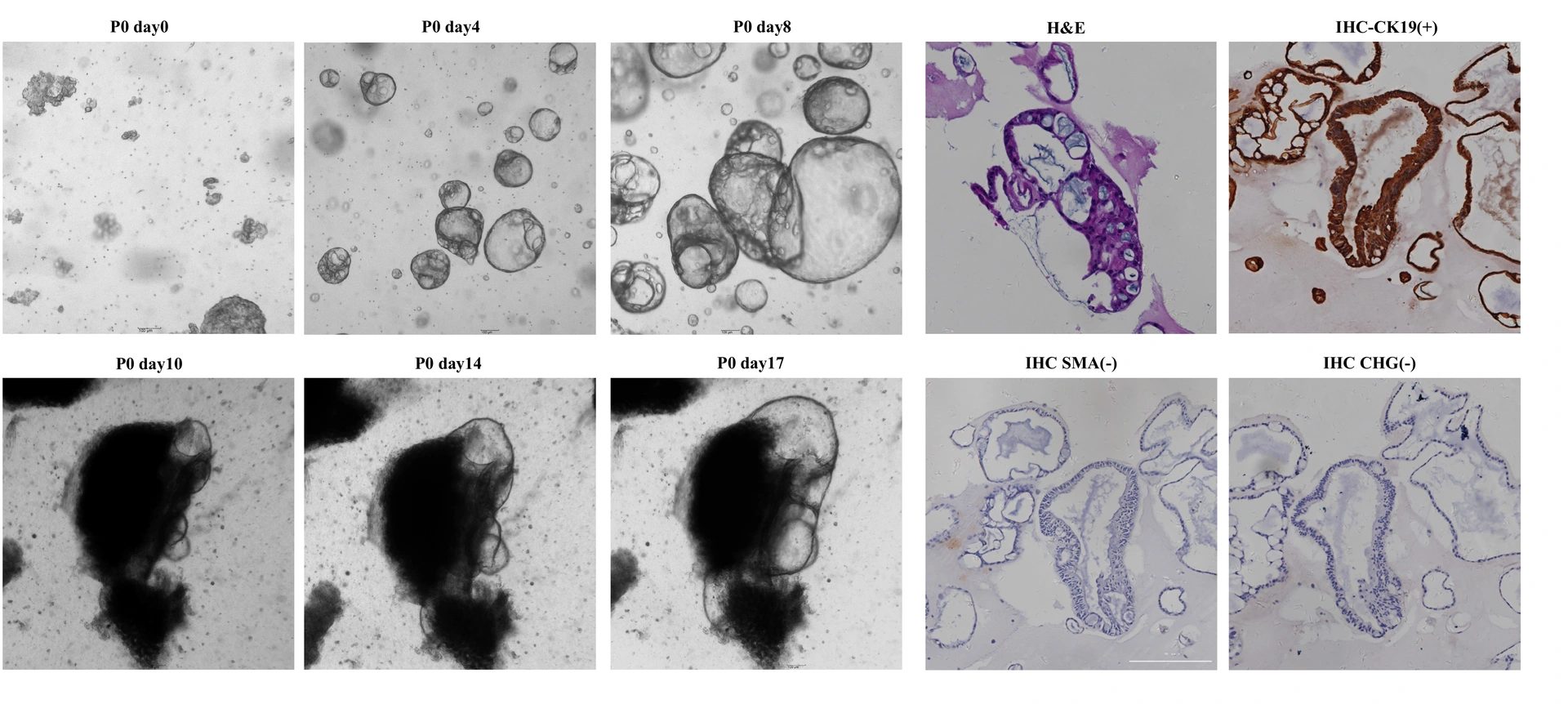
Culture and identity: serial P0 growth is shown with H&E; the panel shown is CK19-positive and SMA-negative.
Study data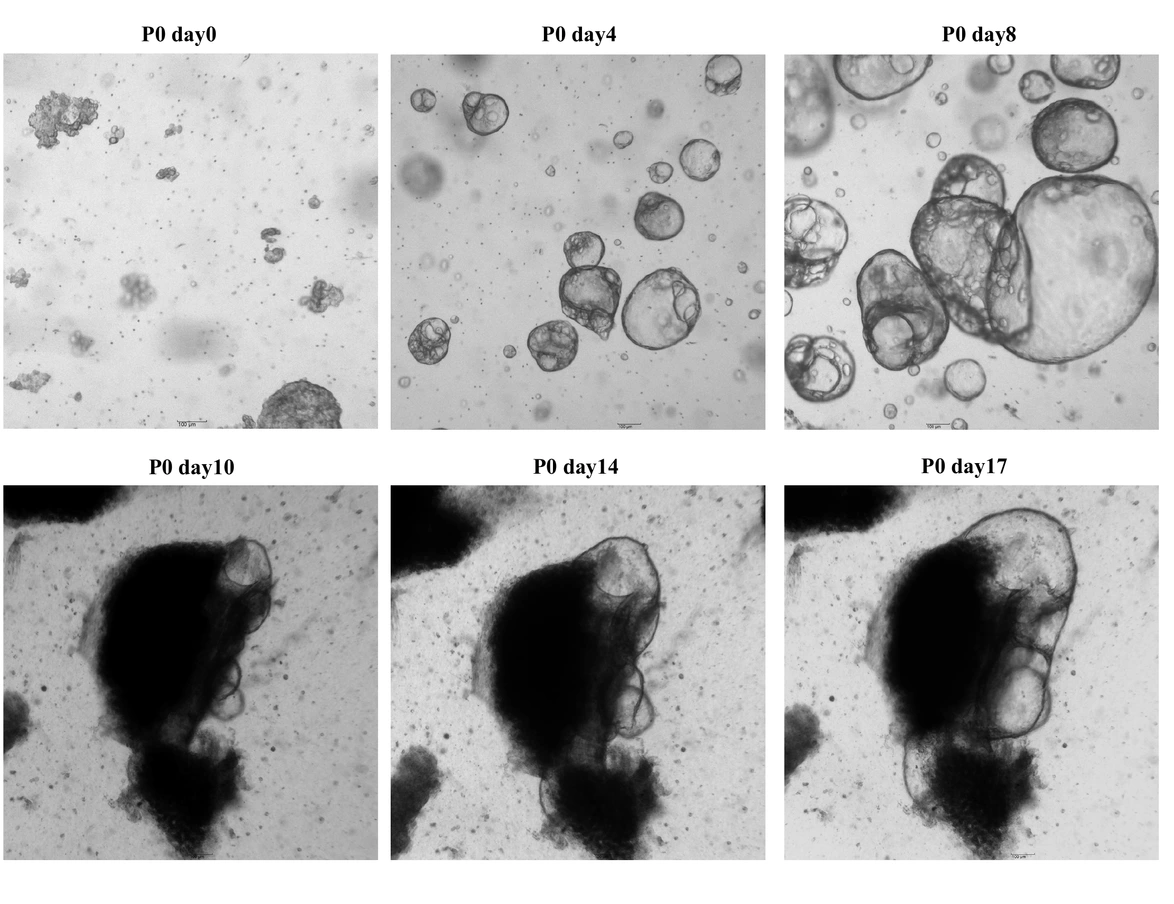 View image
Serial culture: bright-field views at P0 days 0, 4, 8, 10, 14 and 17 show morphological change during establishment and guide culture-state selection for subsequent studies.
Study data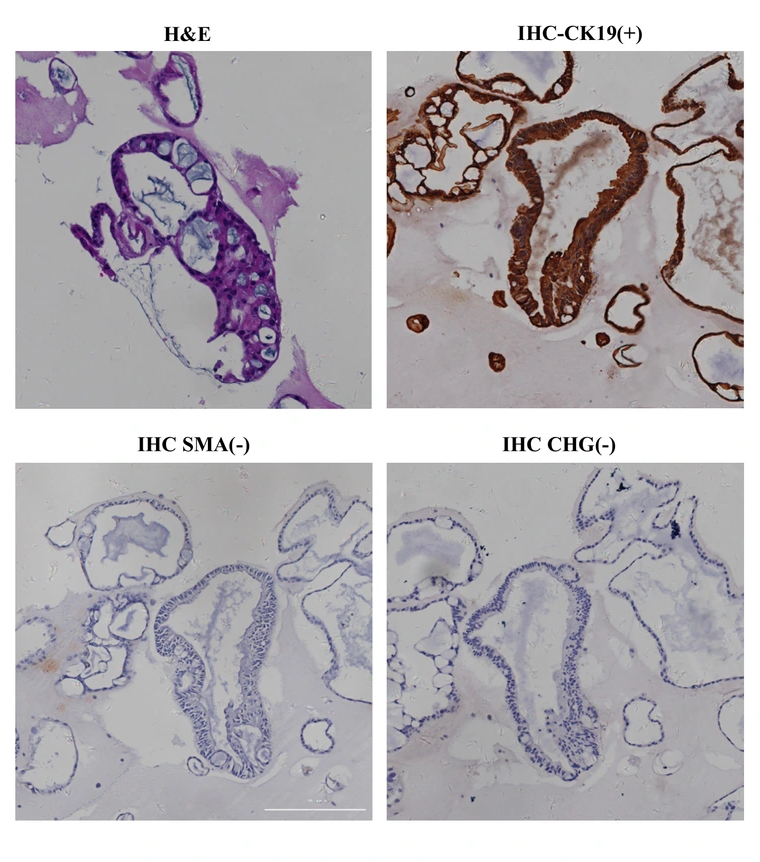 View image
Histology and identity: H&E shows tissue structure; the CK19-positive, SMA-negative panel supports liver-epithelial, injury and adjacent-tissue comparison studies.
Study dataStudy planning
Candidate exposure and the priority organ-safety or functional endpoints shape the model conditions, dosing and readouts.
Modality, concentration range, exposure time and control conditions.
Priority organ-injury, efficacy or functional endpoints, together with the readouts needed to interpret them.
Required culture format, study batches, raw data, images and reporting needs.
Study design
Derived from adjacent non-tumor liver tissue, this model combines culture morphology, histology and epithelial markers for liver epithelial biology, drug exposure, tissue injury and tumor-adjacent comparisons.
Record tumor adjacency, sampling region and available pathology.
Use serial culture, H&E and morphology to assess growth and epithelial structure.
Serial culture and H&E show model structure; the CK19-positive, SMA-negative panel adds epithelial identity to the model profile.
Select endpoints for drug exposure, injury or tumor-adjacent comparison.
Research applications
Assays & QC
Serial morphology and H&E show tissue structure; the panel shown is CK19-positive and SMA-negative, adding epithelial identity to the model profile.
Study & delivery
Choose model establishment, culture or dosing studies. Typical deliverables include imaging, histology and a study report.
Related solutions
PROJECT DISCUSSION
Candidate profile, expected exposure and priority organ risk determine dose conditions, controls and injury or functional endpoints for the adjacent non-tumor liver organoid.
Organoids from adjacent non-tumor liver tissue for epithelial-biology, drug-exposure and tumor-versus-adjacent-tissue studies.
Adjacent non-tumor liver tissue from surgical specimens
3D culture · Organoid 1.0 / 2.0 comparison
TRiCBIO adjacent non-tumor liver organoid culture and characterization
Model characterization
Culture morphology, histology and tissue-lineage markers establish the model profile and guide selection of subsequent efficacy, safety or functional endpoints.
View imageCulture and identity: serial P0 growth is shown with H&E; the panel shown is CK19-positive and SMA-negative.
Study dataView imageSerial culture: bright-field views at P0 days 0, 4, 8, 10, 14 and 17 show morphological change during establishment and guide culture-state selection for subsequent studies.
Study dataView imageHistology and identity: H&E shows tissue structure; the CK19-positive, SMA-negative panel supports liver-epithelial, injury and adjacent-tissue comparison studies.
Study dataStudy planning
Candidate exposure and the priority organ-safety or functional endpoints shape the model conditions, dosing and readouts.
Modality, concentration range, exposure time and control conditions.
Priority organ-injury, efficacy or functional endpoints, together with the readouts needed to interpret them.
Required culture format, study batches, raw data, images and reporting needs.
Study design
Derived from adjacent non-tumor liver tissue, this model combines culture morphology, histology and epithelial markers for liver epithelial biology, drug exposure, tissue injury and tumor-adjacent comparisons.
Record tumor adjacency, sampling region and available pathology.
Use serial culture, H&E and morphology to assess growth and epithelial structure.
Serial culture and H&E show model structure; the CK19-positive, SMA-negative panel adds epithelial identity to the model profile.
Select endpoints for drug exposure, injury or tumor-adjacent comparison.
Research applications
Assays & QC
Serial morphology and H&E show tissue structure; the panel shown is CK19-positive and SMA-negative, adding epithelial identity to the model profile.
Study & delivery
Choose model establishment, culture or dosing studies. Typical deliverables include imaging, histology and a study report.
Related solutions
PROJECT DISCUSSION
Candidate profile, expected exposure and priority organ risk determine dose conditions, controls and injury or functional endpoints for the adjacent non-tumor liver organoid.