
Establishes culture, tissue and marker baselines for candidate comparison or mechanism studies in a specific HCC model.
Model & assay dataCase study
HCC PDO and PDO 2.0: culture format and tissue identity
HCC PDO and PDO 2.0 studies combine culture morphology, tissue comparison and lineage-marker profiling to guide efficacy and mechanism endpoints.
01Study objective02Model & design03Assays & findings04Decision & next step
Model & sampleHepatocellular carcinoma PDO and PDO 2.0 with source-tissue comparison
ObjectiveEstablish architecture, model identity and downstream study direction through complementary HCC model evidence
Study conditionsModel establishment, tissue characterization and treatment conditions selected for the study
AssaysBright-field, whole-mount immunofluorescence, H&E, and hepatic and endothelial markers
Study evidenceTRiCBIO model and assay data with study figures
DeliverablesReceive images, assay results and an analysis summary; the report documents the study design, sample size and statistical methods
CULTURE FORMAT & TISSUE IDENTITY
PDO morphology and hepatic identity
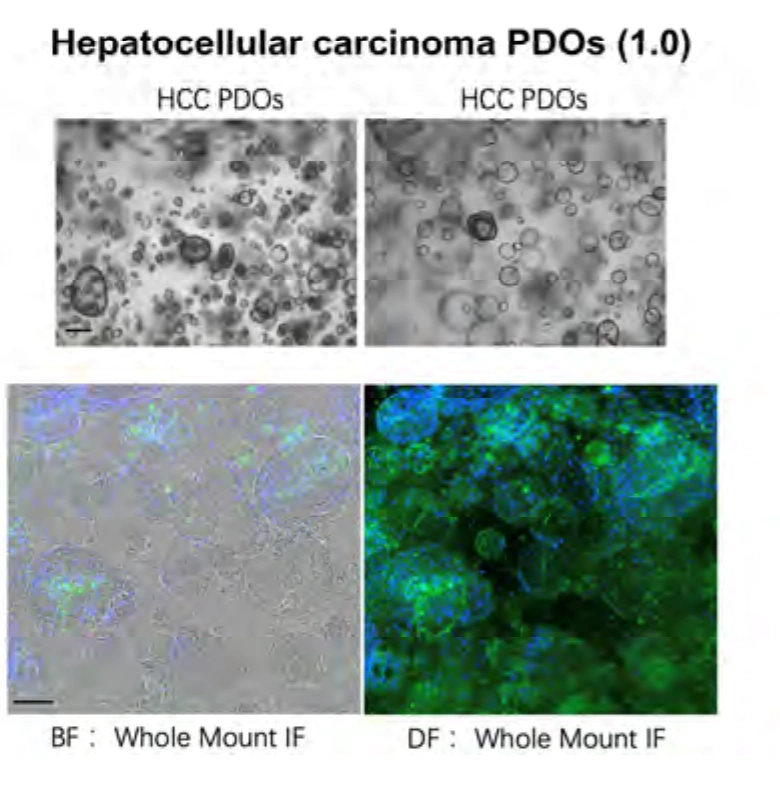
Bright-field and whole-mount immunofluorescence show culture morphology and cell state; source-tissue and PDO H&E, endothelial and hepatocyte-associated markers then guide efficacy and mechanism endpoints.
 View image
Conventional PDO culture: bright-field and whole-mount immunofluorescence show model morphology and cell state, supporting characterization and downstream endpoint design.
Study data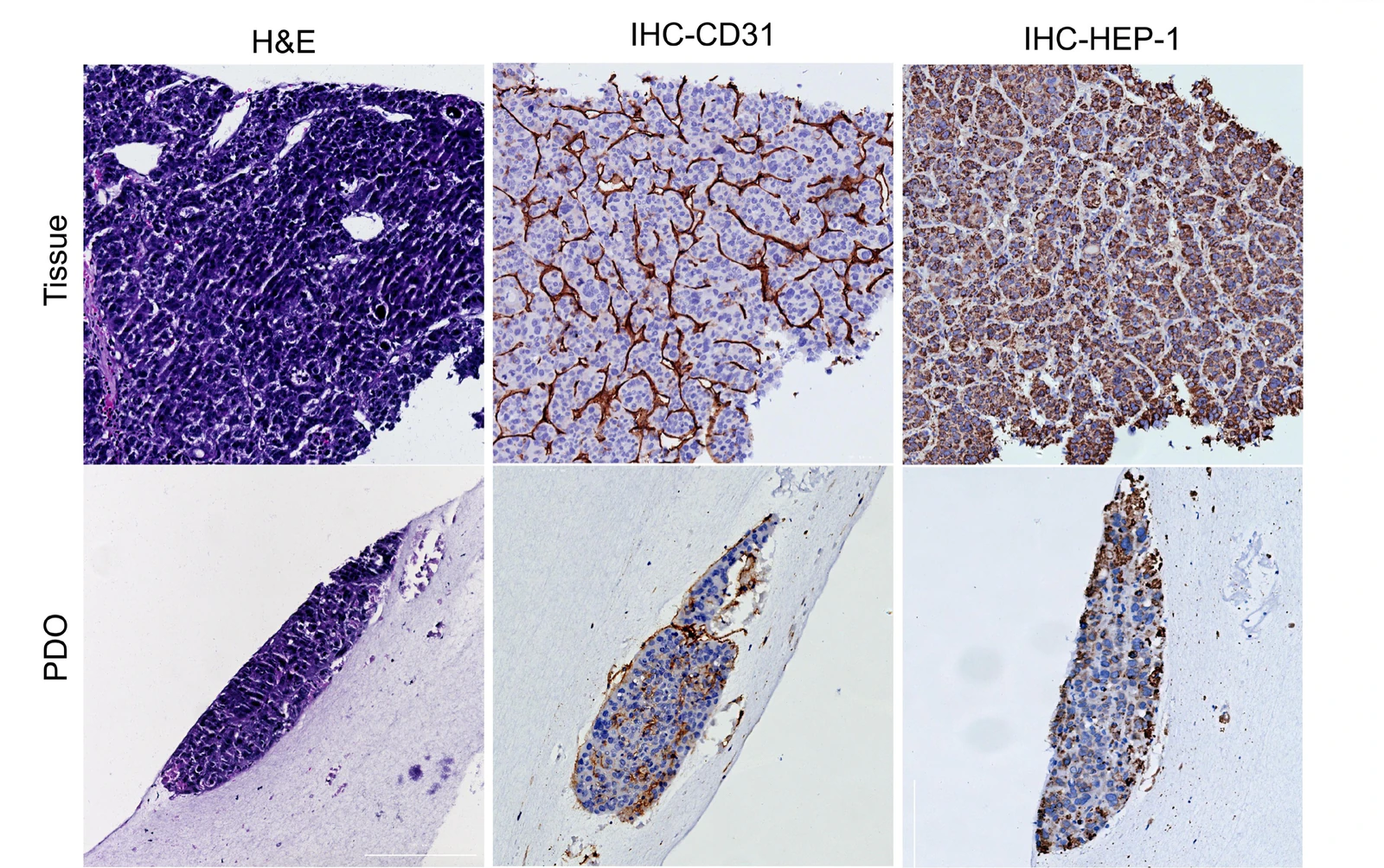 View image
Tissue and model profiling: paired H&E, CD31 and HEP-1 immunohistochemistry in source tissue and PDO shows tissue architecture, vascular features and hepatic lineage markers, supporting model identity and the selection of target and mechanism readouts.
Model & assay dataEstablish HCC identity from source tissue and hepatic features
Source-tissue morphology, hepatic epithelial features and overall model condition guide culture-format and endpoint selection across conventional PDO and PDO 2.0 studies.
Document PDO culture morphology and cell state
Bright-field and whole-mount immunofluorescence document 3D growth and cell state, then combine with histology and lineage markers to define the model profile used in treatment studies.
Confirm lineage identity through histology and markers
Source-tissue and PDO H&E, hepatic markers and endothelial IHC define tissue structure and lineage context before efficacy or mechanism studies.
- Source-tissue comparison
- Hepatic identity
- Endothelial profiling
- Culture and histology QC
INTERPRETATION
Move from model identity into candidate and mechanism studies
Culture morphology, histology and identity markers are assessed with HCC pathology and can be extended through independent samples and functional endpoints.
Build treatment studies around target expression, dose, time and mechanism endpoints, then compare across independent samples.
Related models and services
Choose the right models and services for the next study
PROJECT DISCUSSION
Discuss a study built around your program
Tell us which model, assay or finding you want to extend. Our scientists will adapt the approach to your candidate, samples and decision point.