
Multi-organoid culture and tissue comparison
Culture, histology and passaging studies across organ systems show serial growth and morphological correspondence with source tissue.
CROSS-MODEL CULTURE & TISSUE COMPARISON
Cross-model growth and tissue identity
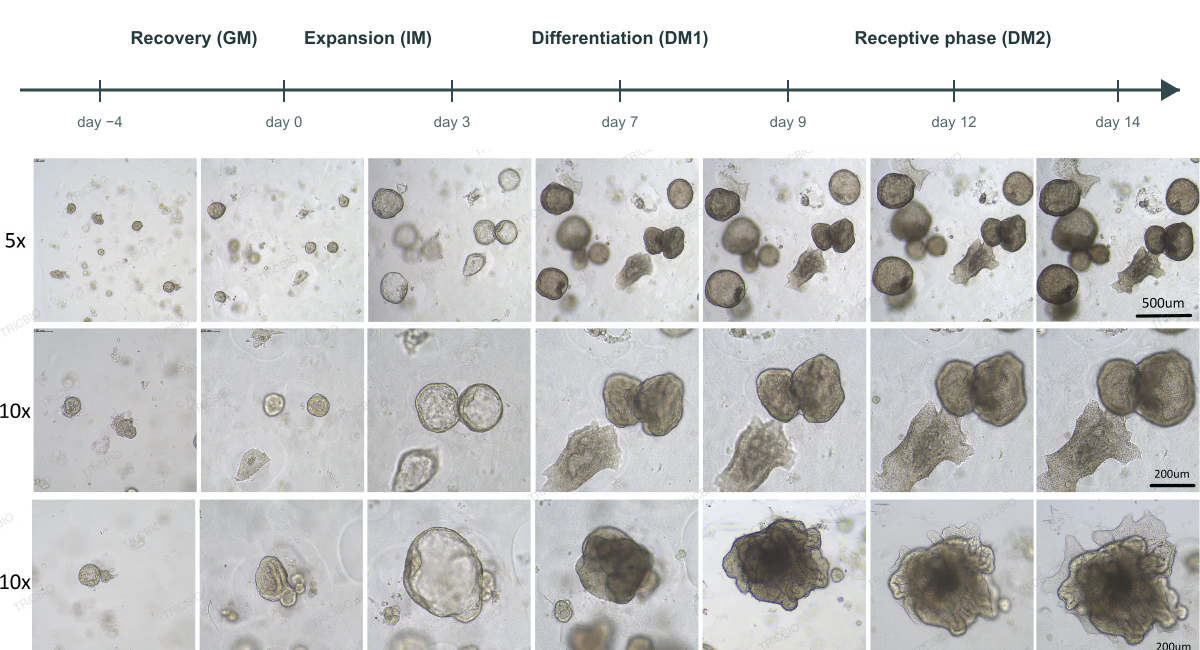
Serial endometrial organoid culture shows stage-related morphology, while source-tissue and organoid comparisons in a mesenchymal tumor show tissue correspondence across complementary model workflows.
 View image
Serial culture record: morphology is followed across recovery, expansion, differentiation and receptive stages within one workflow.
TRiCBIO human endometrial organoid characterization data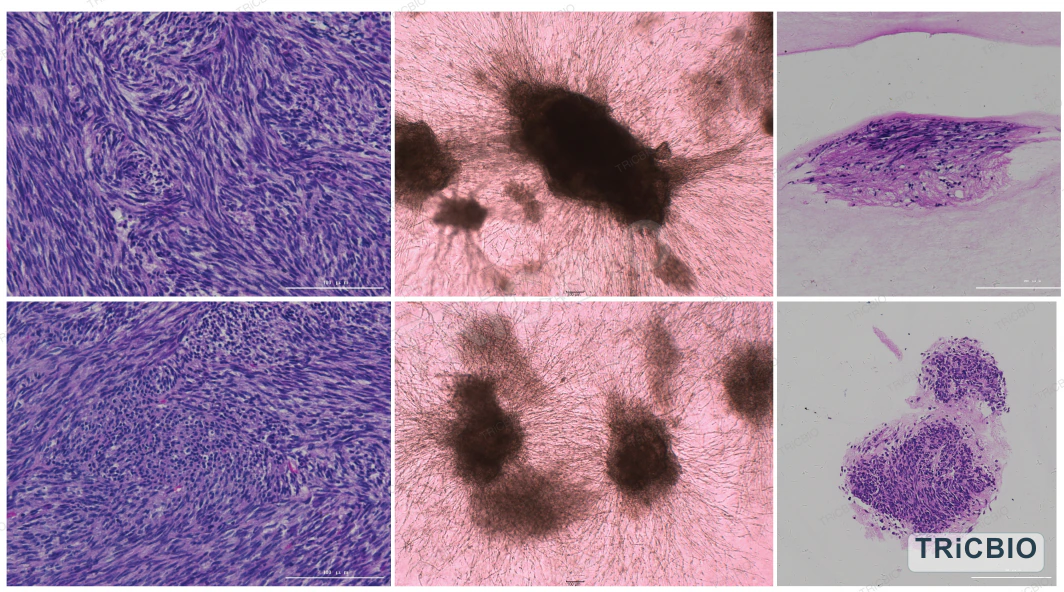 View image
Tissue comparison: source-tissue H&E, organoid bright-field and organoid H&E are viewed together to assess morphological correspondence in a mesenchymal-tumor model.
Model & assay data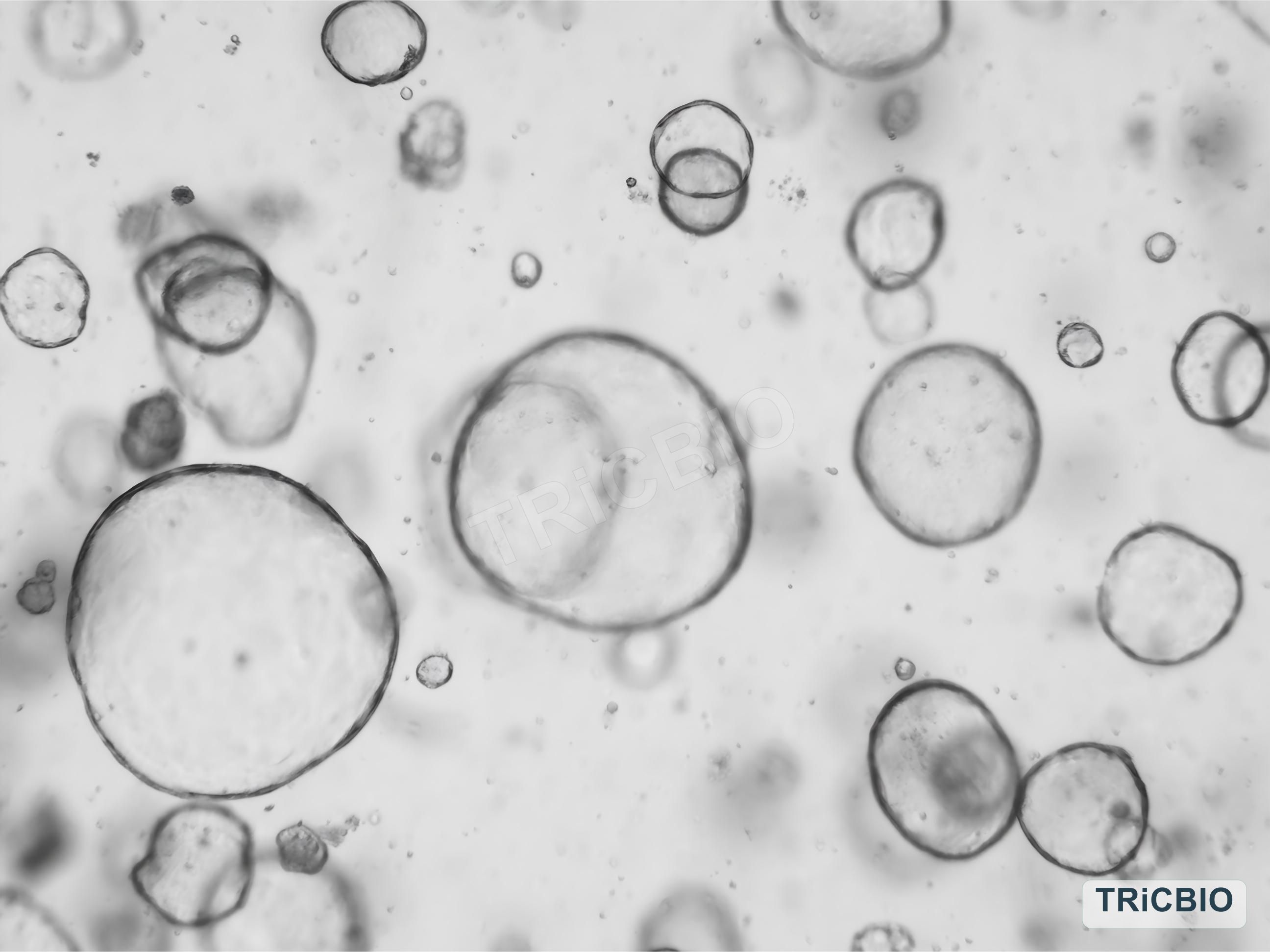 View image
Normal gastric organoids: bright-field imaging shows 3D growth morphology and provides a culture reference for passaging, histology and functional assays.
Model & assay dataExplore normal-tissue, tumor and disease-model combinations
Platform evidence covers culture, passage and histology across lung, adjacent non-tumor liver, gastric, endometrial, fallopian and multiple tumor models, together with selected PDOX and immune studies.
Use culture and tissue comparisons to select models for downstream studies
Across the portfolio, culture, passaging and source-tissue comparisons characterize each model before efficacy, mechanism or safety studies.
Explore each organ model
Lung, liver, gastric, endometrial and fallopian content links to dedicated model pages with model QC, functional state, intended studies and related services.
Combine efficacy, mechanism and multi-organ safety studies
Candidate mechanism, target organs and development stage can guide a single-organ study or a coordinated normal-tissue and tumor-model program across efficacy, mechanism and safety.
Related models and services
Find relevant models and services
PROJECT DISCUSSION
Discuss your study with a scientist
Tell us which model features and readouts matter most. Our scientists will recommend the model, QC plan and study endpoints.