
Sample and tissue context
Sample source, tissue context, cycle or stage information, and available ethics or background documentation.
Human fallopian tube organoids with serial culture morphology and source-tissue/organoid H&E comparison, plus study-specific identity and functional assays.
Human fallopian tube tissue, with sample context, collection and ethics integrated into study design
3D culture · Custom development
TRiCBIO human fallopian tube organoid establishment, culture and histology data
Model characterization
Serial culture and source-tissue/organoid H&E show epithelial morphology and growth, with identity, functional and reproducibility endpoints tailored to the objective.
 View image
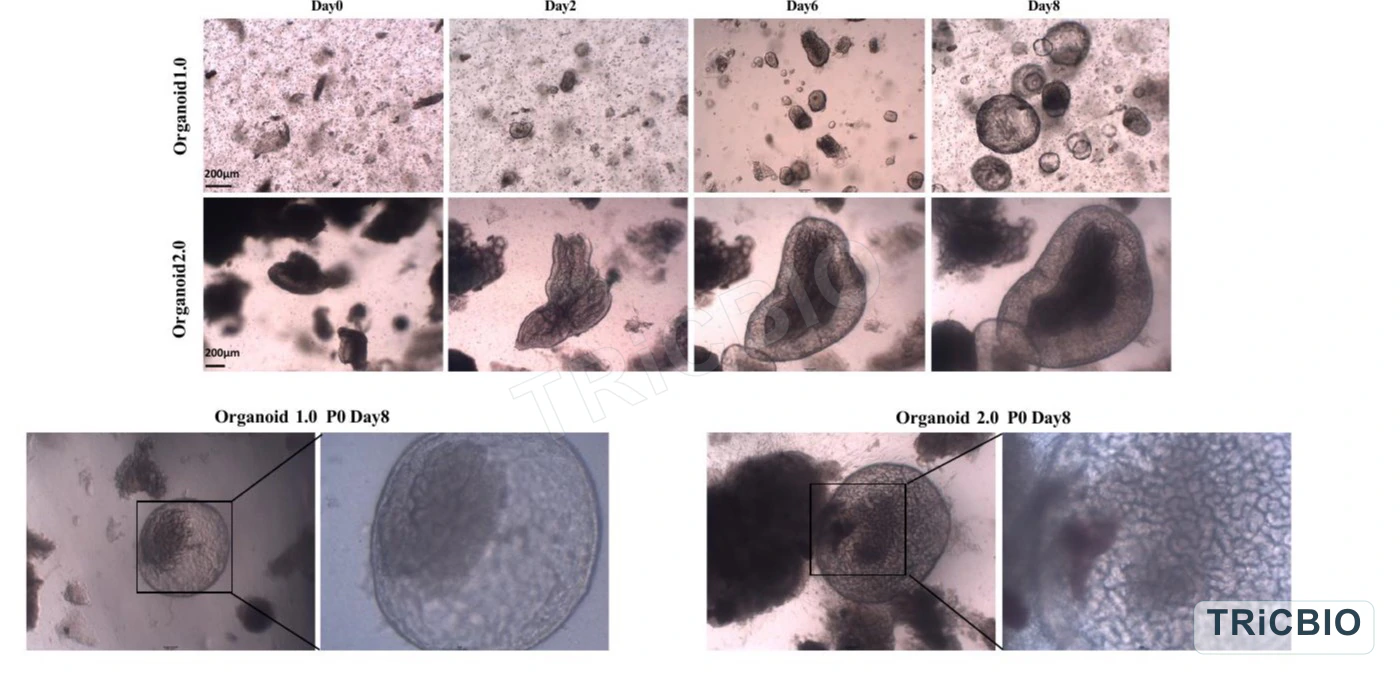
Culture establishment: the displayed time points document formation of 3D structures from tissue-derived material and compare morphology across formats to guide custom-condition optimization.
TRiCBIO human fallopian tube organoid characterization data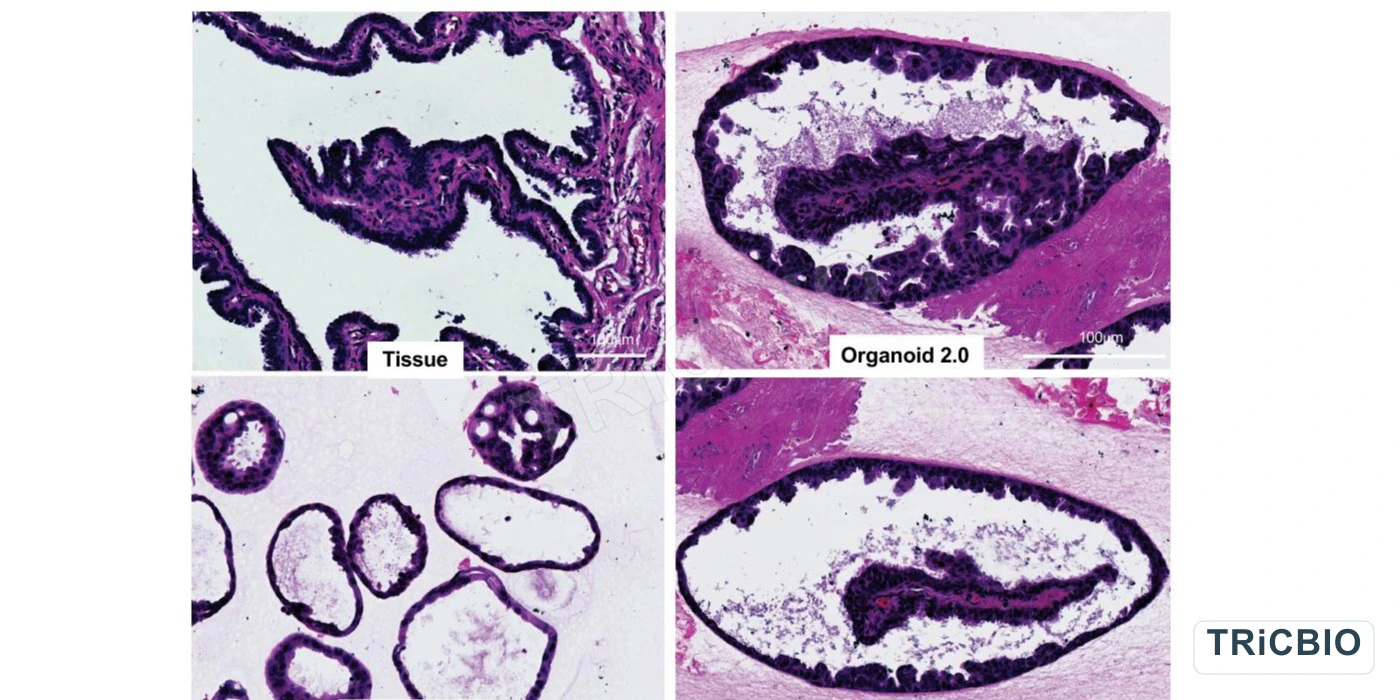 View image
Histology: H&E compares epithelial morphology between source tissue and organoids. Subsequent studies can add identity markers, functional assays and reproducibility assessments.
TRiCBIO human fallopian tube organoid characterization dataStudy planning
Sample and tissue context, the biological objective and the stages or phenotypes of interest guide culture conditions, assays and deliverables.
Sample source, tissue context, cycle or stage information, and available ethics or background documentation.
The tissue-biology objective, induction or intervention conditions, and the stages or phenotypes to compare.
Planned morphology, histology, molecular or functional assays, with preferred images, data and report formats.
Study design
Culture and histology document model establishment and source-tissue correspondence. Identity markers, functional endpoints and batch-reproducibility criteria are then selected for the study objective.
Bring together collection site, sample state, ethics documentation and intended use to define the core endpoint and study design.
Record 3D-structure formation and culture state across time points to guide culture optimization and follow-on studies.
Compare source tissue and organoids by H&E, then add epithelial-identity or functional assays aligned to the study objective.
Use prespecified criteria to plan sample, batch and candidate expansion and set priorities for follow-on work.
Research applications
Assays & QC
Culture morphology and H&E document growth and source-tissue concordance. Each program defines additional identity markers, functional assays and batch criteria before candidate testing.
Study & delivery
A tailored program can include model expansion, assays and follow-on research, with images, data and reporting defined in the study plan.
Related solutions
PROJECT DISCUSSION
Sample and tissue context, study goal, intervention conditions and functional endpoints determine the model configuration, assay panel and deliverables for the human fallopian tube organoid.
Human fallopian tube organoids with serial culture morphology and source-tissue/organoid H&E comparison, plus study-specific identity and functional assays.
Human fallopian tube tissue, with sample context, collection and ethics integrated into study design
3D culture · Custom development
TRiCBIO human fallopian tube organoid establishment, culture and histology data
Model characterization
Serial culture and source-tissue/organoid H&E show epithelial morphology and growth, with identity, functional and reproducibility endpoints tailored to the objective.
View imageCulture establishment: the displayed time points document formation of 3D structures from tissue-derived material and compare morphology across formats to guide custom-condition optimization.
TRiCBIO human fallopian tube organoid characterization dataView imageHistology: H&E compares epithelial morphology between source tissue and organoids. Subsequent studies can add identity markers, functional assays and reproducibility assessments.
TRiCBIO human fallopian tube organoid characterization dataStudy planning
Sample and tissue context, the biological objective and the stages or phenotypes of interest guide culture conditions, assays and deliverables.
Sample source, tissue context, cycle or stage information, and available ethics or background documentation.
The tissue-biology objective, induction or intervention conditions, and the stages or phenotypes to compare.
Planned morphology, histology, molecular or functional assays, with preferred images, data and report formats.
Study design
Culture and histology document model establishment and source-tissue correspondence. Identity markers, functional endpoints and batch-reproducibility criteria are then selected for the study objective.
Bring together collection site, sample state, ethics documentation and intended use to define the core endpoint and study design.
Record 3D-structure formation and culture state across time points to guide culture optimization and follow-on studies.
Compare source tissue and organoids by H&E, then add epithelial-identity or functional assays aligned to the study objective.
Use prespecified criteria to plan sample, batch and candidate expansion and set priorities for follow-on work.
Research applications
Assays & QC
Culture morphology and H&E document growth and source-tissue concordance. Each program defines additional identity markers, functional assays and batch criteria before candidate testing.
Study & delivery
A tailored program can include model expansion, assays and follow-on research, with images, data and reporting defined in the study plan.
Related solutions
PROJECT DISCUSSION
Sample and tissue context, study goal, intervention conditions and functional endpoints determine the model configuration, assay panel and deliverables for the human fallopian tube organoid.