
Tumor sample context
Tumor type, collection site, sample condition, expected timing and available ethics documentation.
Case-specific model development, phenotype profiling and candidate-response studies for GIST, osteosarcoma and related tumors.
Patient tumor tissue with pathology-guided, case-specific design
Custom 3D culture
TRiCBIO culture and project cases
Model characterization
Source-tissue and organoid imaging plus lineage/identity markers characterize the model; functional readouts are selected for the candidate mechanism and study objective.
 View image
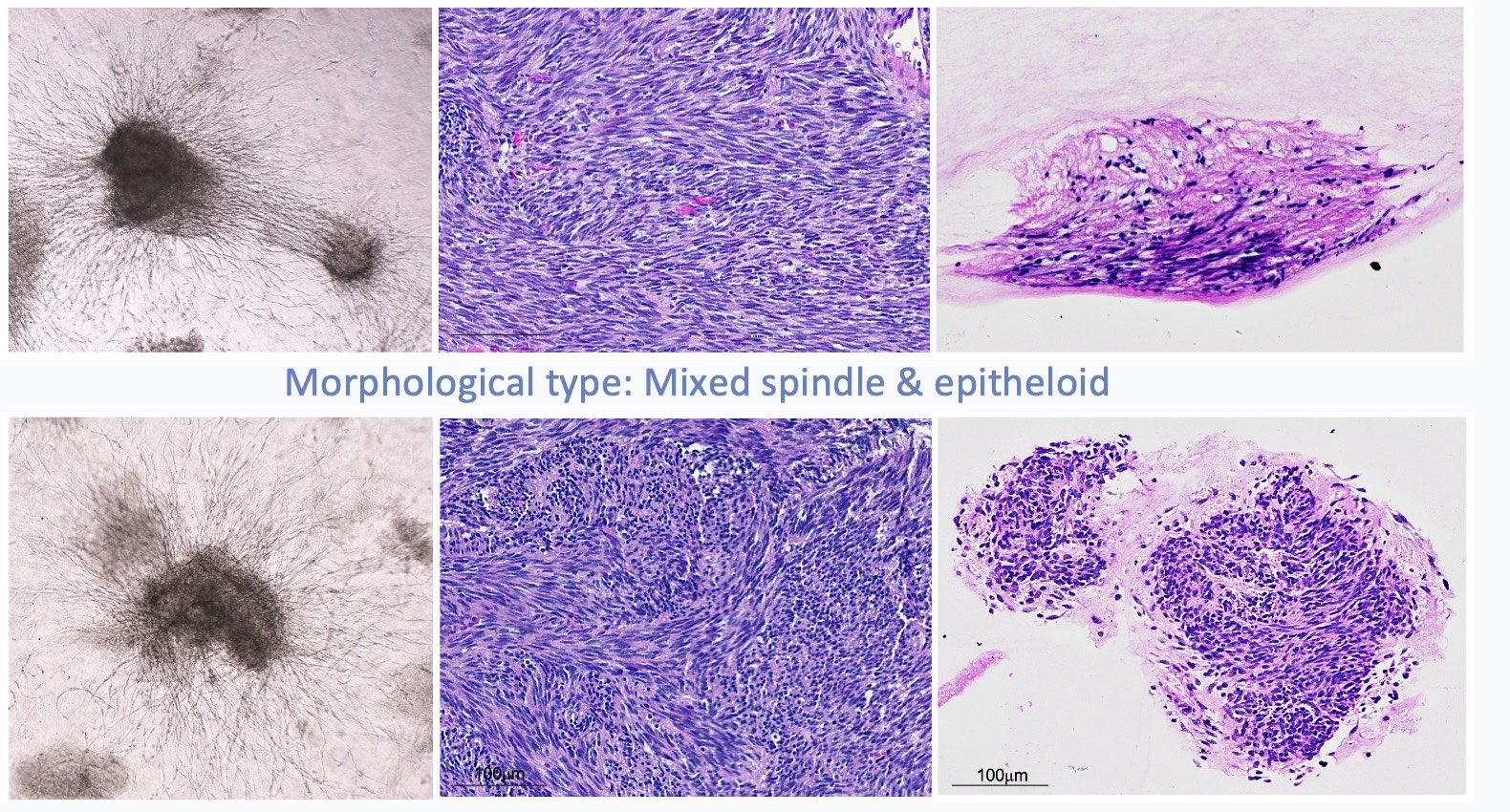
Custom GIST models: bright-field culture morphology, source-tissue H&E and culture H&E compare spindle and mixed spindle/epithelioid patterns for case-specific pathology reference and model QC.
Study data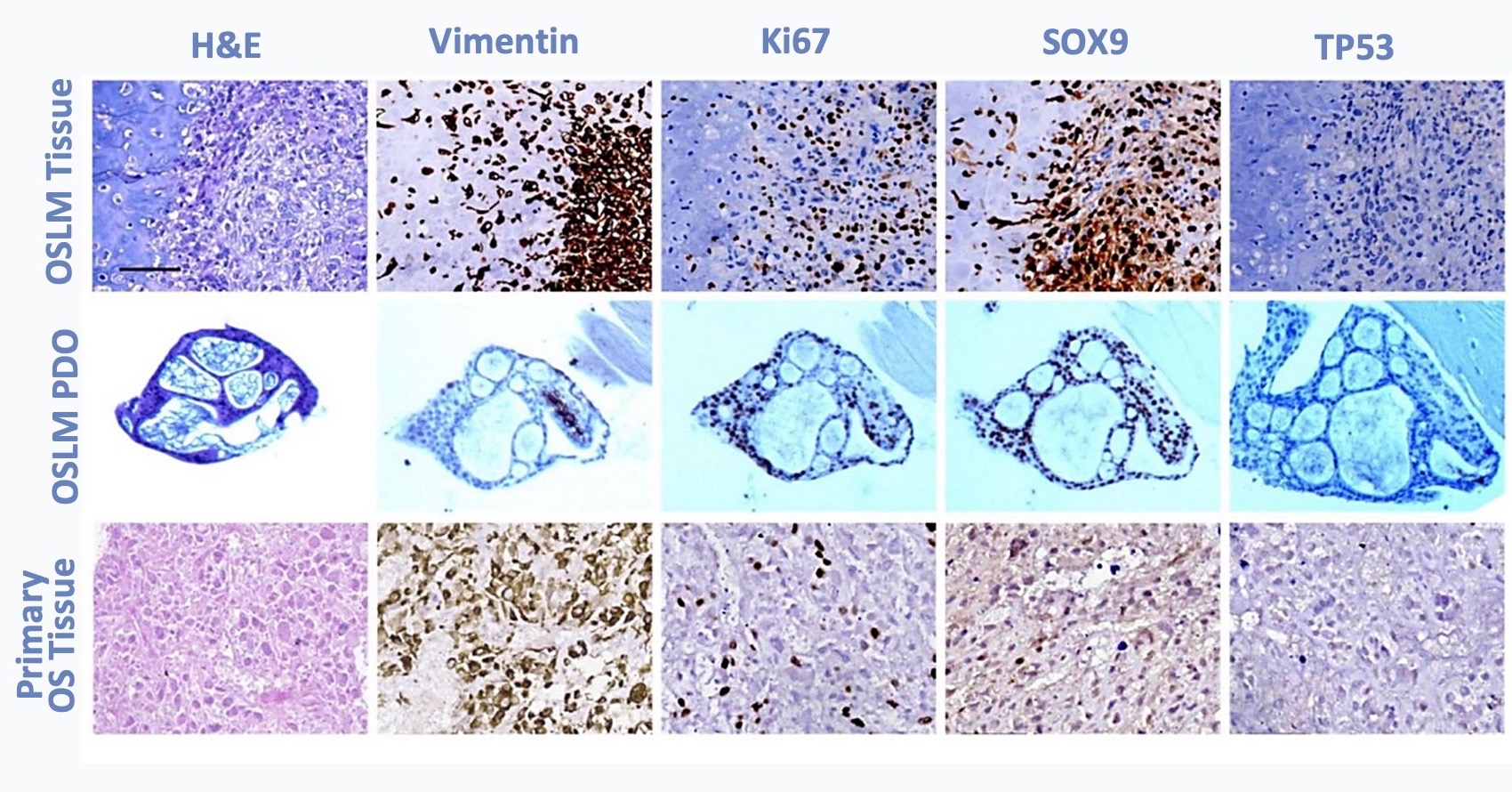 View image
Custom osteosarcoma models: H&E and marker panels across source tissue, PDO and primary tissue compare identity, proliferation and lineage-associated phenotypes for downstream assay selection.
Study dataStudy planning
Tumor type, sample condition, candidate and intended comparison guide the culture format, controls and assays.
Tumor type, collection site, sample condition, expected timing and available ethics documentation.
Modality, dosing plan, controls and the response or comparison the study should address.
Planned histology, flow, molecular or functional assays, together with preferred data and report formats.
Study design
GIST, osteosarcoma and other mesenchymal tumors have distinct pathology and molecular profiles, calling for tailored model establishment, identity QC, treatment-response and mechanism studies.
Assess diagnosis, sampling site, tissue state and molecular records.
Assess growth patterns and reproducible morphology before expanding the model.
Use source H&E, organoid bright-field, organoid H&E and pathology-relevant markers.
Once model identity and culture performance are confirmed, progress into treatment response, functional phenotype or mechanism studies.
Research applications
Assays & QC
Case-specific QC is based on pathology, morphology, mutation or protein markers.
Study & delivery
Pathology-guided model establishment, characterization and candidate studies, with corresponding data and reporting.
Related solutions
PROJECT DISCUSSION
Tumor type, sample status, candidate profile and comparison endpoints determine the culture format, controls, assay panel and deliverables for the mesenchymal tumor PDO.
Case-specific model development, phenotype profiling and candidate-response studies for GIST, osteosarcoma and related tumors.
Patient tumor tissue with pathology-guided, case-specific design
Custom 3D culture
TRiCBIO culture and project cases
Model characterization
Source-tissue and organoid imaging plus lineage/identity markers characterize the model; functional readouts are selected for the candidate mechanism and study objective.
View imageCustom GIST models: bright-field culture morphology, source-tissue H&E and culture H&E compare spindle and mixed spindle/epithelioid patterns for case-specific pathology reference and model QC.
Study dataView imageCustom osteosarcoma models: H&E and marker panels across source tissue, PDO and primary tissue compare identity, proliferation and lineage-associated phenotypes for downstream assay selection.
Study dataStudy planning
Tumor type, sample condition, candidate and intended comparison guide the culture format, controls and assays.
Tumor type, collection site, sample condition, expected timing and available ethics documentation.
Modality, dosing plan, controls and the response or comparison the study should address.
Planned histology, flow, molecular or functional assays, together with preferred data and report formats.
Study design
GIST, osteosarcoma and other mesenchymal tumors have distinct pathology and molecular profiles, calling for tailored model establishment, identity QC, treatment-response and mechanism studies.
Assess diagnosis, sampling site, tissue state and molecular records.
Assess growth patterns and reproducible morphology before expanding the model.
Use source H&E, organoid bright-field, organoid H&E and pathology-relevant markers.
Once model identity and culture performance are confirmed, progress into treatment response, functional phenotype or mechanism studies.
Research applications
Assays & QC
Case-specific QC is based on pathology, morphology, mutation or protein markers.
Study & delivery
Pathology-guided model establishment, characterization and candidate studies, with corresponding data and reporting.
Related solutions
PROJECT DISCUSSION
Tumor type, sample status, candidate profile and comparison endpoints determine the culture format, controls, assay panel and deliverables for the mesenchymal tumor PDO.