
Culture records, epithelial identity and stage-associated markers characterize model establishment and the different culture stages.
Model & assay dataModel characterization
Endometrial organoid profiling
Evaluate primary establishment and passage with H&E, E-cadherin and Ki67, plus ER, PR and FOXO1 profiling, to assess identity and stage-dependent change.
01Study objective02Model & design03Assays & findings04Decision & next step
Model & sampleHuman tissue-derived endometrial organoids
ObjectiveEstablish model growth, epithelial identity and stage characterization
Study conditionsProliferative, secretory and receptive culture stages
AssaysBright-field, H&E, E-cadherin, Ki67, ER, PR and FOXO1
Study evidenceTRiCBIO endometrial organoid establishment and stage-characterization data
DeliverablesReceive images, assay results and an analysis summary; the report documents the study design, sample size and statistical methods
ESTABLISHMENT & STAGE PHENOTYPES
Stage-specific endometrial phenotypes
Serial culture, H&E, E-cadherin and Ki67 establish model growth and epithelial state; ER, PR and FOXO1 then show phenotype changes across culture stages.
 View image
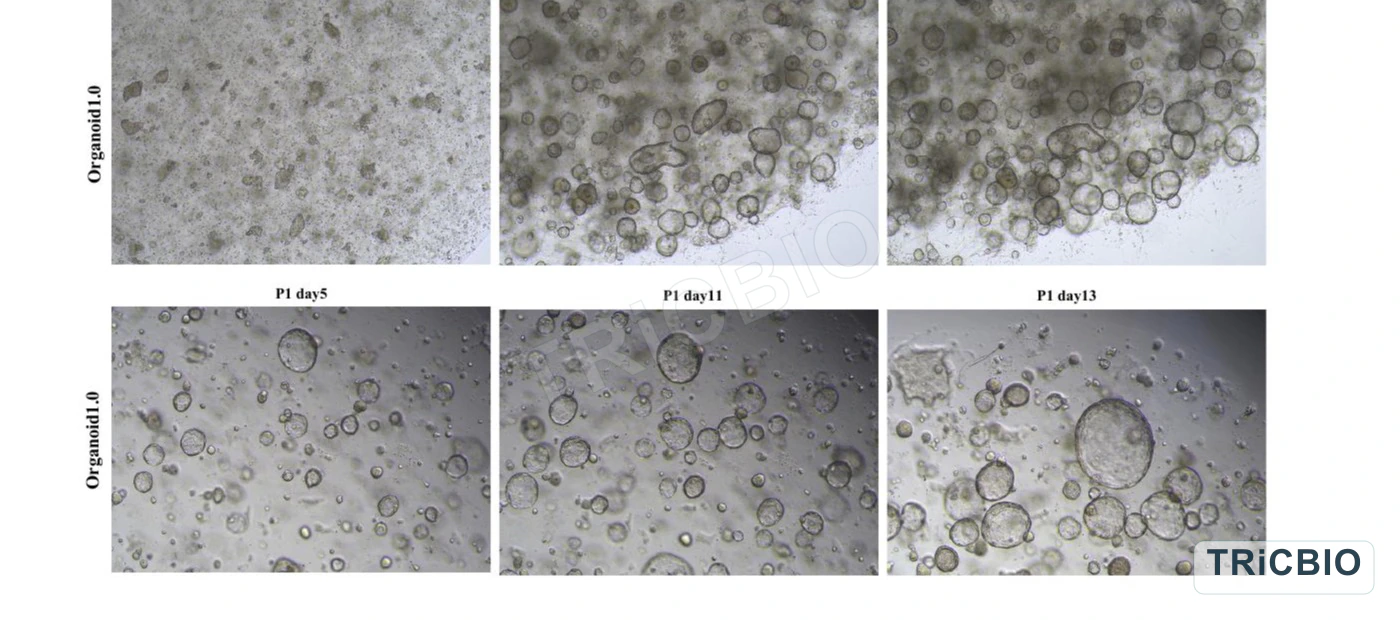
Establishment and passage: the displayed time points document organoid formation after primary processing and continued growth after passage.
TRiCBIO human endometrial organoid characterization data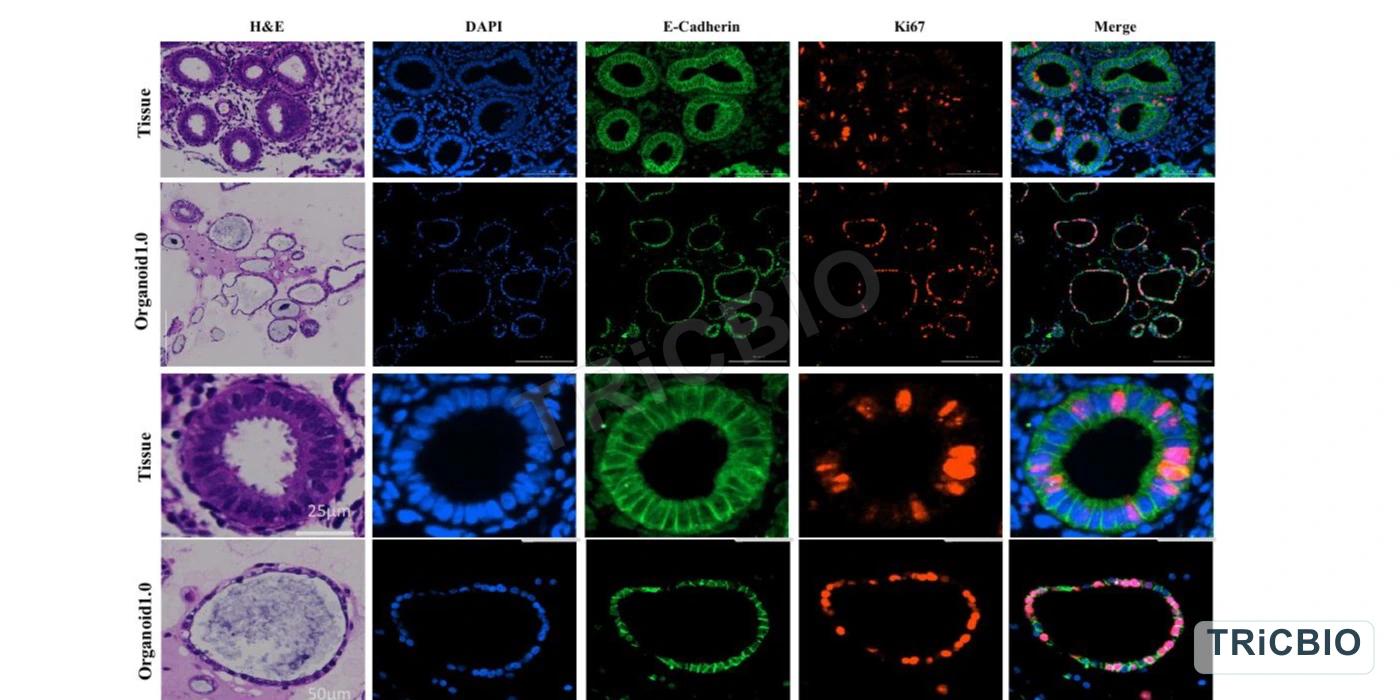 View image
Baseline identity: H&E, DAPI, E-cadherin and Ki67 images compare source tissue and organoids for epithelial organization and proliferative state.
TRiCBIO human endometrial organoid characterization data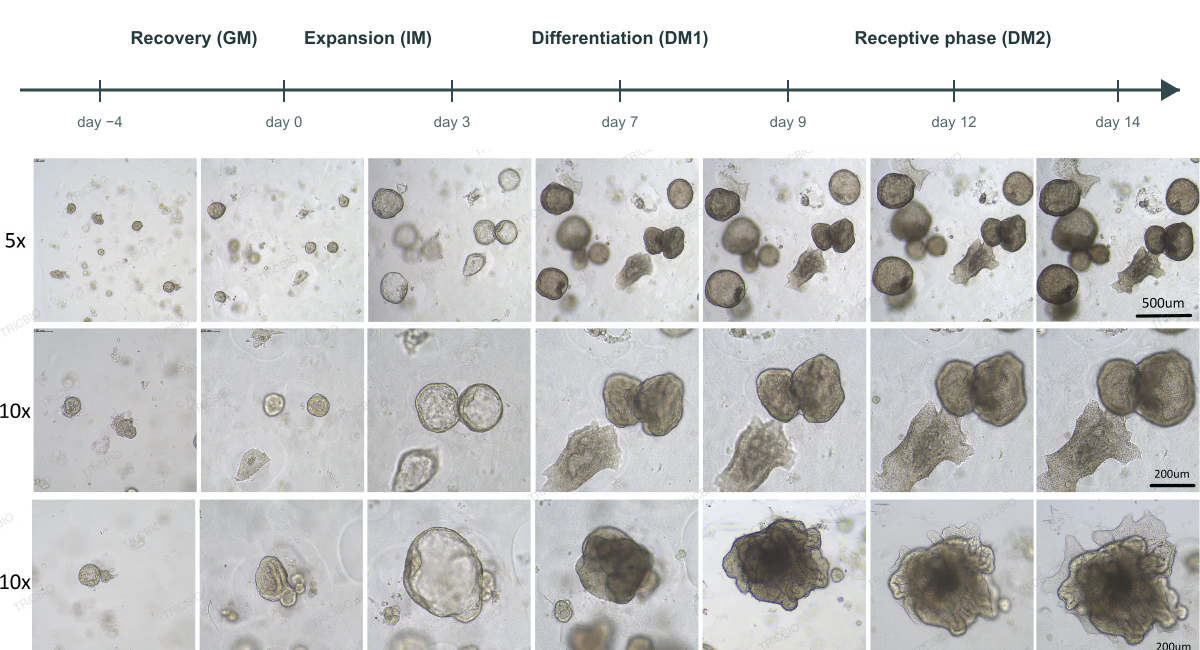 View image
Stage-dependent morphology: serial imaging within one culture workflow helps define time points for downstream assays.
TRiCBIO human endometrial organoid characterization data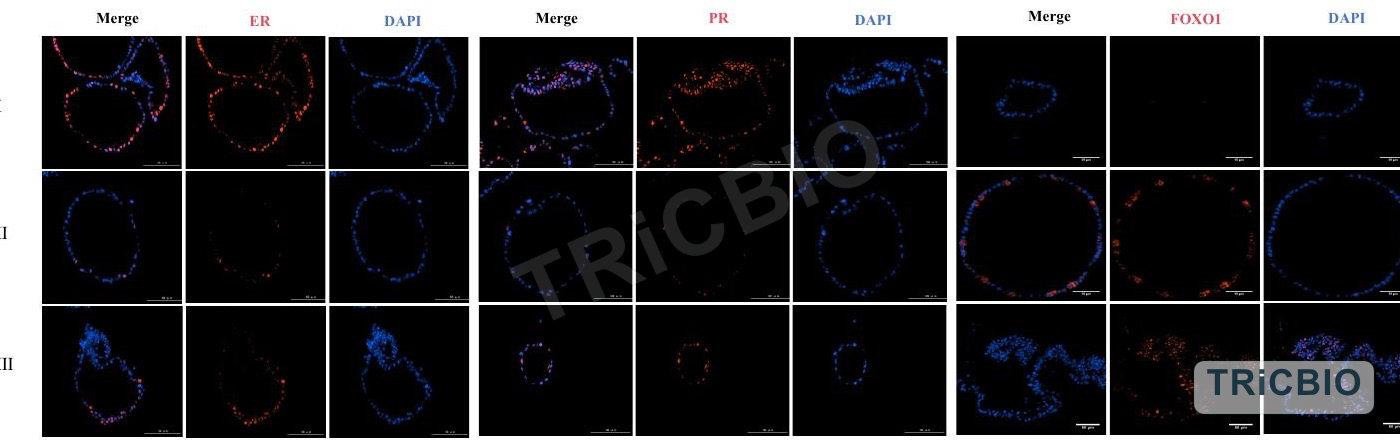 View image
Stage markers: immunofluorescence for ER, PR and FOXO1 adds phenotype context across culture stages for in vitro stage research and candidate-response assessment.
TRiCBIO human endometrial organoid characterization dataBegin with establishment and passage
Organoid formation after primary tissue processing and continued growth after passage document establishment and passaging performance; culture conditions and observation times are set for each sample.
Confirm epithelial identity and proliferation
Together, these readouts establish epithelial organization and a proliferative baseline before stage-directed or candidate-response studies.
- Source-tissue and organoid H&E
- E-cadherin epithelial profiling
- Ki67 proliferation profiling
Assess stage-dependent change
Serial morphology and immunofluorescence for ER, PR and FOXO1 compare proliferative, secretory and receptive culture stages for in vitro stage research and candidate-response assessment.
Define cycle context, conditions and endpoints
For a new study, define the cycle stage, hormonal or treatment conditions, replication plan and primary endpoints for candidate-response, inflammation or injury research.
INTERPRETATION
Epithelial identity and stage-related changes
These profiles guide model selection for candidate, hormonal, inflammatory and tissue-injury studies.
Follow-on studies can compare dose and time-course effects, with confirmation in independent samples.
Related models and services
Choose the right models and services for the next study
Study planning
Build your study from this evidence
Model establishment, stage characterization or treatment-response studies
Sample context, cycle or hormone conditions, project goal and intended assays
Establishment and passage, epithelial identity checks and stage-associated morphology/marker profiling
Study images, assay results, method records, integrated analysis and study-design notes
Define the stage-directed or candidate-focused study
Cycle context, induction conditions, batch replication and functional endpoints for each new sample
PROJECT DISCUSSION
Discuss a study built around your program
Tell us which model features and readouts matter most. Our scientists will recommend the model, QC plan and study endpoints.