
Serial-culture morphology and E-cadherin, LRP2 and Nephrin profiling establish hPSC kidney organoid identity for developing ADPKD cyst-phenotype endpoints.
Tailored ADPKD organoid cyst-phenotype studies
For autosomal dominant polycystic kidney disease (ADPKD), characterized hPSC-derived kidney organoids provide the starting point for cyst phenotypes, PKD-related assays, candidate-intervention conditions, QC and deliverables.
E-cadherinLRP2Nephrin
Model source
TRiCBIO hPSC kidney organoid culture and identity data, extended with ADPKD disease phenotypes and assays for each program
Culture / format
hPSC kidney organoid · Cyst-phenotype assay development
Supporting evidence
TRiCBIO characterized hPSC kidney organoid culture and identity data with ADPKD literature benchmarks
Model characterization
From characterized kidney organoids to tailored ADPKD studies
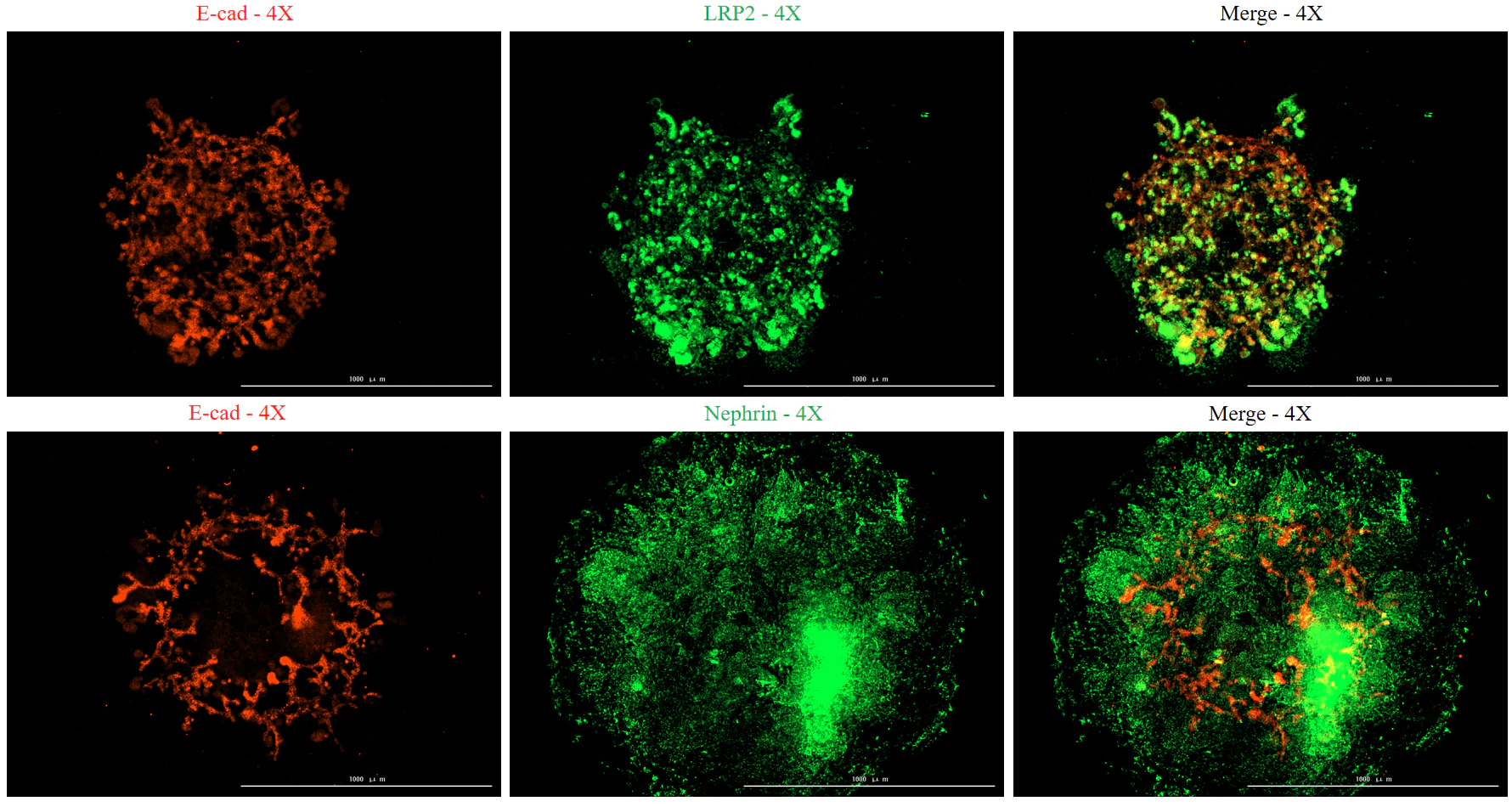
Serial morphology and E-cadherin, LRP2 and Nephrin profiling characterize kidney organoid growth and identity. The study can then add cyst phenotypes, PKD-related assays and candidate-intervention conditions.
 View image
Kidney organoid identity profiling: E-cadherin, LRP2 and Nephrin immunofluorescence shows epithelial, proximal-tubule and podocyte-associated signals for ADPKD study design.
Study data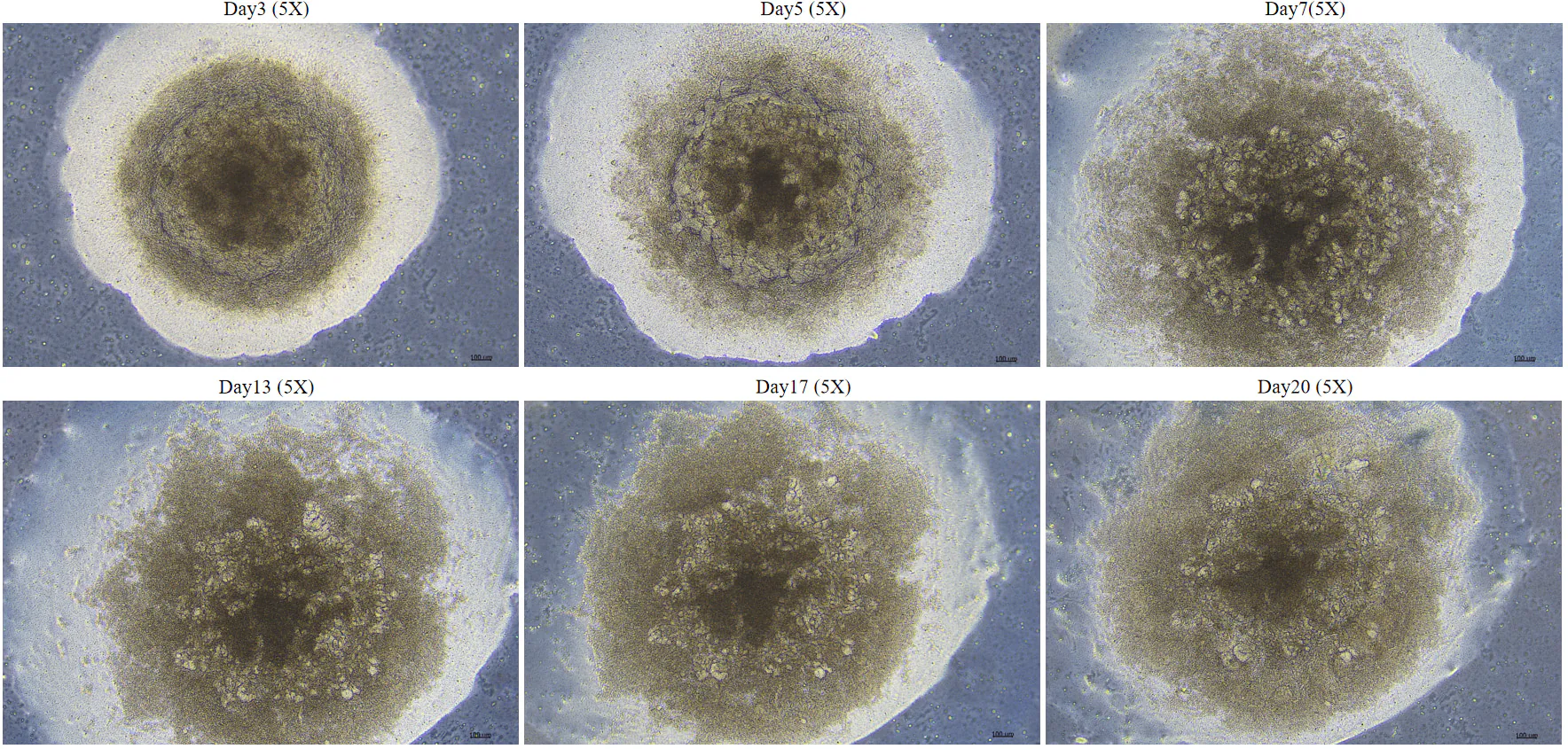 View image
Culture progression: serial bright-field images from Day 3 to Day 20 show kidney organoid formation and growth, providing the culture baseline for subsequent cyst-phenotype and disease-relevant readouts.
Study dataModel documentation
Model profile and available documentation
We can configure cyst growth, injury and proliferation markers, and candidate-response readouts around the program goal.
Tailored ADPKD studies combine characterized kidney organoid identity and culture data with prespecified cyst phenotypes and disease-relevant endpoints.
You receive the study plan, model QC, images and data, with recommendations for the next study.
Study planning
From study objective to model and assay plan
Disease phenotype, available models or samples, the intervention and study hypothesis guide induction conditions and readouts.
Disease phenotype and objective
Phenotype, induction condition, intervention strategy and primary hypothesis.
Samples and candidate
Sample source, available model information, candidate intervention and controls.
Assays and deliverables
Morphology, barrier, molecular or functional readouts, together with data and reporting needs.
Research applications
Recommended applications
- Cyst-phenotype method development
- PKD1/PKD2 mechanisms
- Candidate-intervention studies
Assays & QC
Disease phenotype and intervention readouts
Kidney organoid culture & characterization
Kidney organoid culture and identity characterization
E-cadherinLRP2Nephrin
Tailored study focus
Cyst phenotypes, PKD-related mechanisms and candidate-intervention studies can draw on:
- Imaging
- Morphometry
- Molecular readouts
QC approach
We combine kidney organoid identity with prespecified cyst-phenotype and disease-relevant acceptance criteria for study QC.
Each study defines the genetic background, cyst phenotype, assay panel and intervention strategy before experimental work begins.
Study & delivery
Disease-phenotype study design and deliverables
You receive the study plan, experimental data, model QC and study report.
Related solutions
Related study options
PROJECT DISCUSSION
Discuss an ADPKD study
Disease phenotype, induction or intervention conditions and the primary hypothesis determine model conditions, assays and stage-specific readouts for the tailored ADPKD organoid cyst-phenotype studies.